







Seeking Hope in the Pandemic: Strategic Purchasing (Continued)




Seeking Hope in the Pandemic: Strategic Purchasing (Continued)

Authors: Queenie Li, Researcher, and Onno Ho, Research Intern, Our Hong Kong Foundation
To read our previous article on strategic purchasing, click here: https://bit.ly/31Na84W

The coronavirus has fully exposed the fragility of Hong Kong’s public health system. There is a lack of public resources and a shortage of medical staff, while private healthcare remains unaffordable for most people. Faced with a pandemic, the public health sector is occupied with tracking and tracing individual cases in real time, distributing medical supplies and enhancing public education. Meanwhile, more experts have started drawing lessons for the future through focusing on our health system’s resilience in the long term.
When it comes to health system reform, primary care has always been at the forefront of discussion. A robust system of primary care can serve as the first defence for the community by actively promoting preventive care. This not only helps contain the growth of healthcare demand accelerated by an ageing population and increasing prevalence of chronic diseases, but also slows down community outbreaks, strengthens public response and sustains regular healthcare services in an unforeseen public health crisis. However, Hong Kong’s primary care has been falling behind. What can be the potential driver for propelling its development?
Strategic purchasing in primary care
In fact, strategic purchasing has gradually attracted the government’s attention in recent years, due to its decisive role in ensuring the sustainability of the health system. Major healthcare policies such as the Elderly Health Care Voucher Scheme, the District Health Centres and the Voluntary Health Insurance Scheme encourage citizens to use private primary care, in order to ease the burden on the public sector and rebalance public and private healthcare in Hong Kong.
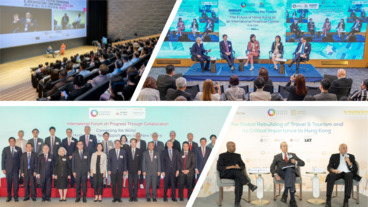
On July 17, public health experts from home and abroad convened at an online roundtable to discuss the role of strategic purchasing in the 21st century’s health system amidst a new wave of coronavirus outbreak. At the roundtable, Professor Eng-kiong Yeoh, Professor of Public Health and Director of Centre for Health Systems and Policy Research at the Jockey Club School of Public Health and Primary Care, Faculty of Medicine, the Chinese University of Hong Kong, stressed that it is the government’s responsibility to deploy strategic purchasing to enhance the overall efficacy of the health system. The development of primary care is no exception.
Another speaker, Professor Chiu-Wan Ng, Professor of Public Health at the Department of Social and Preventive Medicine, Faculty of Medicine, University of Malaya, talked about the PeKa B40 scheme introduced in 2019 by the Malaysian government. The scheme provides free medical check-ups for the country’s bottom 40% income group, with 70% of the procedures carried out by the private sector. It is generally recognised by industry professionals as a paradigm of strategic purchasing in primary care to advance preventive care.
A public health crisis accentuates the importance of a holistic approach
A health system that is both resilient and sustainable is the most effective means for the prevention and control of infectious and chronic diseases. Yet a well-equipped system requires a careful analysis of the overall demand of the population and an accurate identification of service gaps in the system, whilst improving the integration of care on all levels from primary care to hospital services. At the same time, we must balance the allocation of resources between public and private sectors and allow them to complement each other in fulfilling delineated service targets.
As we stated in the previous article, the pandemic of coronavirus has created an opportunistic time for promoting public and private partnerships (PPPs) in Hong Kong’s health system. As the virus spreads, the Hospital Authority has been expanding the scope of PPPs, which can hopefully demonstrate to the public the significance of strategic purchasing. Beyond the short-term target of fighting Covid-19, we look forward to seeing more government initiatives aimed at utilising this policy tool to promote primary care and improve the sustainability of Hong Kong’s health system.
To watch the roundtable ‘Health Financing in the 21st Century: The Public-Private Lever in Strategic Purchasing’, click here.


Authors: Queenie Li, Researcher, and Onno Ho, Research Intern, Our Hong Kong Foundation
To read our previous article on strategic purchasing, click here: https://bit.ly/31Na84W
The coronavirus has fully exposed the fragility of Hong Kong’s public health system. There is a lack of public resources and a shortage of medical staff, while private healthcare remains unaffordable for most people. Faced with a pandemic, the public health sector is occupied with tracking and tracing individual cases in real time, distributing medical supplies and enhancing public education. Meanwhile, more experts have started drawing lessons for the future through focusing on our health system’s resilience in the long term.
When it comes to health system reform, primary care has always been at the forefront of discussion. A robust system of primary care can serve as the first defence for the community by actively promoting preventive care. This not only helps contain the growth of healthcare demand accelerated by an ageing population and increasing prevalence of chronic diseases, but also slows down community outbreaks, strengthens public response and sustains regular healthcare services in an unforeseen public health crisis. However, Hong Kong’s primary care has been falling behind. What can be the potential driver for propelling its development?
Strategic purchasing in primary care
In fact, strategic purchasing has gradually attracted the government’s attention in recent years, due to its decisive role in ensuring the sustainability of the health system. Major healthcare policies such as the Elderly Health Care Voucher Scheme, the District Health Centres and the Voluntary Health Insurance Scheme encourage citizens to use private primary care, in order to ease the burden on the public sector and rebalance public and private healthcare in Hong Kong.
On July 17, public health experts from home and abroad convened at an online roundtable to discuss the role of strategic purchasing in the 21st century’s health system amidst a new wave of coronavirus outbreak. At the roundtable, Professor Eng-kiong Yeoh, Professor of Public Health and Director of Centre for Health Systems and Policy Research at the Jockey Club School of Public Health and Primary Care, Faculty of Medicine, the Chinese University of Hong Kong, stressed that it is the government’s responsibility to deploy strategic purchasing to enhance the overall efficacy of the health system. The development of primary care is no exception.
Another speaker, Professor Chiu-Wan Ng, Professor of Public Health at the Department of Social and Preventive Medicine, Faculty of Medicine, University of Malaya, talked about the PeKa B40 scheme introduced in 2019 by the Malaysian government. The scheme provides free medical check-ups for the country’s bottom 40% income group, with 70% of the procedures carried out by the private sector. It is generally recognised by industry professionals as a paradigm of strategic purchasing in primary care to advance preventive care.
A public health crisis accentuates the importance of a holistic approach
A health system that is both resilient and sustainable is the most effective means for the prevention and control of infectious and chronic diseases. Yet a well-equipped system requires a careful analysis of the overall demand of the population and an accurate identification of service gaps in the system, whilst improving the integration of care on all levels from primary care to hospital services. At the same time, we must balance the allocation of resources between public and private sectors and allow them to complement each other in fulfilling delineated service targets.
As we stated in the previous article, the pandemic of coronavirus has created an opportunistic time for promoting public and private partnerships (PPPs) in Hong Kong’s health system. As the virus spreads, the Hospital Authority has been expanding the scope of PPPs, which can hopefully demonstrate to the public the significance of strategic purchasing. Beyond the short-term target of fighting Covid-19, we look forward to seeing more government initiatives aimed at utilising this policy tool to promote primary care and improve the sustainability of Hong Kong’s health system.
To watch the roundtable ‘Health Financing in the 21st Century: The Public-Private Lever in Strategic Purchasing’, click here.