





OHKF Participated in Writing United Nations’ AI Development Report AI Delivers Profound Economic Benefits Hong Kong Among Leaders Globally Calling for Global Cooperation for Shared Prosperity




OHKF Participated in Writing United Nations’ AI Development Report AI Delivers Profound Economic Benefits Hong Kong Among Leaders Globally Calling for Global Cooperation for Shared Prosperity

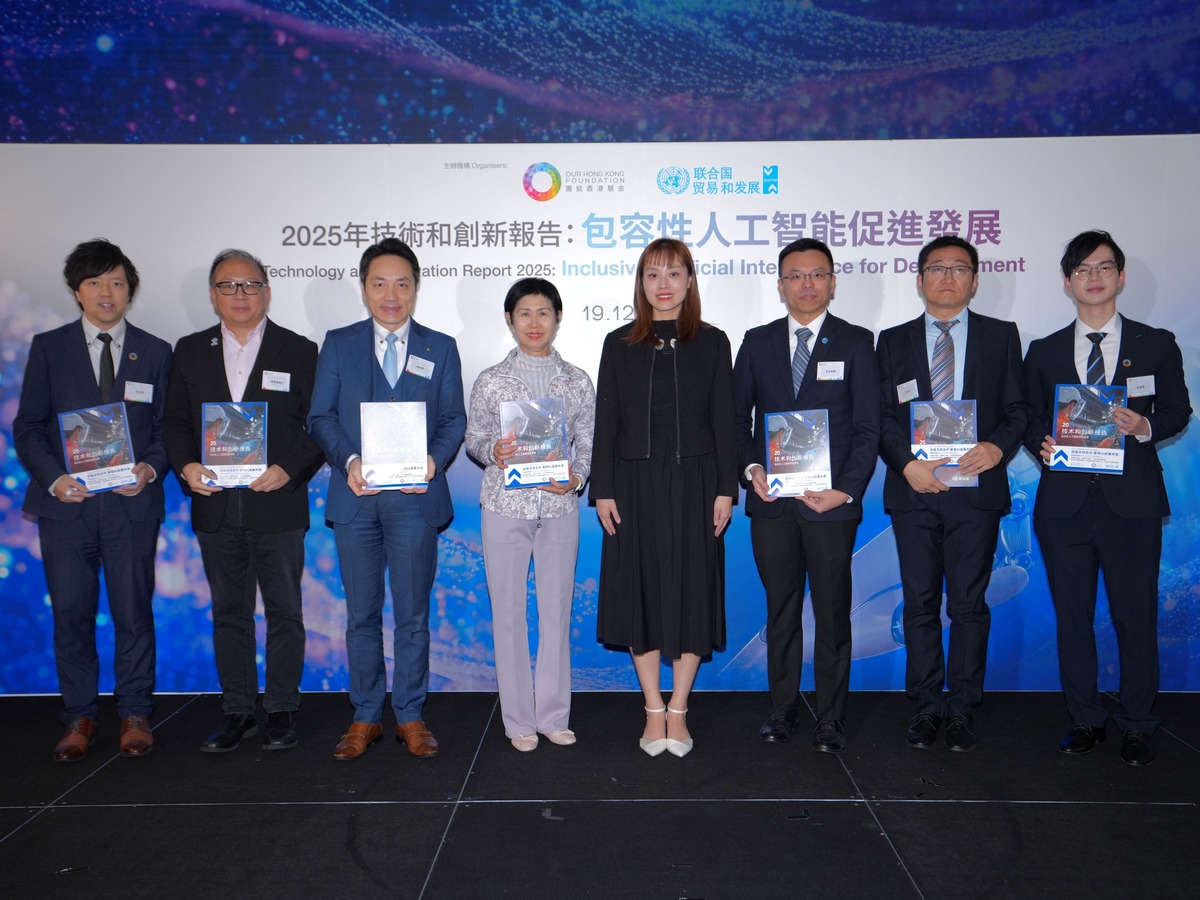
[Hong Kong, December 19, 2025] Artificial intelligence (AI) technology is rapidly reshaping global economic structures and work patterns. UN Trade and Development (UNCTAD) published its 2025 Technology and Innovation Report: Inclusive Artificial Intelligence for Development (the report) this year. Our Hong Kong Foundation (OHKF) was honoured to have participated in the writing of the report, analysing AI’s potential impacts on productivity, employment, and labour markets. The report also conducts a multidimensional analysis of regional preparedness for AI adoption and development, explains how science, technology, and innovation (STI) policies can help economies at different stages of development capture AI growth dividends, and concludes with a call for global cooperation to establish an international AI governance framework for shared prosperity.
AI’s economic benefit is profound yet a significant AI divide exists among nations
The report first highlights that among frontier technologies like IoT, blockchain, and 5G, AI is projected to become the technology with the largest market share by 2033, reaching approximately $4.8 trillion—more than 2.5 times its 2023 value. Referencing multiple international studies, the report demonstrates that AI can boost total factor productivity—a key driver of GDP growth— with the estimated average effect of up to 8.9%, showing its substantial economic benefits. However, current AI Research & Development investment and infrastructure remain highly concentrated among a few economies and tech giants. Without policy support, AI development risks further exacerbating regional disparities in productivity and innovation.
Assessing AI preparedness across three aspects: Hong Kong ranks among global leaders
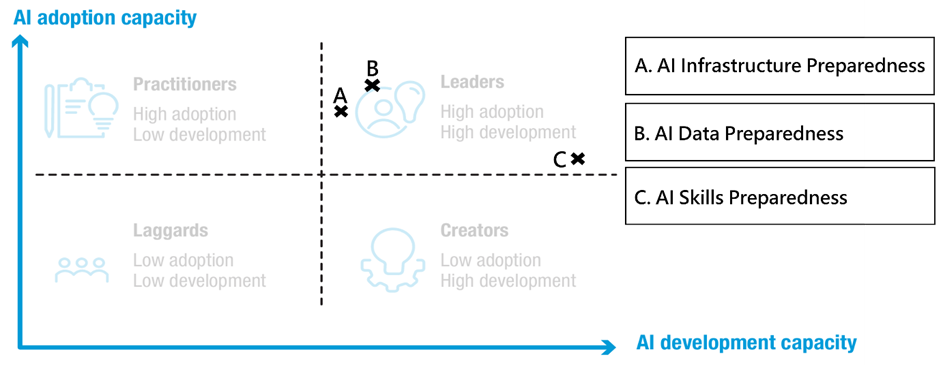
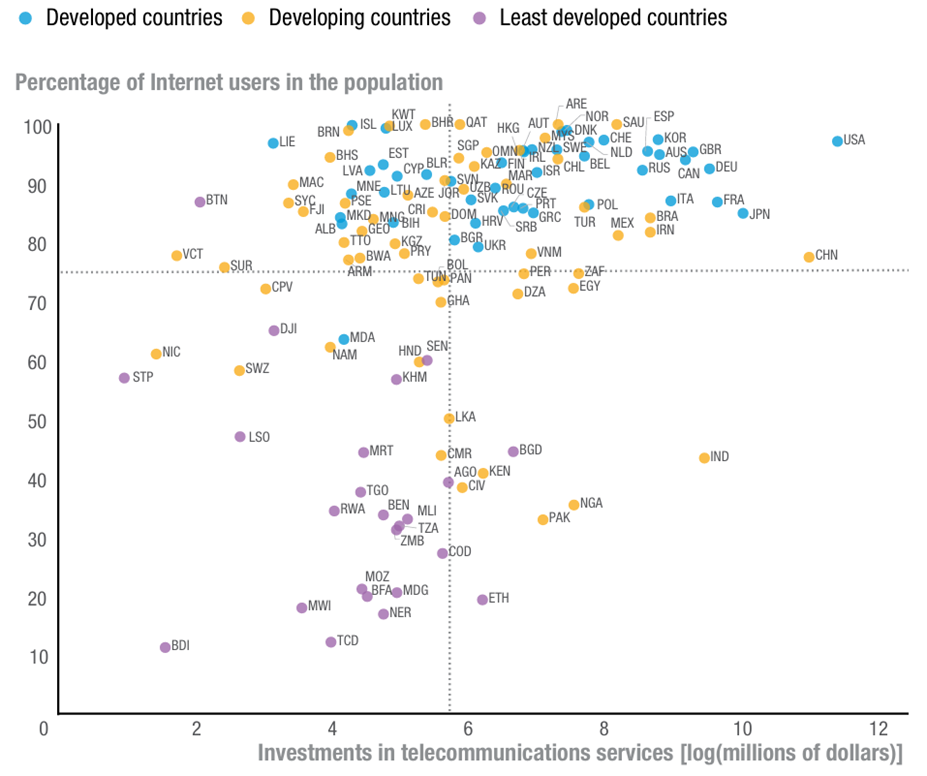
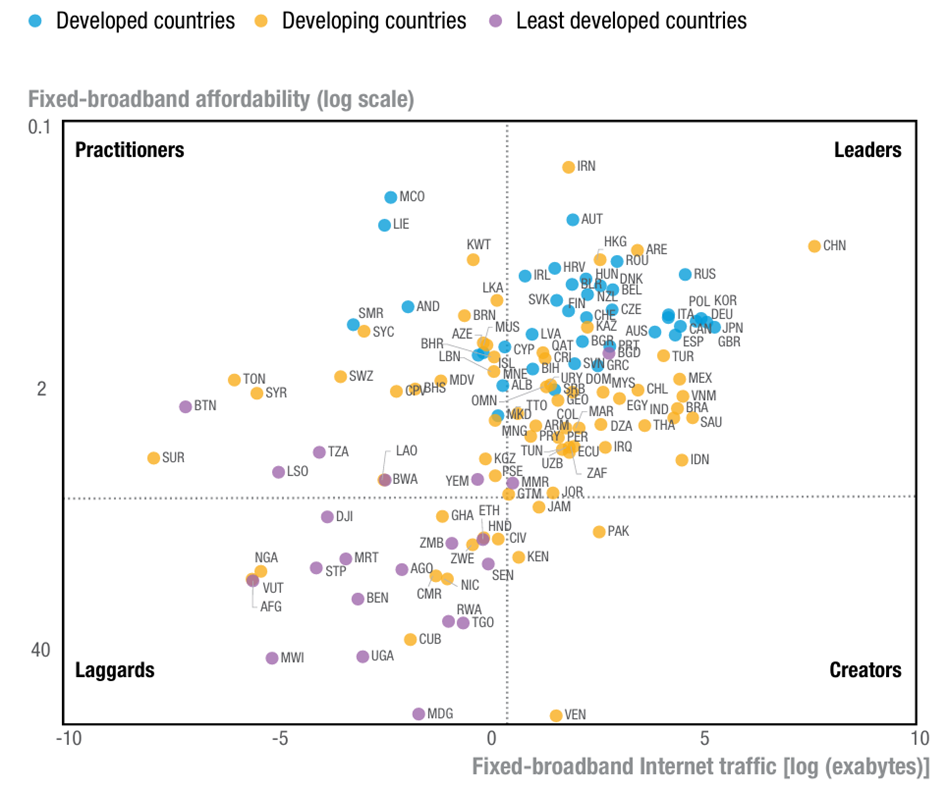
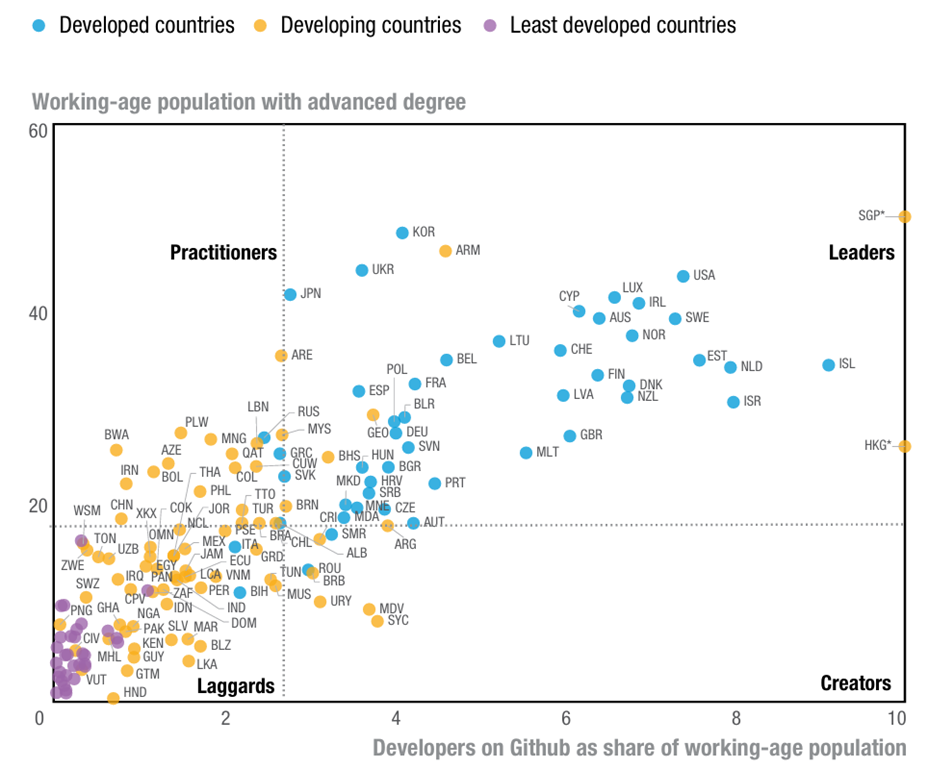
The report establishes a framework for evaluating AI preparedness based on three aspects: infrastructure (such as data centres and high-speed networks), data (covering quantity, quality, and availability), and skills (including digital literacy and specialised digital knowledge). Each aspect can be analysed from two perspectives: AI adoption and development capacity (as shown in Figure 1), resulting in a matrix classification of “Practitioners,” “Leaders,” “Laggards,” and “Creators.” In the assessment of over 100 economies, Hong Kong was rated as a Leader in all three aspects—infrastructure, data, and skills—indicating that Hong Kong has achieved a high level of capacity in both adoption and development across these areas.
AI exerts the most complex impact on the workforce in knowledge-intensive industries
According to the report, AI reshapes the labour market via four key channels. First, substituting human labour with higher efficiency, such as automated monitoring of large-scale transactions in the banking industry. Second, complementing human labour by assisting with routine tasks like paperwork and scheduling. Third, deepening automation, for example, replacing traditional machine quality inspection with AI automated inspection to enhance accuracy and production efficiency. Fourth, creating new job opportunities, which include positions related to AI research & development, deployment, and maintenance, driving the emergence of new industries.
The actual benefits gained by different economies can vary significantly. This disparity is closely tied to the nature of work and industrial structure in each region. Currently, the sectors most vulnerable to AI disruption are those heavily reliant on writing, analysis, and knowledge processing, such as finance, advertising, consulting services, and information technology. These roles constitute a higher proportion of employment in developed economies. Consequently, their labour markets face stronger pressure for technological substitution and transformation, while also being better positioned to leverage AI for efficiency gains, new business development, and higher value creation.
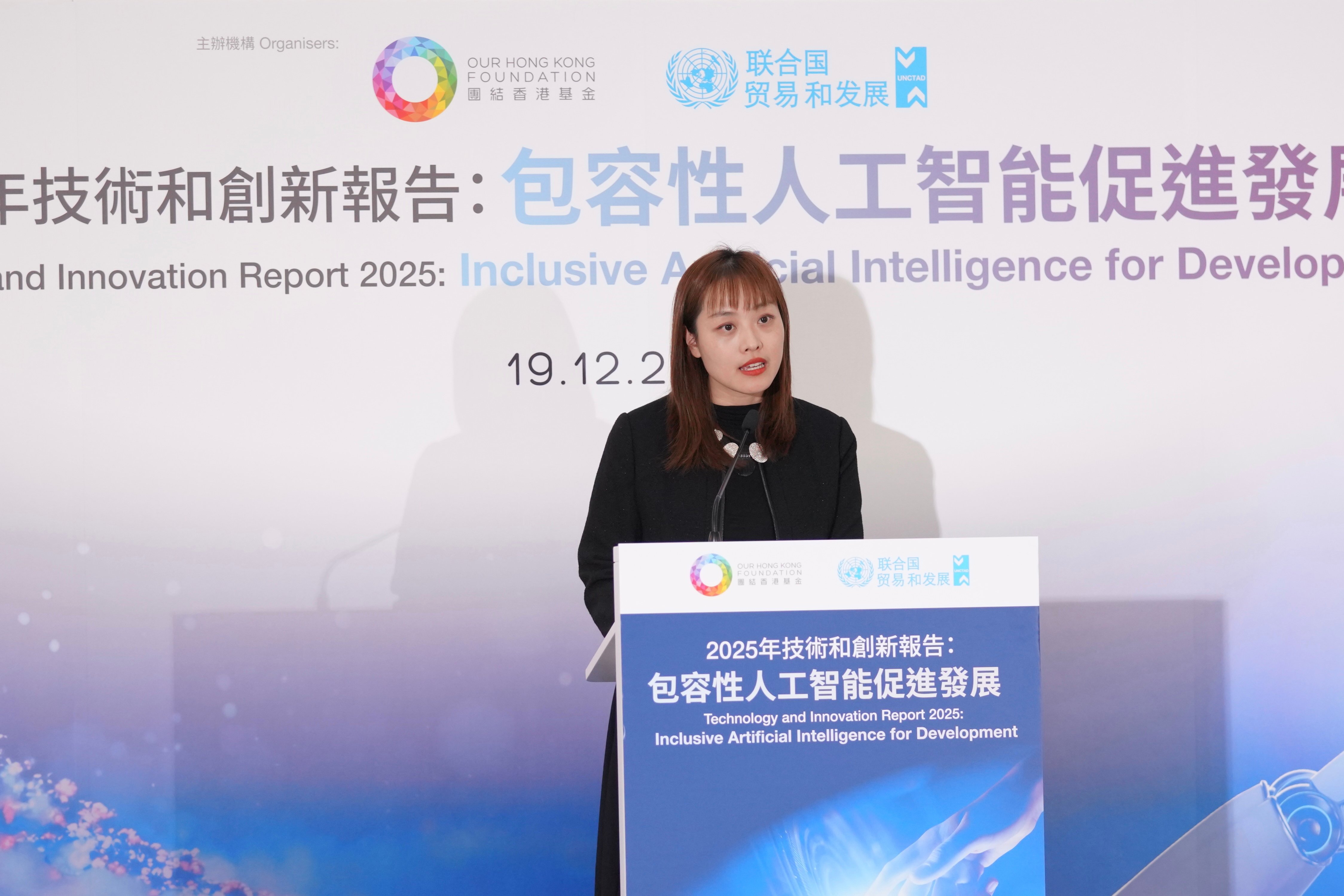
Acting Secretary for Innovation, Technology and Industry of the Government of the HKSAR, Ms Lillian Cheong said: “Since the promulgation of the Hong Kong Innovation and Technology Development Blueprint by the HKSAR Government in 2022, continuous efforts have been made to promote the building of the AI ecosystem. Clear directions have been set out from policy planning to specific measures, which are being steadily implemented. Over the past few years, Hong Kong has gradually built up advantages in digital infrastructure, data, and innovation technology talents, forming a complete path for AI development. The three key areas for AI-driven transformation—infrastructure, data, and skills highlighted in "2025 Technology and Innovation Report: Inclusive Artificial Intelligence for Development" align seamlessly with the Government’s recent focus on advancing AI. This convergence confirms that Hong Kong’s development has consistently been at the forefront.”
Economic Affairs Officer of the UNCTAD, Mr Jackie Si Tou stated: “Over the years, the United Nations has made significant contributions to advancing global AI governance. We call for strengthened global cooperation to promote knowledge sharing; the establishment of international research partnerships to encourage technology transfer and capacity building; and the facilitation of exchanges among developing economies to jointly promote AI solutions. These efforts will ensure all nations can benefit from AI development.”
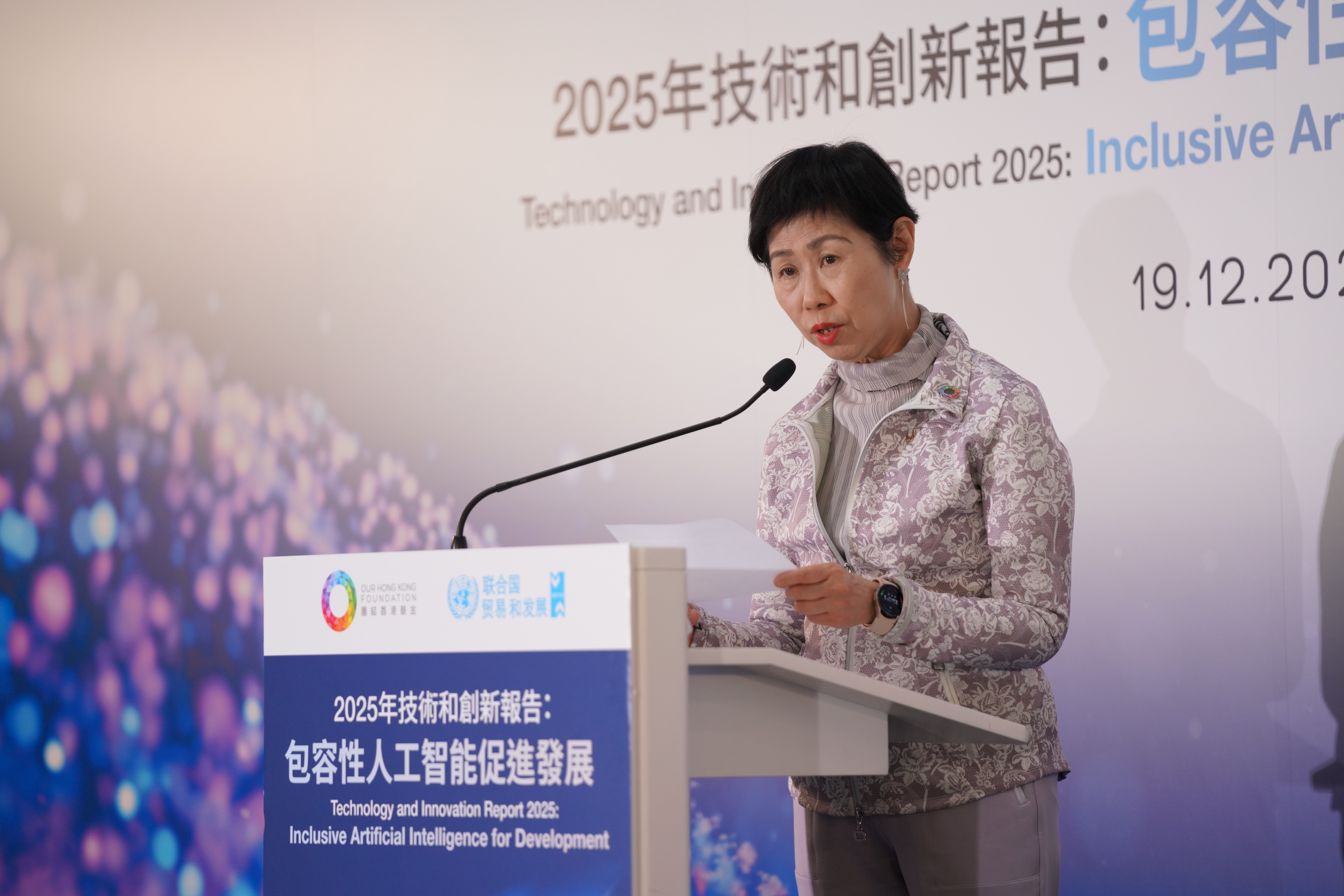
President of OHKF, Dr Jane Lee said: “Hong Kong has focused on developing AI in recent years, achieving significant progress in infrastructure, data, and skills. The HKSAR Government can collaborate with multiple stakeholders, including representatives from academia and industries, to conduct a strategic positioning assessment and lay out the route towards achieving the developmental goals.”
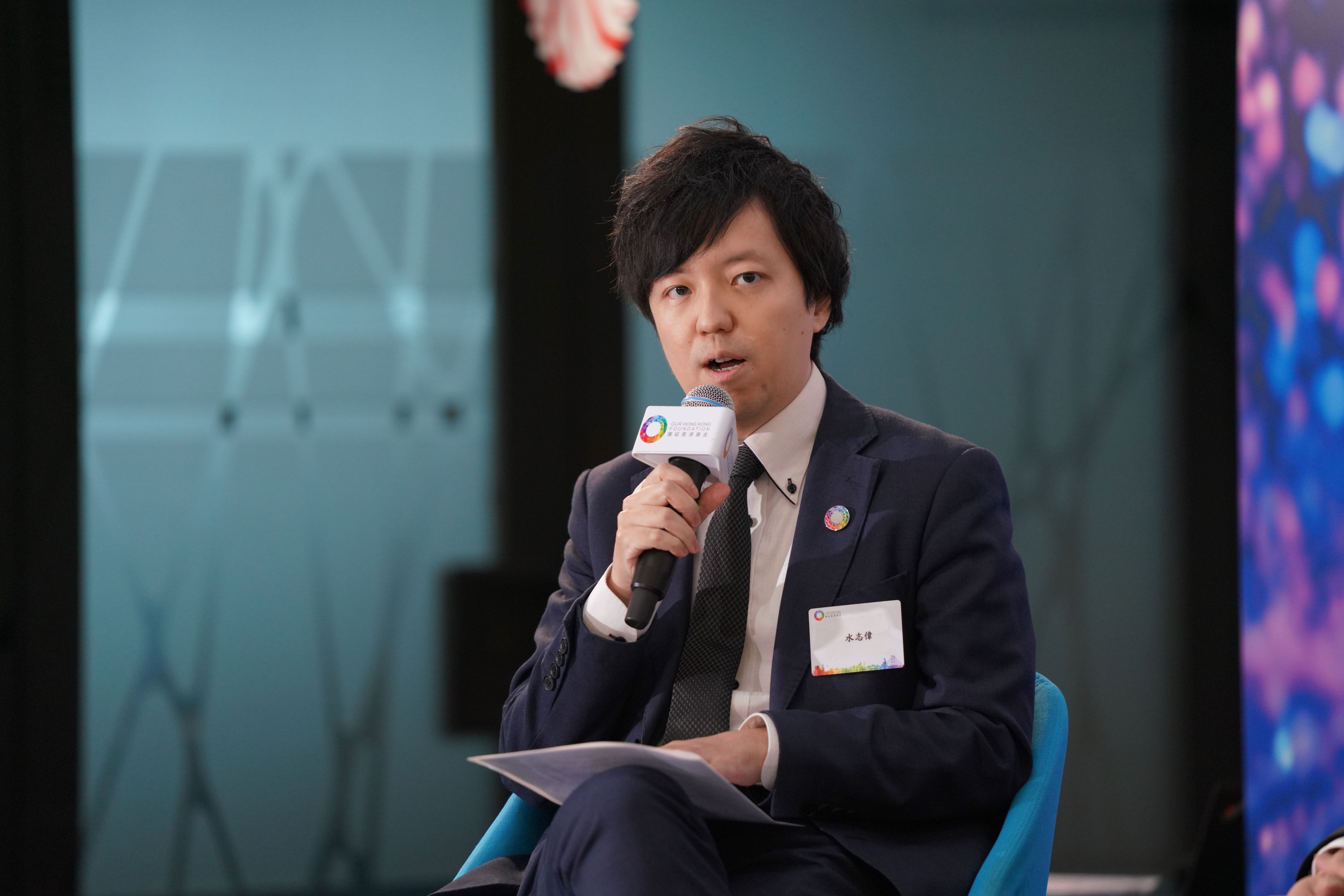
Vice President of OHKF and Executive Director of the Public Policy Institute, Mr Kenny Shui mentioned: “Hong Kong can position the AI Institute as a key driver of public-private collaboration. By providing funding, pooling resources and offering technical support, it can strengthen AI application and development capabilities across different sectors and accelerate the AI transformation of industries.”
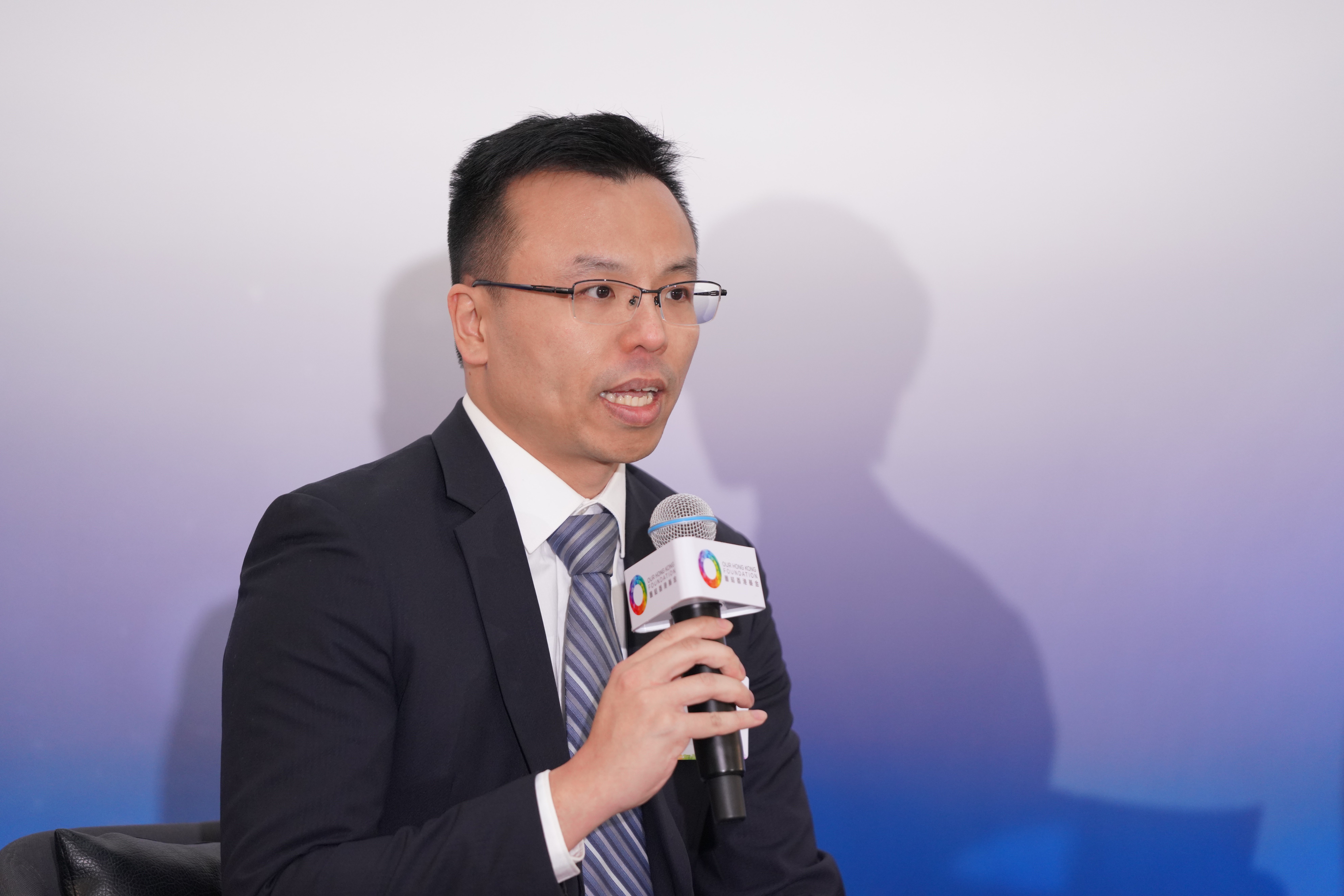
Head of Greater Bay Area Development of OHKF, Mr Alex Mak remarked: “Hong Kong enjoys a unique advantage as a super-connector between Chinese Mainland and the rest of the world and could consider establishing an internationally recognised AI standards and certification platform, with mutual recognition arrangements with other economies. This would provide companies seeking to ‘go global’ with AI testing frameworks that meet international standards and are aligned with global AI verification systems, while also attracting international AI firms to set up in Hong Kong.”
2025 Technology and Innovation Report: Inclusive Artificial Intelligence for Development


AI Infrastructure Preparedness
AI Data Preparedness
AI Skills Preparedness


[Hong Kong, December 19, 2025] Artificial intelligence (AI) technology is rapidly reshaping global economic structures and work patterns. UN Trade and Development (UNCTAD) published its 2025 Technology and Innovation Report: Inclusive Artificial Intelligence for Development (the report) this year. Our Hong Kong Foundation (OHKF) was honoured to have participated in the writing of the report, analysing AI’s potential impacts on productivity, employment, and labour markets. The report also conducts a multidimensional analysis of regional preparedness for AI adoption and development, explains how science, technology, and innovation (STI) policies can help economies at different stages of development capture AI growth dividends, and concludes with a call for global cooperation to establish an international AI governance framework for shared prosperity.
AI’s economic benefit is profound yet a significant AI divide exists among nations
The report first highlights that among frontier technologies like IoT, blockchain, and 5G, AI is projected to become the technology with the largest market share by 2033, reaching approximately $4.8 trillion—more than 2.5 times its 2023 value. Referencing multiple international studies, the report demonstrates that AI can boost total factor productivity—a key driver of GDP growth— with the estimated average effect of up to 8.9%, showing its substantial economic benefits. However, current AI Research & Development investment and infrastructure remain highly concentrated among a few economies and tech giants. Without policy support, AI development risks further exacerbating regional disparities in productivity and innovation.
Assessing AI preparedness across three aspects: Hong Kong ranks among global leaders
The report establishes a framework for evaluating AI preparedness based on three aspects: infrastructure (such as data centres and high-speed networks), data (covering quantity, quality, and availability), and skills (including digital literacy and specialised digital knowledge). Each aspect can be analysed from two perspectives: AI adoption and development capacity (as shown in Figure 1), resulting in a matrix classification of “Practitioners,” “Leaders,” “Laggards,” and “Creators.” In the assessment of over 100 economies, Hong Kong was rated as a Leader in all three aspects—infrastructure, data, and skills—indicating that Hong Kong has achieved a high level of capacity in both adoption and development across these areas.
AI exerts the most complex impact on the workforce in knowledge-intensive industries
According to the report, AI reshapes the labour market via four key channels. First, substituting human labour with higher efficiency, such as automated monitoring of large-scale transactions in the banking industry. Second, complementing human labour by assisting with routine tasks like paperwork and scheduling. Third, deepening automation, for example, replacing traditional machine quality inspection with AI automated inspection to enhance accuracy and production efficiency. Fourth, creating new job opportunities, which include positions related to AI research & development, deployment, and maintenance, driving the emergence of new industries.
The actual benefits gained by different economies can vary significantly. This disparity is closely tied to the nature of work and industrial structure in each region. Currently, the sectors most vulnerable to AI disruption are those heavily reliant on writing, analysis, and knowledge processing, such as finance, advertising, consulting services, and information technology. These roles constitute a higher proportion of employment in developed economies. Consequently, their labour markets face stronger pressure for technological substitution and transformation, while also being better positioned to leverage AI for efficiency gains, new business development, and higher value creation.
Acting Secretary for Innovation, Technology and Industry of the Government of the HKSAR, Ms Lillian Cheong said: “Since the promulgation of the Hong Kong Innovation and Technology Development Blueprint by the HKSAR Government in 2022, continuous efforts have been made to promote the building of the AI ecosystem. Clear directions have been set out from policy planning to specific measures, which are being steadily implemented. Over the past few years, Hong Kong has gradually built up advantages in digital infrastructure, data, and innovation technology talents, forming a complete path for AI development. The three key areas for AI-driven transformation—infrastructure, data, and skills highlighted in "2025 Technology and Innovation Report: Inclusive Artificial Intelligence for Development" align seamlessly with the Government’s recent focus on advancing AI. This convergence confirms that Hong Kong’s development has consistently been at the forefront.”
Economic Affairs Officer of the UNCTAD, Mr Jackie Si Tou stated: “Over the years, the United Nations has made significant contributions to advancing global AI governance. We call for strengthened global cooperation to promote knowledge sharing; the establishment of international research partnerships to encourage technology transfer and capacity building; and the facilitation of exchanges among developing economies to jointly promote AI solutions. These efforts will ensure all nations can benefit from AI development.”
President of OHKF, Dr Jane Lee said: “Hong Kong has focused on developing AI in recent years, achieving significant progress in infrastructure, data, and skills. The HKSAR Government can collaborate with multiple stakeholders, including representatives from academia and industries, to conduct a strategic positioning assessment and lay out the route towards achieving the developmental goals.”
Vice President of OHKF and Executive Director of the Public Policy Institute, Mr Kenny Shui mentioned: “Hong Kong can position the AI Institute as a key driver of public-private collaboration. By providing funding, pooling resources and offering technical support, it can strengthen AI application and development capabilities across different sectors and accelerate the AI transformation of industries.”
Head of Greater Bay Area Development of OHKF, Mr Alex Mak remarked: “Hong Kong enjoys a unique advantage as a super-connector between Chinese Mainland and the rest of the world and could consider establishing an internationally recognised AI standards and certification platform, with mutual recognition arrangements with other economies. This would provide companies seeking to ‘go global’ with AI testing frameworks that meet international standards and are aligned with global AI verification systems, while also attracting international AI firms to set up in Hong Kong.”
2025 Technology and Innovation Report: Inclusive Artificial Intelligence for Development
AI Infrastructure Preparedness
AI Data Preparedness
AI Skills Preparedness