





COVID-19 Pandemic: Hong Kong Lessons to Export




COVID-19 Pandemic: Hong Kong Lessons to Export

Author: Queeni Li, Researcher, and Maira Qamar, Assistant Researcher in Our Hong Kong Foundation
The Hong Kong story is distinctly interesting because from the beginning, our health system has been at the brink of collapse with a dated treatment-focused care model. Couple that with decade-long calls for stronger primary care and a private sector characterized by unaffordable services, our public health sector has been notorious for its long waiting time and overstretched capacity. There is an ongoing shortage of medical professionals with ever-increasing rotation shifts, in which our frontline staff have been left with very little breathing space, especially in public hospitals. Not to mention our proximity to mainland China, the heart of the initial virus outbreak.
Hence, after the Covid-19 imported cases first made headlines in Hong Kong during the Chinese New Year holiday, our crippling health system has been bracing itself to weather an extreme test of resilience. Today, we are not alone. Since March 11th when the World Health Organisation declared Covid-19 as a pandemic, many countries mirror the position Hong Kong was in just earlier last month.
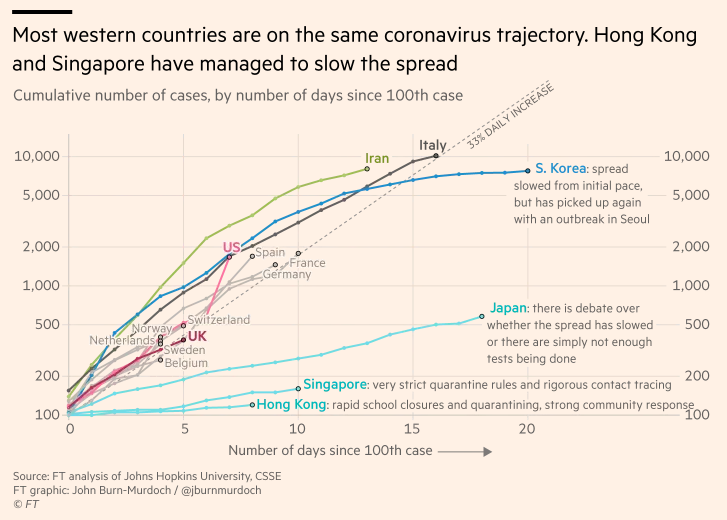
Most of us are now watching the unfolding crisis and community panic globally with a sense of déjà vu. As Hong Kong managed to quickly shift gears and control the spread of the virus without becoming another epicenter like Wuhan, Italy and Iran, what hope can the city offer to the rest of the world as it once followed the same disease trajectory?
Community Transforms Risks into Opportunities
Relative success has been accredited to early government’s interventions like rapid school closures and quarantine efforts. But most importantly, many local academics and professionals have been relentlessly advocating for a more proactive approach to leverage community resources to plug the gaps in our ailing health system, which is widely resonated by the general public.
After a hefty lesson learnt from the Severe Acute Respiratory Syndrome (SARS) epidemic in 2003, Hong Kong people have known far too well the importance of bottom-up solidarity and substituted for the much-needed resilience through swift community response. In our combat against Covid-19, the crux of Hong Kong’s turnaround is the resilience and ability for all actors in the community to work together.
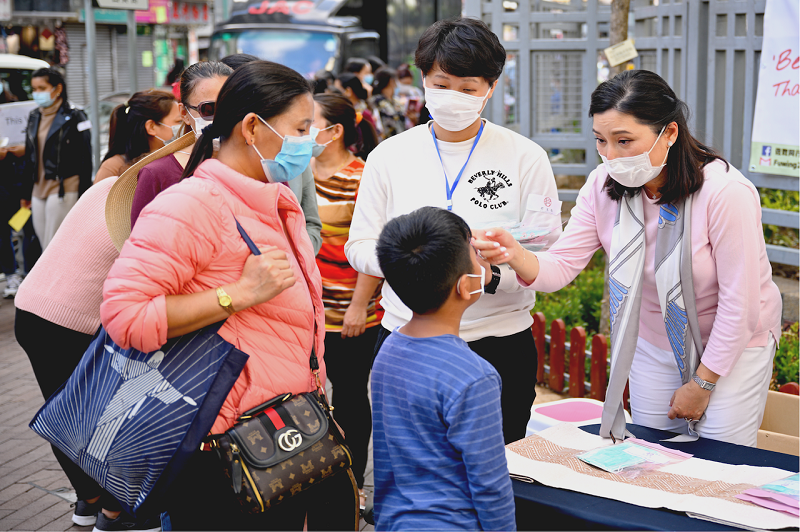
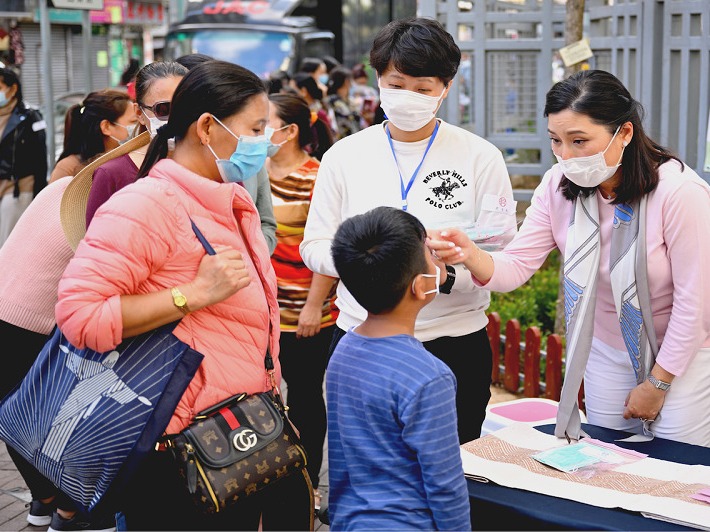
At the individual level, Hong Kong people sustain rigorous self-discipline through maintaining personal hygiene, adopting proactive self-isolation, seeking early medical advice and realising social distancing. And most profoundly, rippling impacts were observed when individuals teamed up and innovated community-centric solutions.
To name yet a few, emerging initiatives included a temporary community pharmacy programme coordinated by six non-governmental organisations (NGOs) such as the Hong Kong College of Health Service Executive and Society for Innovative Healthcare Hong Kong. The programme provides chronic patients who regularly visit Hospital Authority outpatient clinics an alternative route to seek care in private clinics for short-term medicine prescription to ensure continuity of care.
Health in Action, another NGO advocating on health equity, has also teamed up with frontline medical professionals, medical students and alumni from the University of Hong Kong to provide protective supplies and health education to low-income households and ethnic minorities.
In another example, MasHKers, a new social enterprise formed by unsung individuals has leveraged on the shopping trend of masks to help patients’ groups. Whilst quickly setting up a local production line, for every two boxes of mask sold, they donate an extra one to partner institutions such as the Hong Kong Rehabilitation Power and the Hong Kong Alzheimer’s Disease Association to strengthen support for patients with weaker immunity.
Sustainable Success Requires Long-term Efforts
As articles in the Financial Times and the international medical journal The Lancet emphasized, Hong Kong’s fight against the pandemic lies in a robust community response. In fact, personal actions are considered just as important as government measures in containing the virus. Where a health system cannot deliver, community forces can provide additional routes of care and support to shield a vulnerable system.
With the second wave of cases on a rise in Hong Kong, we hope to count on our citizens to not fall in the trap of complacency, maintain physical and mental health and continue to uplift our community. In the long run, we believe our health system should depart from a hospital-centric to community-centric model that not only meets demands of a rapidly ageing population but also guards against forthcoming public health emergencies.


Author: Queeni Li, Researcher, and Maira Qamar, Assistant Researcher in Our Hong Kong Foundation
The Hong Kong story is distinctly interesting because from the beginning, our health system has been at the brink of collapse with a dated treatment-focused care model. Couple that with decade-long calls for stronger primary care and a private sector characterized by unaffordable services, our public health sector has been notorious for its long waiting time and overstretched capacity. There is an ongoing shortage of medical professionals with ever-increasing rotation shifts, in which our frontline staff have been left with very little breathing space, especially in public hospitals. Not to mention our proximity to mainland China, the heart of the initial virus outbreak.
Hence, after the Covid-19 imported cases first made headlines in Hong Kong during the Chinese New Year holiday, our crippling health system has been bracing itself to weather an extreme test of resilience. Today, we are not alone. Since March 11th when the World Health Organisation declared Covid-19 as a pandemic, many countries mirror the position Hong Kong was in just earlier last month.
Most of us are now watching the unfolding crisis and community panic globally with a sense of déjà vu. As Hong Kong managed to quickly shift gears and control the spread of the virus without becoming another epicenter like Wuhan, Italy and Iran, what hope can the city offer to the rest of the world as it once followed the same disease trajectory?
Community Transforms Risks into Opportunities
Relative success has been accredited to early government’s interventions like rapid school closures and quarantine efforts. But most importantly, many local academics and professionals have been relentlessly advocating for a more proactive approach to leverage community resources to plug the gaps in our ailing health system, which is widely resonated by the general public.
After a hefty lesson learnt from the Severe Acute Respiratory Syndrome (SARS) epidemic in 2003, Hong Kong people have known far too well the importance of bottom-up solidarity and substituted for the much-needed resilience through swift community response. In our combat against Covid-19, the crux of Hong Kong’s turnaround is the resilience and ability for all actors in the community to work together.
At the individual level, Hong Kong people sustain rigorous self-discipline through maintaining personal hygiene, adopting proactive self-isolation, seeking early medical advice and realising social distancing. And most profoundly, rippling impacts were observed when individuals teamed up and innovated community-centric solutions.
To name yet a few, emerging initiatives included a temporary community pharmacy programme coordinated by six non-governmental organisations (NGOs) such as the Hong Kong College of Health Service Executive and Society for Innovative Healthcare Hong Kong. The programme provides chronic patients who regularly visit Hospital Authority outpatient clinics an alternative route to seek care in private clinics for short-term medicine prescription to ensure continuity of care.
Health in Action, another NGO advocating on health equity, has also teamed up with frontline medical professionals, medical students and alumni from the University of Hong Kong to provide protective supplies and health education to low-income households and ethnic minorities.
In another example, MasHKers, a new social enterprise formed by unsung individuals has leveraged on the shopping trend of masks to help patients’ groups. Whilst quickly setting up a local production line, for every two boxes of mask sold, they donate an extra one to partner institutions such as the Hong Kong Rehabilitation Power and the Hong Kong Alzheimer’s Disease Association to strengthen support for patients with weaker immunity.
Sustainable Success Requires Long-term Efforts
As articles in the Financial Times and the international medical journal The Lancet emphasized, Hong Kong’s fight against the pandemic lies in a robust community response. In fact, personal actions are considered just as important as government measures in containing the virus. Where a health system cannot deliver, community forces can provide additional routes of care and support to shield a vulnerable system.
With the second wave of cases on a rise in Hong Kong, we hope to count on our citizens to not fall in the trap of complacency, maintain physical and mental health and continue to uplift our community. In the long run, we believe our health system should depart from a hospital-centric to community-centric model that not only meets demands of a rapidly ageing population but also guards against forthcoming public health emergencies.