







Smart Transport Infrastructure Is Essential for Northern Metropolis Development




Smart Transport Infrastructure Is Essential for Northern Metropolis Development

The source text is in Chinese. This English version is for reference only. In case of any discrepancy between this English version and the Chinese version, the Chinese version shall prevail.
The development of the Northern Metropolis is gradually underway. While infrastructure undoubtedly serves as a prerequisite, more frequent cross-border transportation activities anticipated in the future introduce uncertainties to urban transport planning. Additionally, with rapid advancements in innovation and technology, the future transport system likely will transform travel habits of the citizens. Autonomous vehicles and electric vertical take-off and landing aircraft (eVTOL) will be increasingly commonplace, progressively bringing scenarios once seen only in science fiction to life. How will these innovative technologies reshape future urban design and citizens' lifestyles?
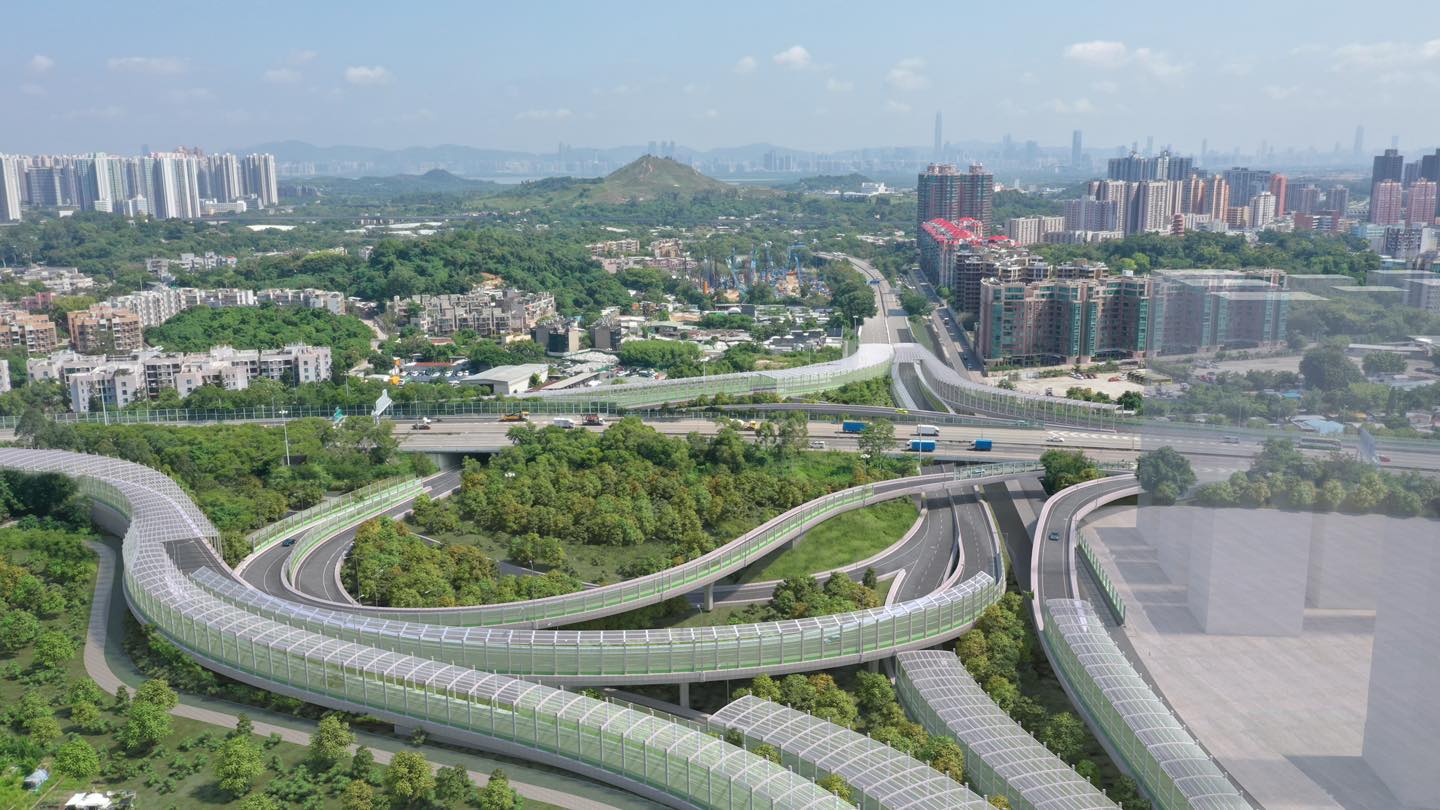
Hong Kong’s public transport system is renowned for its efficiency, with its railway network covering areas inhabited by over 70% of the population. Approximately 90% of daily journeys are made by public transport, achieving one of the highest usage rates globally. Covering an expansive area of 30,000 hectares, the railway and routes in the Northern Metropolis represents a significant investment and comprehensive coverage across all areas appears impractical. Therefore, it is crucial to formulate a strategic infrastructure plan, including a high-density development at the transport hub to secure a highly efficient public transport system for the majority of the public.
Innovative Technologies Facilitate Regional Connectivity
As the interaction between the Northern Metropolis and other cities in the Greater Bay Area (GBA) increases, the strategy of utilising the traditional public transport system to maintain a high-density development may be insufficient to address the needs of future cross-border transportation. As envisaged, the "Northbound Travel for Hong Kong Vehicles" and "Southbound Travel for Guangdong Vehicles" schemes will result in a substantial increase in cross-border vehicle traffic, thereby raising demands for road capacity, border-crossing capability, parking, charging, and fuel-filling facilities. Moreover, differences in road design standards, regulations, and driving habits between the two regions could pose significant challenges to traffic safety. Therefore, the initial stage of the "Southbound Travel for Guangdong Vehicles" scheme restricts vehicles from entering urban areas in Hong Kong. Some have suggested allowing a limited number of vehicles to enter the urban areas through lotteries or quotas as an interim measure. Nonetheless, it does not address the long-term needs for interconnectivity between the two areas. It can be observed that innovative technology measures, such as autonomous vehicles and eVTOL, are possible solutions to these issues.
Autonomous Vehicles Enhance Urban Development Flexibility
The technology of autonomous vehicles is becoming more mature, offering the potential to acquire the traffic regulations and driving habits of the Mainland and Hong Kong. The maturation of this technology likely can address most of the hidden traffic safety concerns. In addition, many regions have been trialling unmanned-driving taxis, providing passengers with "last-mile" transport services. When the taxis are not in use, they can automatically leave busy roads and require no additional parking space, and thus potentially reducing the public’s demand for private car ownership in the long run. Turning our attention to the "Southbound Travel for Guangdong Vehicles" scheme, there will be an increased demand for road capacity and parking as more of the vehicles travel to Hong Kong. Depending on the maturity of the future technology and the arrangement of traffic measures, despite the difficulty of anticipating changes in future transportation demand at this stage, it is foreseeable that following the popularisation of automated vehicles, the capacity of roads will be increased and automated vehicles will be permitted to park on the roadside, provided that they are not obstructing the flow of traffic. Over time, it may not be necessary to reserve parking facilities near departure points and destinations, paving the way for more flexibility in urban planning and design.
Early Planning for Accommodating eVTOL Operations
Regarding eVTOL aircraft, despite the current technological and regulatory immaturity, it is anticipated that eVTOL will become one of the means of transportation, similar to "air taxis" soaring through the city, and will be a promising transportation alternative to traditional railways and roads. Given the extensive area of the Northern Metropolis, there is a high demand for swift transportation shuttling across the Mainland, Hong Kong, and various development zones. Therefore, eVTOL appears particularly suitable for the future urban development of the Northern Metropolis.
In fact, most of the land in the Northern Metropolis remains undeveloped and the construction of transportation infrastructure there is costly, time-consuming, and inflexible. Nevertheless, these constraints offer distinct advantages for developing eVTOL. The Government can designate low-altitude flight routes and establish an air traffic management system in the undeveloped areas in advance, ensuring flight safety. Additionally, the rooftops of buildings in the aforementioned high-density development at the transport hub can serve as eVTOL landing platforms, facilitating seamless transfers to railways and other transportation.
The Government is currently investigating the feasibility of an "on-demand public transport mode". In the future, as buses, minibuses, and taxis become autonomous, in addition to eVTOL and the traditional railway system, the public will benefit from the mobility as a service in short-, medium-, and long-distance transport services.
The Northern Metropolis will serve as a model for the next generation of smart cities. It is essential to incorporate flexibility at the early stage of development to accommodate future innovative technologies, overcoming the constraints of urban development, and ultimately addressing the needs of the public.


The source text is in Chinese. This English version is for reference only. In case of any discrepancy between this English version and the Chinese version, the Chinese version shall prevail.
The development of the Northern Metropolis is gradually underway. While infrastructure undoubtedly serves as a prerequisite, more frequent cross-border transportation activities anticipated in the future introduce uncertainties to urban transport planning. Additionally, with rapid advancements in innovation and technology, the future transport system likely will transform travel habits of the citizens. Autonomous vehicles and electric vertical take-off and landing aircraft (eVTOL) will be increasingly commonplace, progressively bringing scenarios once seen only in science fiction to life. How will these innovative technologies reshape future urban design and citizens' lifestyles?
Hong Kong’s public transport system is renowned for its efficiency, with its railway network covering areas inhabited by over 70% of the population. Approximately 90% of daily journeys are made by public transport, achieving one of the highest usage rates globally. Covering an expansive area of 30,000 hectares, the railway and routes in the Northern Metropolis represents a significant investment and comprehensive coverage across all areas appears impractical. Therefore, it is crucial to formulate a strategic infrastructure plan, including a high-density development at the transport hub to secure a highly efficient public transport system for the majority of the public.
Innovative Technologies Facilitate Regional Connectivity
As the interaction between the Northern Metropolis and other cities in the Greater Bay Area (GBA) increases, the strategy of utilising the traditional public transport system to maintain a high-density development may be insufficient to address the needs of future cross-border transportation. As envisaged, the "Northbound Travel for Hong Kong Vehicles" and "Southbound Travel for Guangdong Vehicles" schemes will result in a substantial increase in cross-border vehicle traffic, thereby raising demands for road capacity, border-crossing capability, parking, charging, and fuel-filling facilities. Moreover, differences in road design standards, regulations, and driving habits between the two regions could pose significant challenges to traffic safety. Therefore, the initial stage of the "Southbound Travel for Guangdong Vehicles" scheme restricts vehicles from entering urban areas in Hong Kong. Some have suggested allowing a limited number of vehicles to enter the urban areas through lotteries or quotas as an interim measure. Nonetheless, it does not address the long-term needs for interconnectivity between the two areas. It can be observed that innovative technology measures, such as autonomous vehicles and eVTOL, are possible solutions to these issues.
Autonomous Vehicles Enhance Urban Development Flexibility
The technology of autonomous vehicles is becoming more mature, offering the potential to acquire the traffic regulations and driving habits of the Mainland and Hong Kong. The maturation of this technology likely can address most of the hidden traffic safety concerns. In addition, many regions have been trialling unmanned-driving taxis, providing passengers with "last-mile" transport services. When the taxis are not in use, they can automatically leave busy roads and require no additional parking space, and thus potentially reducing the public’s demand for private car ownership in the long run. Turning our attention to the "Southbound Travel for Guangdong Vehicles" scheme, there will be an increased demand for road capacity and parking as more of the vehicles travel to Hong Kong. Depending on the maturity of the future technology and the arrangement of traffic measures, despite the difficulty of anticipating changes in future transportation demand at this stage, it is foreseeable that following the popularisation of automated vehicles, the capacity of roads will be increased and automated vehicles will be permitted to park on the roadside, provided that they are not obstructing the flow of traffic. Over time, it may not be necessary to reserve parking facilities near departure points and destinations, paving the way for more flexibility in urban planning and design.
Early Planning for Accommodating eVTOL Operations
Regarding eVTOL aircraft, despite the current technological and regulatory immaturity, it is anticipated that eVTOL will become one of the means of transportation, similar to "air taxis" soaring through the city, and will be a promising transportation alternative to traditional railways and roads. Given the extensive area of the Northern Metropolis, there is a high demand for swift transportation shuttling across the Mainland, Hong Kong, and various development zones. Therefore, eVTOL appears particularly suitable for the future urban development of the Northern Metropolis.
In fact, most of the land in the Northern Metropolis remains undeveloped and the construction of transportation infrastructure there is costly, time-consuming, and inflexible. Nevertheless, these constraints offer distinct advantages for developing eVTOL. The Government can designate low-altitude flight routes and establish an air traffic management system in the undeveloped areas in advance, ensuring flight safety. Additionally, the rooftops of buildings in the aforementioned high-density development at the transport hub can serve as eVTOL landing platforms, facilitating seamless transfers to railways and other transportation.
The Government is currently investigating the feasibility of an "on-demand public transport mode". In the future, as buses, minibuses, and taxis become autonomous, in addition to eVTOL and the traditional railway system, the public will benefit from the mobility as a service in short-, medium-, and long-distance transport services.
The Northern Metropolis will serve as a model for the next generation of smart cities. It is essential to incorporate flexibility at the early stage of development to accommodate future innovative technologies, overcoming the constraints of urban development, and ultimately addressing the needs of the public.