






Hong Kong’s Trade Sector Must Stay Alert: Three-pronged Strategy to New Opportunities




Hong Kong’s Trade Sector Must Stay Alert: Three-pronged Strategy to New Opportunities

The source text is in Chinese. This English version is for reference only. In case of any discrepancy between this English version and the Chinese version, the Chinese version shall prevail.
After the "reciprocal tariff" policy proposed by US President Donald Trump, the international political and economic situation has become highly volatile, resulting in unpredictable future developments in the trade war.
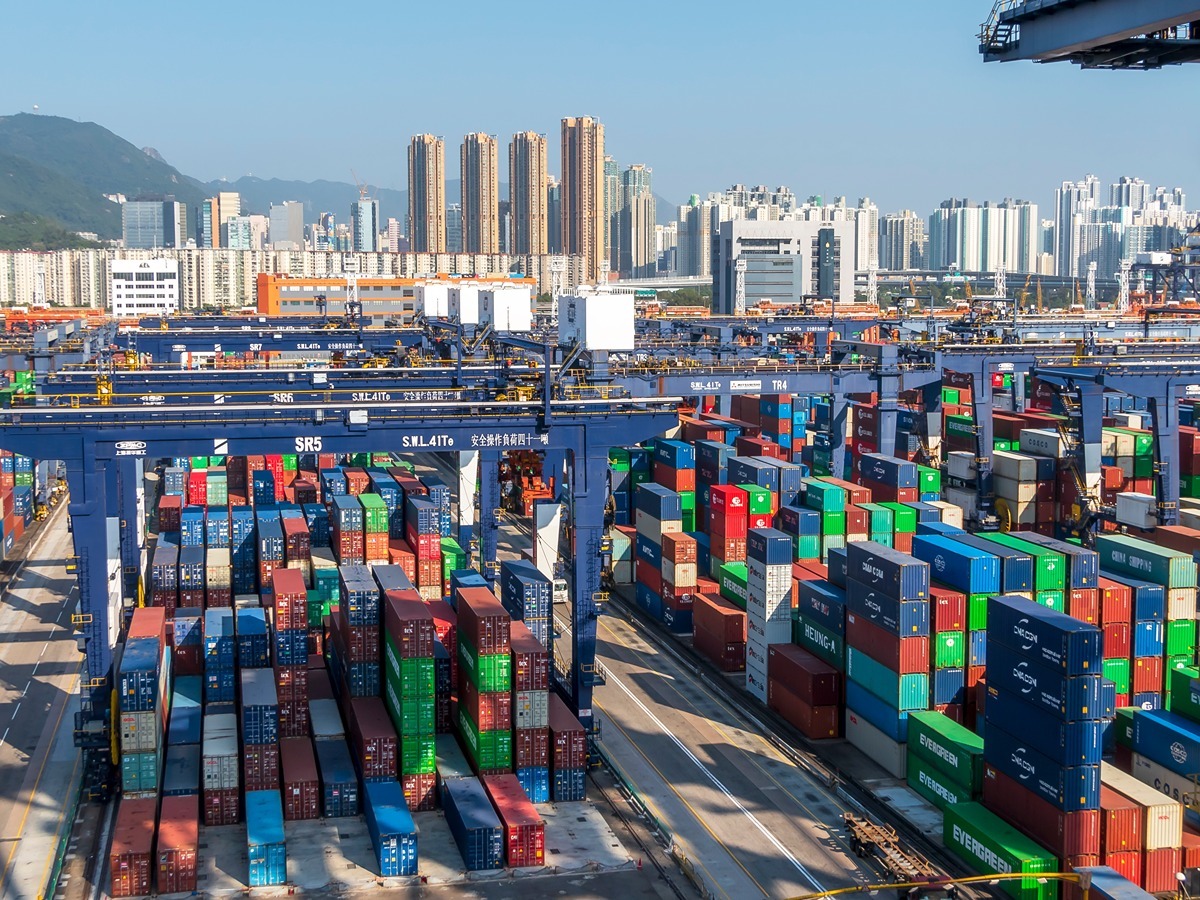
The current upheaval has disrupted China's export economy. At present, China's exports to the US account for approximately 15% of its total exports. As of recently, the US has imposed an average tariff of 145% on goods imported from China, with some categories facing cumulative tariffs as high as 245%, contrary to the logic of conventional commercial negotiation. Worse still, tariff exemptions for small parcels have also been cancelled.
Prompt Remediation of the Harm Posed by Tariffs Is Needed
With a shared future, Hong Kong and the motherland are facing equally severe situation. "Trading and logistics," as one of Hong Kong's four pillar industries, accounts for 19% of GDP and 16% of local employment. Hong Kong must accurately address the impact of US tariffs on various industries and promptly formulate remediation.
Hong Kong’s trade has long relied on national development. Since the 1980s, the Mainland had replaced the US as Hong Kong’s largest export market. In fact, Hong Kong’s exports to the US as a proportion of its total exports have been decreasing year-on-year, from 20% to 30% to less than 10% lately. Although the US remains Hong Kong’s second-largest export market, it pales in comparison to the Mainland’s nearly 60%. Notably, re-exports account for nearly 99% of Hong Kong’s total exports, with minimal local product exports. For instance, Hong Kong’s major export categories to the US, including telecommunications equipment, computers, jewellery, semiconductors, and electronic tubes, are largely re-exported goods rather than direct exports of Hong Kong-manufactured products.
Therefore, simply by examining recent data on Hong Kong’s export to the US, local exports marginally constituted 0.1% of the total, accounted for 6.5% in total including re-exports. Seemingly, despite the impact of US tariffs on Hong Kong’s external trade, the overall impact might be insignificant.
However, the figure above is not the full picture of the impact. According to the "reciprocal tariff" list released by the US on 2 April, countries severely affected by tariffs exceeding 30% included Cambodia (49%), Laos (48%), Vietnam (46%), Myanmar (44%), Thailand (36%), and Indonesia (32%). Among the 10 ASEAN member states, 6 have become regional market affected by the tariffs, indicating a more significant impact on ASEAN than China prior to the U.S. announcement of a suspension.
Huge Impact on Hong Kong’s Re-export Trade as ASEAN Suffered
ASEAN countries have always been Hong Kong’s most important trading partners, with Vietnam and Thailand being Hong Kong’s third and seventh largest export markets last year, respectively. Taking all the 10 ASEAN member states as a whole, it has overtaken the US to become Hong Kong’s second largest export market, accounting for 8.5% of total exports.
Currently, nearly 60% of Hong Kong’s exports to ASEAN comprise semiconductors, electronic tubes, telecommunications equipment, computers, and engine-related components and apparatuses. These major exports to ASEAN cover a wide range of items that are re-exported by Hong Kong from the Mainland. This demonstrates that Hong Kong is a transit hub for raw materials, components, semi-finished products, and finished products across production stages between the Mainland and ASEAN.
During his first term of office between 2017 and 2020, Trump frequently implemented tariff increases, caused many Chinese enterprises to relocate their production lines to neighbouring ASEAN countries to circumvent US tariffs, which at that time were only targeting China. However, the latest US tariff measures are clearly targeting ASEAN exports. Furthermore, the tightening of controls on "origin-washing" have rendered the previous strategy of moving their production lines elsewhere ineffective, significantly impacting re-export trade between Hong Kong and ASEAN.
Even if the 90-day suspension ends and the US "reciprocal tariffs" take a drastic turn again, either lowing the impact or becoming less stringent, the huge underlying threat and the attack on free trade will persist. Hong Kong's export and its overall external trade strategies must therefore evolve, and Chinese enterprises must develop an upgraded "Go-global Strategy 2.0".
Although ASEAN is in the crosshairs of US tariffs, it is not necessary for Hong Kong to refrain from strengthen the long-standing trade collaboration with ASEAN. The city should enhance its strategic approaches by proactively leveraging its internationalism, flexibility, and experience in business management and professional services to facilitate the expansion or the future expansion of Chinese manufacturing enterprises to ASEAN, thereby reducing reliance on imported semi-finished products for re-export processing and ultimately eliminating the accusation of "origin-laundering". Moreover, not only is ASEAN a production and processing base for export to Europe and the US, but it is also an emerging consumer market with a population exceeding 670 million and a rapidly expanding middle class, making it the first stop for many Mainland and Hong Kong enterprises to explore opportunities in the “blue ocean market” along the Belt and Road Countries and regions.
Risk Diversification via Unaffected Middle East and Latin America Markets
In addition, with a careful of the "reciprocal tariff" list, it is obvious that countries in the Middle East’s Gulf Cooperation Council, most Latin American countries, and several major Central Asian and African nations remain unaffected by the US tariffs. These markets, while more distant, are the participants of the Belt and Road Initiative. Therefore, accelerating exploration of these markets, including manufacturing, branding, and business expansion services, will diversify risks posed by exports to the US and re-exports to ASEAN, so that a new global trade order will be established.
Furthermore, Hong Kong enterprises possess distinct strengths in professional services, such as finance, legal affairs, tax compliance, testing and certification, and intellectual property protection, and many of the enterprises have established production networks across the Guangdong-Hong Kong-Macao Greater Bay Area, ASEAN, and South Asia; whereas Mainland enterprises are renowned for their holistic industrial manufacturing capacity and they have achieved great success in brand management and cross-border e-commerce in recent years. If Hong Kong effectively capitalised on its advantages and strengthen collaboration and complementarity with Mainland enterprises to go global, it will be well-positioned to withstand any future trade restrictions.


The source text is in Chinese. This English version is for reference only. In case of any discrepancy between this English version and the Chinese version, the Chinese version shall prevail.
After the "reciprocal tariff" policy proposed by US President Donald Trump, the international political and economic situation has become highly volatile, resulting in unpredictable future developments in the trade war.
The current upheaval has disrupted China's export economy. At present, China's exports to the US account for approximately 15% of its total exports. As of recently, the US has imposed an average tariff of 145% on goods imported from China, with some categories facing cumulative tariffs as high as 245%, contrary to the logic of conventional commercial negotiation. Worse still, tariff exemptions for small parcels have also been cancelled.
Prompt Remediation of the Harm Posed by Tariffs Is Needed
With a shared future, Hong Kong and the motherland are facing equally severe situation. "Trading and logistics," as one of Hong Kong's four pillar industries, accounts for 19% of GDP and 16% of local employment. Hong Kong must accurately address the impact of US tariffs on various industries and promptly formulate remediation.
Hong Kong’s trade has long relied on national development. Since the 1980s, the Mainland had replaced the US as Hong Kong’s largest export market. In fact, Hong Kong’s exports to the US as a proportion of its total exports have been decreasing year-on-year, from 20% to 30% to less than 10% lately. Although the US remains Hong Kong’s second-largest export market, it pales in comparison to the Mainland’s nearly 60%. Notably, re-exports account for nearly 99% of Hong Kong’s total exports, with minimal local product exports. For instance, Hong Kong’s major export categories to the US, including telecommunications equipment, computers, jewellery, semiconductors, and electronic tubes, are largely re-exported goods rather than direct exports of Hong Kong-manufactured products.
Therefore, simply by examining recent data on Hong Kong’s export to the US, local exports marginally constituted 0.1% of the total, accounted for 6.5% in total including re-exports. Seemingly, despite the impact of US tariffs on Hong Kong’s external trade, the overall impact might be insignificant.
However, the figure above is not the full picture of the impact. According to the "reciprocal tariff" list released by the US on 2 April, countries severely affected by tariffs exceeding 30% included Cambodia (49%), Laos (48%), Vietnam (46%), Myanmar (44%), Thailand (36%), and Indonesia (32%). Among the 10 ASEAN member states, 6 have become regional market affected by the tariffs, indicating a more significant impact on ASEAN than China prior to the U.S. announcement of a suspension.
Huge Impact on Hong Kong’s Re-export Trade as ASEAN Suffered
ASEAN countries have always been Hong Kong’s most important trading partners, with Vietnam and Thailand being Hong Kong’s third and seventh largest export markets last year, respectively. Taking all the 10 ASEAN member states as a whole, it has overtaken the US to become Hong Kong’s second largest export market, accounting for 8.5% of total exports.
Currently, nearly 60% of Hong Kong’s exports to ASEAN comprise semiconductors, electronic tubes, telecommunications equipment, computers, and engine-related components and apparatuses. These major exports to ASEAN cover a wide range of items that are re-exported by Hong Kong from the Mainland. This demonstrates that Hong Kong is a transit hub for raw materials, components, semi-finished products, and finished products across production stages between the Mainland and ASEAN.
During his first term of office between 2017 and 2020, Trump frequently implemented tariff increases, caused many Chinese enterprises to relocate their production lines to neighbouring ASEAN countries to circumvent US tariffs, which at that time were only targeting China. However, the latest US tariff measures are clearly targeting ASEAN exports. Furthermore, the tightening of controls on "origin-washing" have rendered the previous strategy of moving their production lines elsewhere ineffective, significantly impacting re-export trade between Hong Kong and ASEAN.
Even if the 90-day suspension ends and the US "reciprocal tariffs" take a drastic turn again, either lowing the impact or becoming less stringent, the huge underlying threat and the attack on free trade will persist. Hong Kong's export and its overall external trade strategies must therefore evolve, and Chinese enterprises must develop an upgraded "Go-global Strategy 2.0".
Although ASEAN is in the crosshairs of US tariffs, it is not necessary for Hong Kong to refrain from strengthen the long-standing trade collaboration with ASEAN. The city should enhance its strategic approaches by proactively leveraging its internationalism, flexibility, and experience in business management and professional services to facilitate the expansion or the future expansion of Chinese manufacturing enterprises to ASEAN, thereby reducing reliance on imported semi-finished products for re-export processing and ultimately eliminating the accusation of "origin-laundering". Moreover, not only is ASEAN a production and processing base for export to Europe and the US, but it is also an emerging consumer market with a population exceeding 670 million and a rapidly expanding middle class, making it the first stop for many Mainland and Hong Kong enterprises to explore opportunities in the “blue ocean market” along the Belt and Road Countries and regions.
Risk Diversification via Unaffected Middle East and Latin America Markets
In addition, with a careful of the "reciprocal tariff" list, it is obvious that countries in the Middle East’s Gulf Cooperation Council, most Latin American countries, and several major Central Asian and African nations remain unaffected by the US tariffs. These markets, while more distant, are the participants of the Belt and Road Initiative. Therefore, accelerating exploration of these markets, including manufacturing, branding, and business expansion services, will diversify risks posed by exports to the US and re-exports to ASEAN, so that a new global trade order will be established.
Furthermore, Hong Kong enterprises possess distinct strengths in professional services, such as finance, legal affairs, tax compliance, testing and certification, and intellectual property protection, and many of the enterprises have established production networks across the Guangdong-Hong Kong-Macao Greater Bay Area, ASEAN, and South Asia; whereas Mainland enterprises are renowned for their holistic industrial manufacturing capacity and they have achieved great success in brand management and cross-border e-commerce in recent years. If Hong Kong effectively capitalised on its advantages and strengthen collaboration and complementarity with Mainland enterprises to go global, it will be well-positioned to withstand any future trade restrictions.