
imgimg
imgimg
img
img
imgimg
Home
Public Policy Institute
About Public Policy Institute
Research Areas
img
Featured Work
Latest News
Publications Archive
img
Event Highlights
img
Academy of Chinese Studies
Hong Kong Chronicles Institute
Media Centre
About Us
About Our Hong Kong Foundation
img
Benefactors
img
Our Governance
Our Hong Kong Foundation
img
Academy of Chinese Studies
img
Hong Kong Chronicles Institute
img
Advisory Members
img
The Management
Legal and Audit
Annual Reports
Careers
Contact Us
Donate Now
imgimgimgimgimgimgimg
Banner
PRESS RELEASES

Presented by OHKF, GIG, and Macao Foundation: Global Bay Area Economic Forum 2025 - Creating New Economic Momentum


4 Nov 2025 (Tue)

(03 November 2025, Hong Kong) The Global Bay Area Economic Forum 2025 hosted by Our Hong Kong Foundation (OHKF), The Guangzhou Institute of the Greater Bay Area (GIG), and Macao Foundation, draws on advanced experiences and practices from the economic development of major bay areas worldwide. It fully seizes opportunities in Bay Area economic growth, establishes a global dialogue platform for bay areas, leverages their unique advantages, better promotes the construction of the Guangdong-Hong Kong-Macao Greater Bay Area (GBA), and echos with the national “15th Five-Year Plan.” The forum brings together distinguished guests, with global industry experts and representatives gathering to jointly explore new pathways for high-quality development of Bay Area economies.

The recently released “15th Five-Year Plan” emphasises core directions such as high-quality development, innovation-driven growth, and regional coordination. The forum focuses on AI-driven industrial upgrading and biopharmaceutical innovation, exploring how the GBA can foster new quality productive forces, build an international sci-tech innovation hub, promote pharmaceutical industry chains, and deeply integrate with global value chains.

The forum is honoured to invite the following to deliver opening remarks:

Mr Wong Wai-lun, Deputy Financial Secretary of the Government of the HKSAR; Mr Deng Haiguang, Vice Chairman of the Guangdong Provincial Committee of the Chinese People's Political Consultative Conference; Dr Bernard Chan, Under Secretary for Commerce and Economic Development of the Government of the HKSAR; Mr Wu Zhiliang, Deputy Director of the Committee on Culture, Historical Data and Studies of the CPPCC National Committee,  and President of the Board of Directors of the Macao Foundation; Mr Bernard Charnwut Chan, Chairman of Our Hong Kong Foundation.

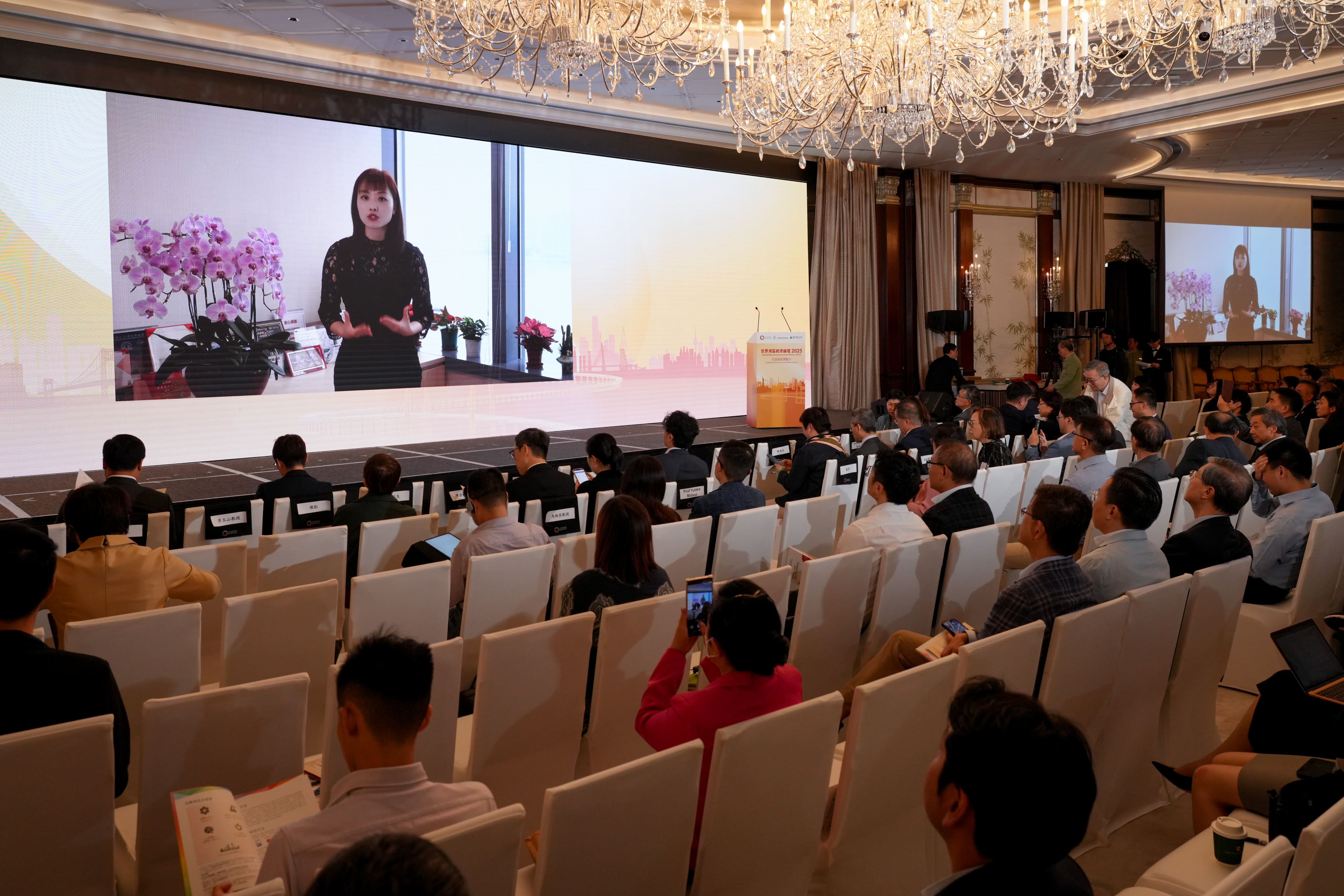
In his video address, Mr Wong Wai-lun, Deputy Financial Secretary of the Government of the HKSAR, stated: “The theme ‘Creating New Economic Momentum’ is both timely and forward-looking, particularly, at the moment, as our country embarks on implementing the 15th Five-Year Plan. The Plan identifies the Guangdong–Hong Kong–Macao Greater Bay Area as one of the engines of high-quality development, and highlights Hong Kong’s role in linking the Chinese Mainland with global markets. We are fostering cooperation in frontier sectors such as artificial intelligence, biomanufacturing, and other key innovative technology industries that identified in our nation’s new development blueprint through initiatives like Hong Kong-Shenzhen Innovation and Technology Park and Northern Metropolis.”

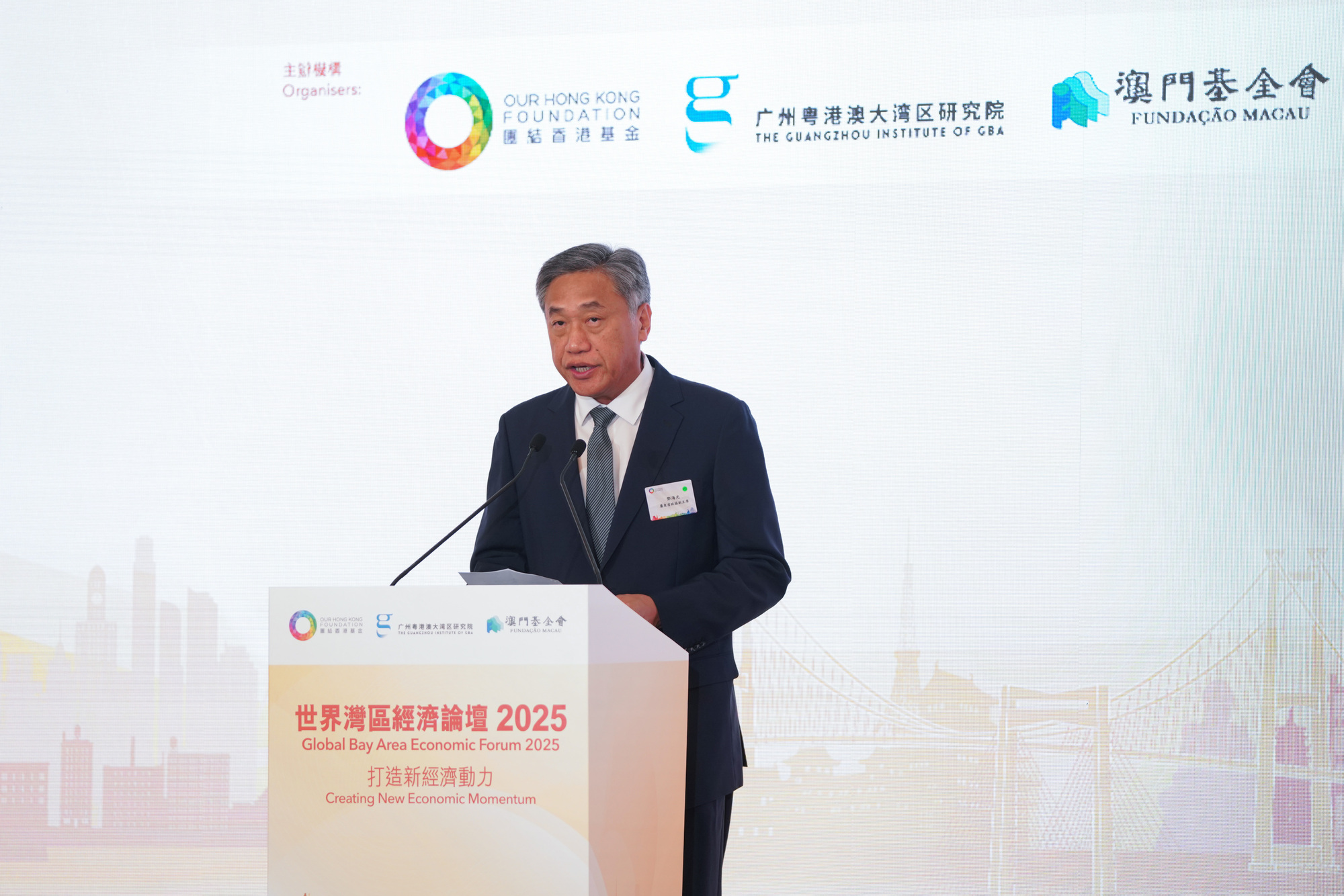
Mr Deng Haiguang, Vice Chairman of the Guangdong Provincial Committee of the Chinese People's Political Consultative Conference, stated: “The Guangdong-Hong Kong-Macao Greater Bay Area (GBA) is now standing prominently among the world's major bay areas with a new posture. Over the past six years, the industrial system of the GBA is continuously advancing. Guangdong has established nine trillion-yuan-level industrial clusters, including new-generation electronic information, green petrochemicals, and new energy. Emerging and future industries such as artificial intelligence, low-altitude economy, and biomanufacturing are flourishing, complementing the well-developed modern service industries in Hong Kong and Macao, such as finance, trade, and legal services.”

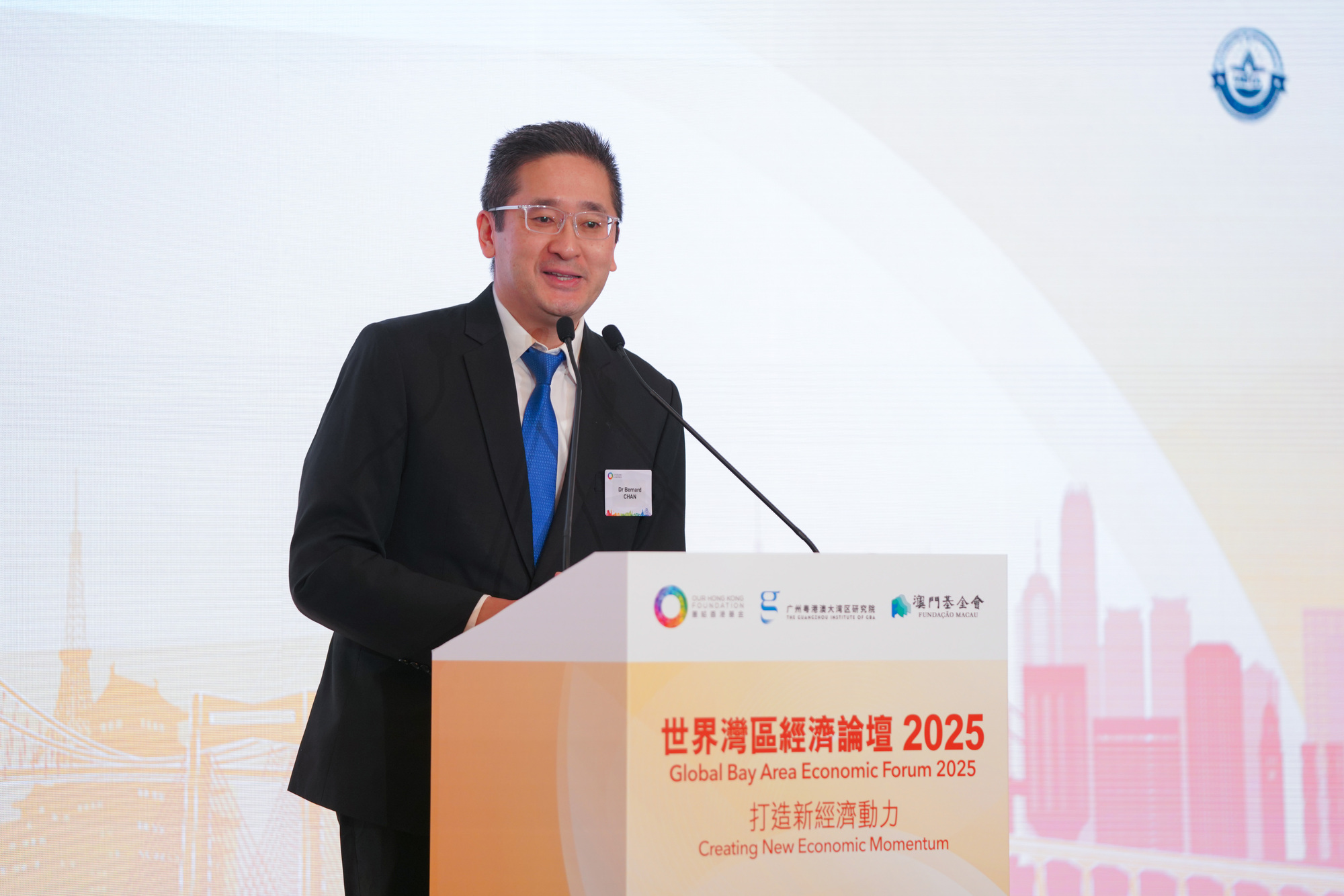
In his remarks, Dr Bernard Chan, Under Secretary for Commerce and Economic Development of the Government of the HKSAR, stated: “Hong Kong’s unique combination of the rule of law, a free flow of capital, a transparent and efficient government, and a low, simple, and competitive tax system make it an ideal gateway for international business and investment.”

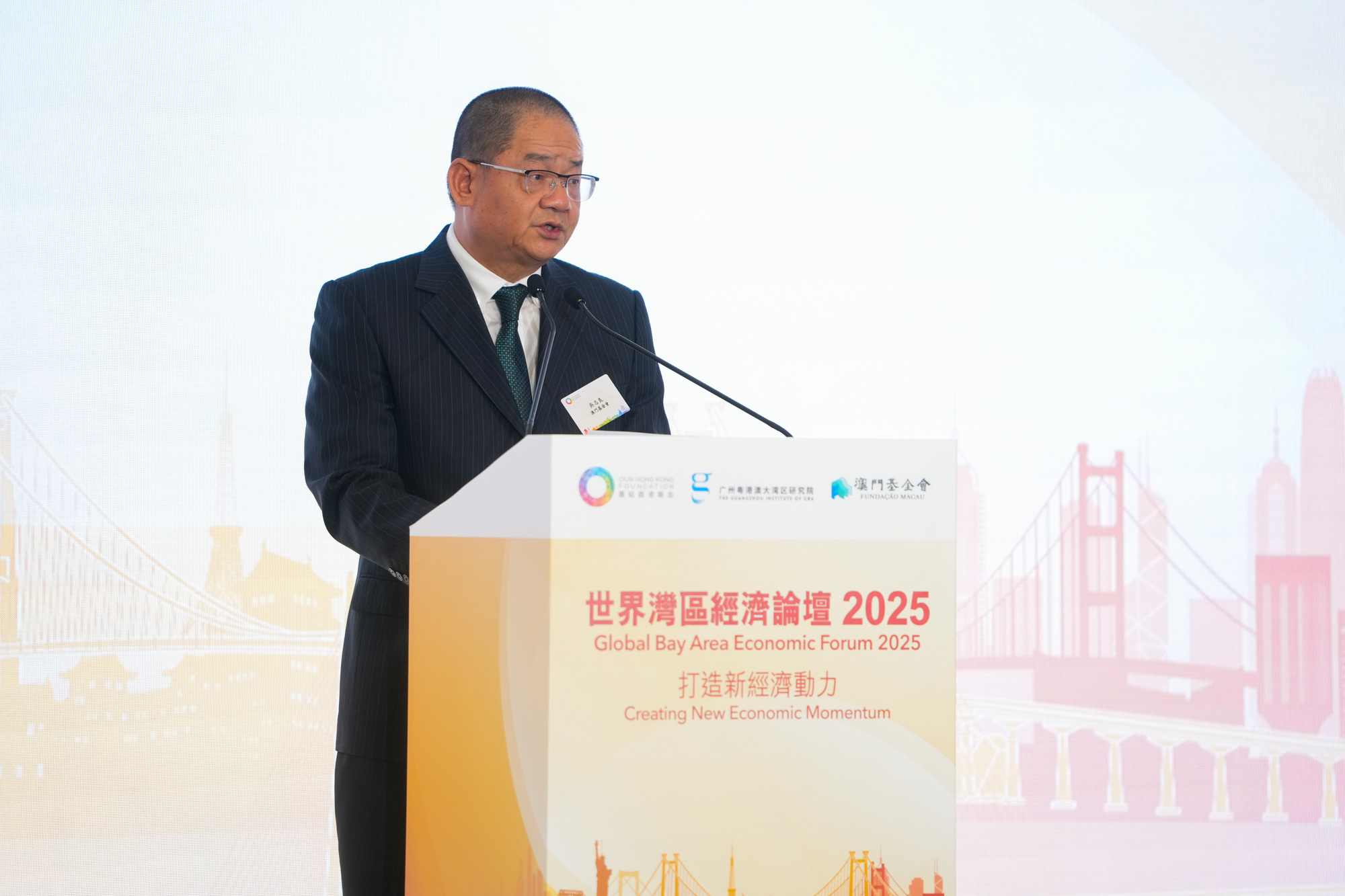
Mr Wu Zhiliang, Deputy Director of the Committee on Culture, Historical Data and Studies of the CPPCC National Committee, President of the Board of Directors of the Macao Foundation, pointed out: “Macao plays a long-standing role as a bridge for economic and trade exchanges between China and Portuguese-speaking countries by actively developing a digital platform to deepen their collaboration in trade, finance, science and technology innovation, youth entrepreneurship, etc.”

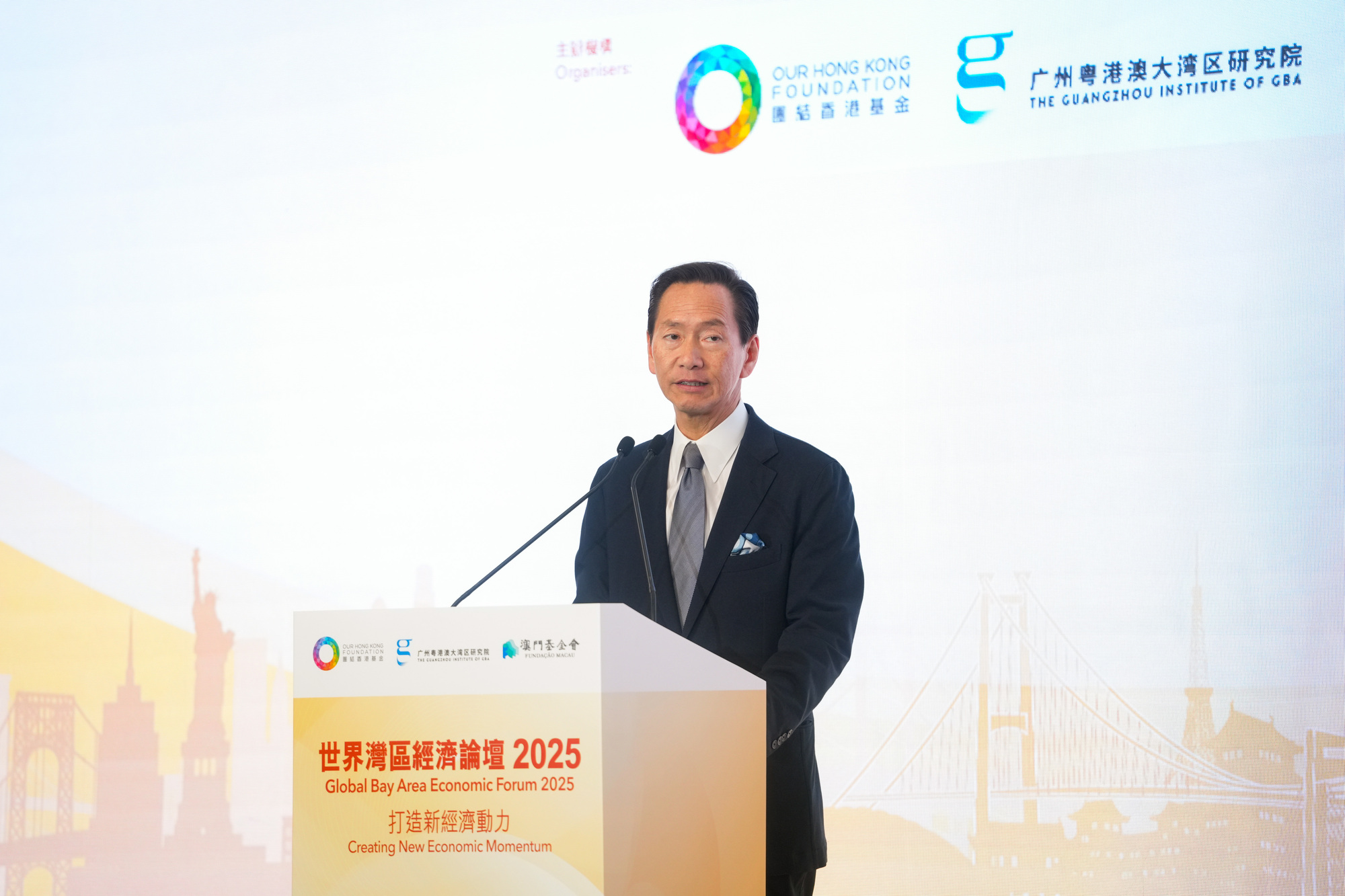
Mr Bernard Charnwut Chan, Chairman of Our Hong Kong Foundation, stated: “Across the world, Bay Area economies have emerged as powerful engines of progress. From the San Francisco Bay Area to the New York Bay Area, from the Tokyo Metropolitan Bay Area to our own Guangdong–Hong Kong–Macao Greater Bay Area, these regions demonstrate how openness, imagination, and collaboration can drive growth and inspire global transformation. Our history as an open economy gives us the flexibility to adapt, while our foundation of One Country, Two Systems ensures the stability that global investors rely upon. These unique advantages allow Hong Kong to contribute meaningfully not only to the development of the GBA, but also to the prosperity of the global community.”

Professor Jeffrey Sachs, Professor of Columbia University, stated: “The Greater Bay Area will be the beating heart of the energy transformation, the ecological transformation that the world urgently needs for the next 25 years. What Hong Kong can do is save the world through finance, global linkages, and science and technology, which are specialties here.”

The forum is divided into two parts: keynote speeches and discussion sessions (see appendix for details), among which the discussion sessions consist of two parts: Biopharmaceutical and Artificial Intelligence.

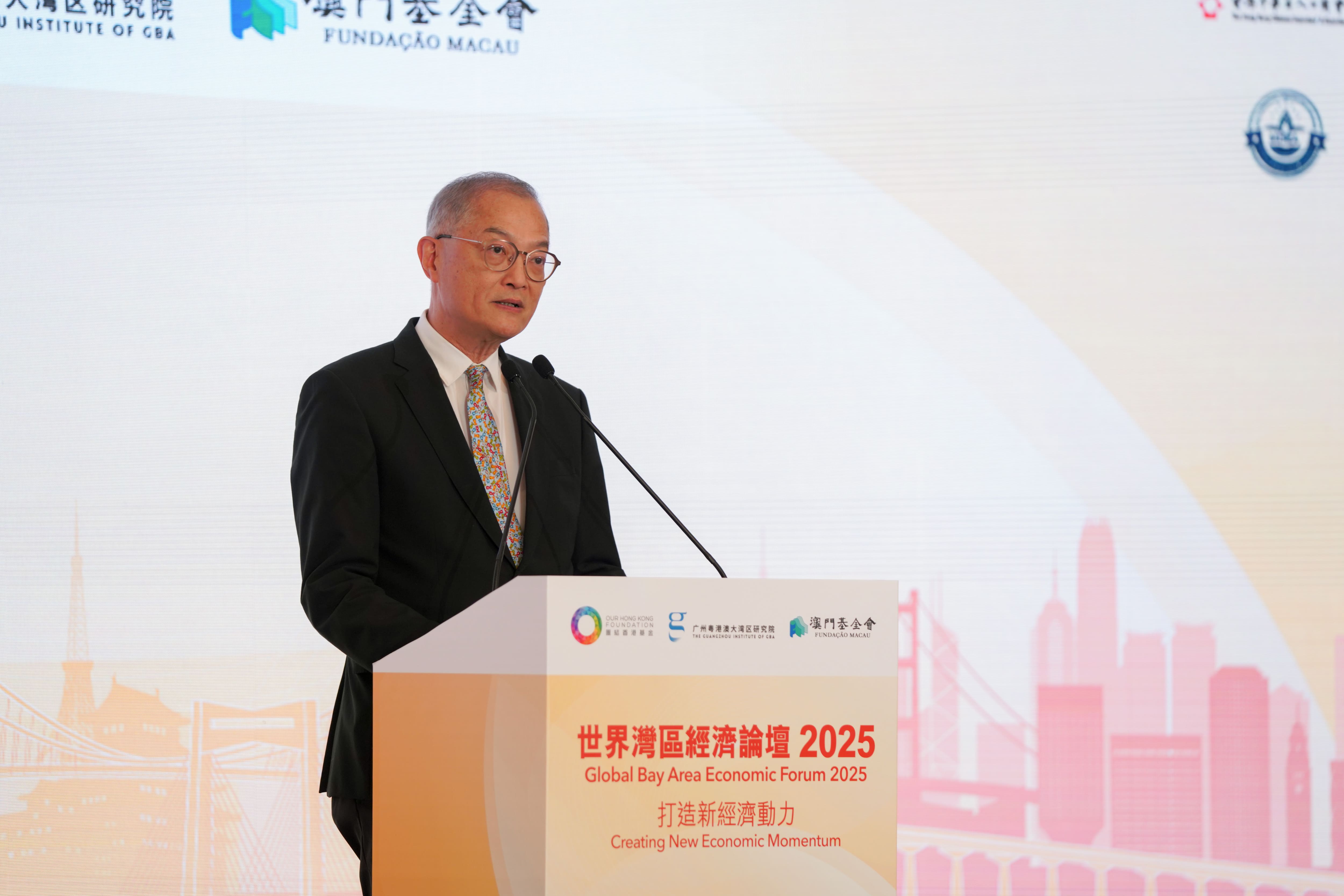
Professor Lo Chung-mau, Secretary for Health of the Government of the HKSAR, stated: “The biomedical innovation landscape is rapidly evolving, and so are we. Over the past two years, we have systematically transformed vision into infrastructure, infrastructure into capability, and capability into tangible results.  Under the new ‘1+’ drug approval mechanism, 15 new drugs approved, over 70 clinical trials in the pipeline, and a regulatory body ready to serve the region and the world. But our ambition extends beyond our shores. We envision Hong Kong as the nexus where Eastern and Western medical innovation converge”

Ms Cheong Man-lei, Under Secretary for Innovation, Technology and Industry of the Government of the HKSAR, stated: “Hong Kong will continue to fully integrate into the national development, give play to its unique advantages and potential to contribute to the nation, and strive to promote AI-driven scientific research, innovation, industrial upgrading, and cross-sector collaboration.”

The forum has received strong support from the government, industry, and major chambers of commerce, including “Principal Sponsor” The Hong Kong Jockey Club; “Gold Sponsor” Nissin Foods Company Limited; and “Luncheon Sponsor” EY.

-
To Watch:
English: https://bit.ly/4otm4lS
Cantonese: https://bit.ly/4oEnvxX
Putonghua: https://bit.ly/4oTkLwg
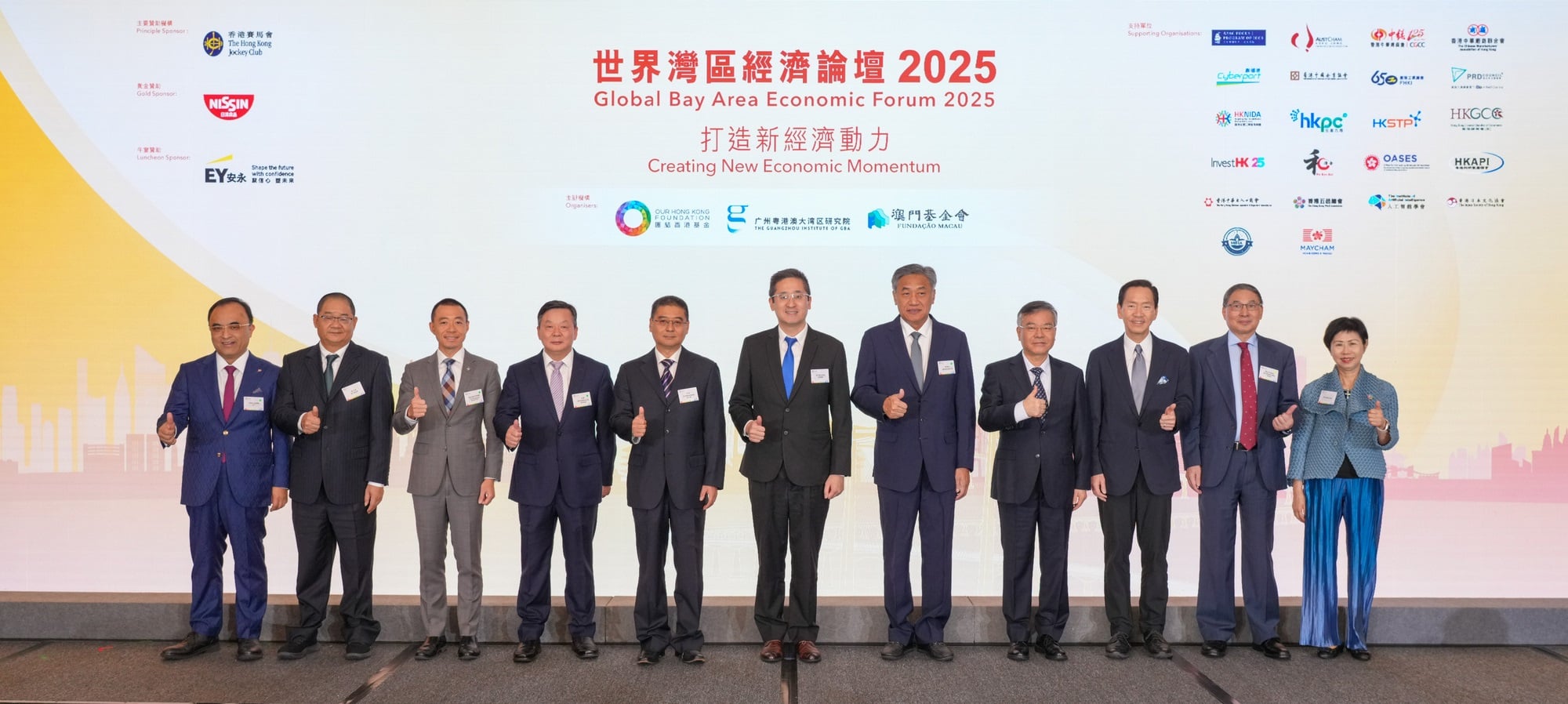
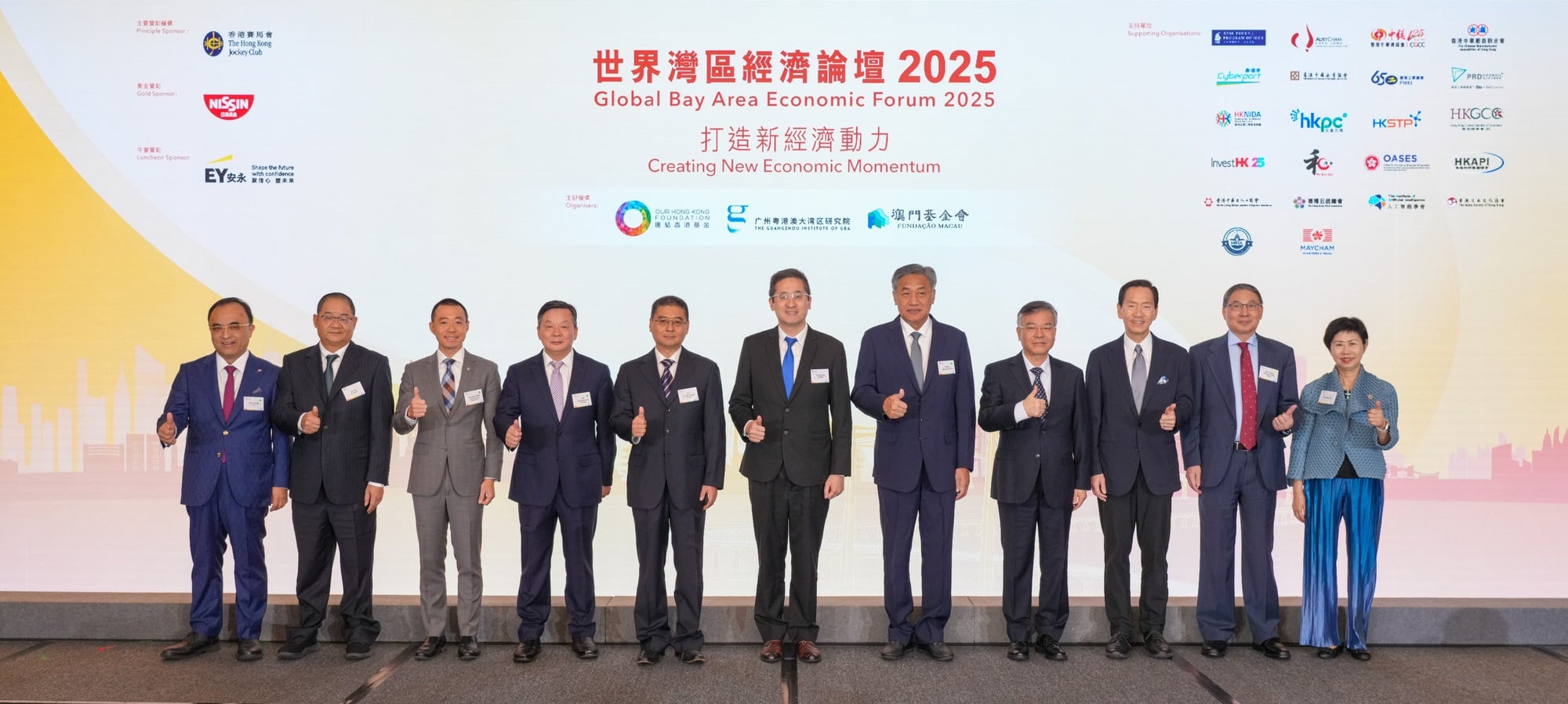
From left: Mr Jack Chan, EY China Chairman; EY Greater China Regional Managing Partner; Mr Wu Zhiliang, Deputy Director of the Committee on Culture, Historical Data and Studies of the CPPCC National Committee,  President of the Board of Directors of the Macao Foundation; Mr Ronald Chan, Head of Mainland Affairs of The Hong Kong Jockey Club; Mr Zhu Wei, Deputy Director of the Guangdong Provincial Development and Reform Commission; Mr Hua You, Deputy Commissioner of Office of the Commissioner of the Ministry of Foreign Affairs of the People's Republic of China in Hong Kong SAR; Dr Bernard Chan, Under Secretary for Commerce and Economic Development of the Government of the HKSAR; Mr Deng Haiguang, Vice Chairman of the Guangdong Provincial Committee of the Chinese People's Political Consultative Conference; Mr Lei Bo, General Director of the South China Sea Office of Ministry of Natural Resources; Mr Bernard Charnwut Chan, Chairman of Our Hong Kong Foundation; Dr Zheng Yongnian, Dean of School of Public Policy of The Chinese University of Hong Kong, Shenzhen; Director of The Institute for International Affairs, Qianhai; Board Director of Guangzhou Institute of the Greater Bay Area; Dr Jane Lee, President of Our Hong Kong Foundation. 
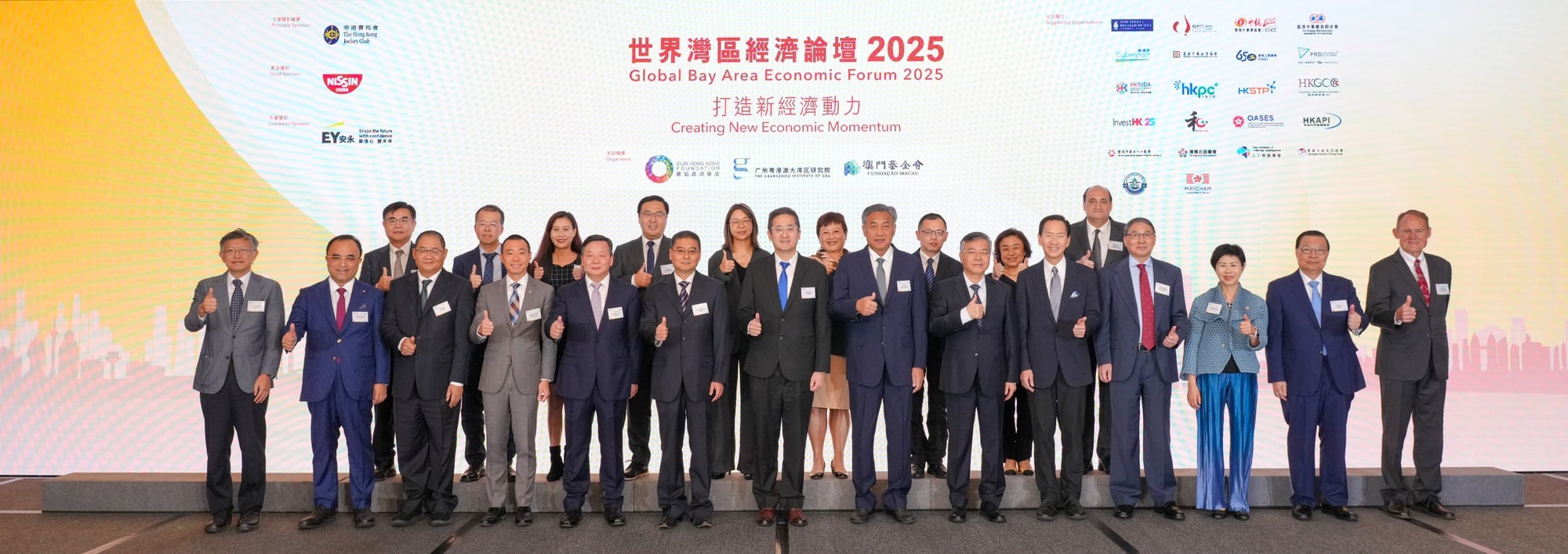
From back row, left: Professor Geng Xiao, Professor and Associate Dean of School of Public Policy of Chinese University of Hong Kong, Shenzhen; Chairman of Hong Kong Institution for International Finance; Dr Lin Kai, Chief Scientific Officer of Sunshine Lake Pharma (HEC Pharm); Ms Jenny Zheng, Senior Vice President and General Manager of Greater China of Illumina; Mr Qiu Mingda, Senior Analyst of China & Northeast Asia of Eurasia Group; Ms Shan Wu, President of HKAPI, General Manager of AstraZeneca Hong Kong; Ms Kang Wei, Former Managing Director of RDPAC; Mr Wu Sa, Director-General of Guangzhou Municipal Development and Reform Commission and Director of the Guangzhou Leading Group Office for Building Guangdong-Hong Kong-Macao Greater Bay Area; Ms Simone Song, Founder and Senior Partner of ORI Capital; Mr Marwan Fathallah, President & Chief Executive Officer of Drug Information Association.

From front row, left: Professor Yutaka Matsuo, Professor of the University of Tokyo; Mr Jack Chan, Chairman of EY China; Mr Wu Zhiliang, Deputy Director of the Committee on Culture, Historical Data and Studies of the CPPCC National Committee,  President of the Board of Directors of the Macao Foundation; Mr Ronald Chan, the Head of Mainland Affairs of The Hong Kong Jockey Club; Mr Zhu Wei, Deputy Director of the Guangdong Provincial Development and Reform Commission; Mr Hua You, Deputy Commissioner of Office of the Commissioner of the Ministry of Foreign Affairs of the People's Republic of China in Hong Kong SAR; Dr Bernard Chan, Under Secretary for Commerce and Economic Development of the Government of the HKSAR; Mr Deng Haiguang, Vice Chairman of the Guangdong Provincial Committee of the Chinese People's Political Consultative Conference; Mr Lei Bo, General Director of the South China Sea Office of Ministry of Natural Resources; Mr Bernard Charnwut Chan, Chairman of Our Hong Kong Foundation; Dr Zheng Yongnian, Dean of School of Public Policy of The Chinese University of Hong Kong, Shenzhen; Director, The Institute for International Affairs, Qianhai; Board Director of Guangzhou Institute of the Greater Bay Area; Dr Jane Lee, President of Our Hong Kong Foundation; Mr Tam Yiu chung, former Member of National People's Congress; Mr Sean Randolph, Former President and CEO of the Bay Area Council, Senior Director of the Bay Area Council Economic Institute.  
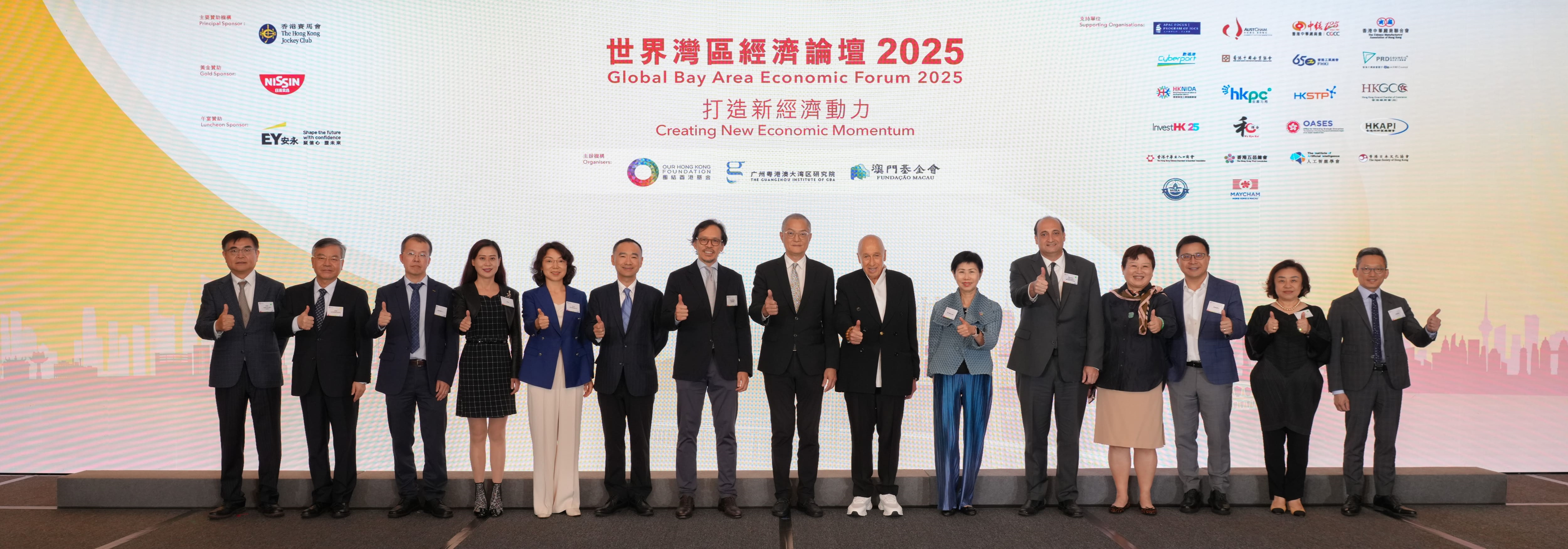
From left: Professor Geng Xiao, Professor and Associate Dean of School of Public Policy of Chinese University of Hong Kong, Shenzhen; Chairman of Hong Kong Institution for International Finance; Mr Lei Bo, General Director of the South China Sea Office of Ministry of Natural Resources; Dr Lin Kai, Chief Scientific Officer of Sunshine Lake Pharma (HEC Pharm); Ms Jenny Zheng, Senior Vice President and General Manager of Greater China of Illumina; Dr Chun Wu, Managing Partner of BCG Greater China, Managing Director and Senior Partner of BCG; Professor Liang Tan, Programme Director for the Customized Programme of Executive Education and Professor of Practice in Management and Strategy of HKU Business School; Mr Jonathan Cheng, Director of Property Investments of Meyer Corporation; Governor of Our Hong Kong Foundation; Professor Lo Chung-mau, The Secretary for Health of the Government of the HKSAR; Dr Allan Zeman, Chairman of Lan Kwai Fong Group; Governor of Our Hong Kong Foundation; Dr Jane Lee, President of Our Hong Kong Foundation; Mr Marwan Fathallah, President & Chief Executive Officer of Drug Information Association; Ms Kang Wei, Former Managing Director of RDPAC; Dr Zhang Wei, Senior Vice President of Head of Medicine of Boehringer Ingelheim Greater China; Ms Simone Song, Founder and Senior Partner of ORI Capital; Mr Henry Yau Kwong-Chi, Managing Director of HKU Clinical Trials Centre. 
Mr Wong Wai-lun, Deputy Financial Secretary of the Government of the HKSAR, stated in his video address: “We are fostering cooperation in frontier sectors such as artificial intelligence, biomanufacturing, and other key innovative technology industries that identified in our nation’s new development blueprint through initiatives like Hong Kong-Shenzhen Innovation and Technology Park and Northern Metropolis.” 
Mr Deng Haiguang, Vice Chairman of the Guangdong Provincial Committee of the Chinese People's Political Consultative Conference, stated: “The Guangdong-Hong Kong-Macao Greater Bay Area (GBA) is now standing prominently among the world's major bay areas with a new posture. The industrial system of the GBA is continuously advancing. Guangdong has established nine trillion-yuan-level industrial clusters, including new-generation electronic information, green petrochemicals, and new energy. Emerging and future industries such as artificial intelligence, low-altitude economy, and biomanufacturing are flourishing, complementing the well-developed modern service industries in Hong Kong and Macao, such as finance, trade, and legal services.”
Dr Bernard Chan, Under Secretary for Commerce and Economic Development of the Government of the HKSAR, stated: “Hong Kong’s unique combination of the rule of law, a free flow of capital, a transparent and efficient government, and a low, simple, and competitive tax system make it an ideal gateway for international business and investment.” 
Mr Wu Zhiliang, Deputy Director of the Committee on Culture, Historical Data and Studies of the CPPCC National Committee, President of the Board of Directors of the Macao Foundation, pointed out: “Macao plays a long-standing role as a bridge for economic and trade exchanges between China and Portuguese-speaking countries by actively developing a digital platform to deepen the Greater Bay Area and Portuguese-speaking countries collaboration in trade, finance, science and technology innovation, youth entrepreneurship, etc.”
Mr Bernard Charnwut Chan, Chairman of Our Hong Kong Foundation, stated: “Our history as an open economy gives us the flexibility to adapt, while our foundation of One Country, Two Systems ensures the stability that global investors rely upon. These unique advantages allow Hong Kong to contribute meaningfully not only to the development of the GBA, but also to the prosperity of the global community.”
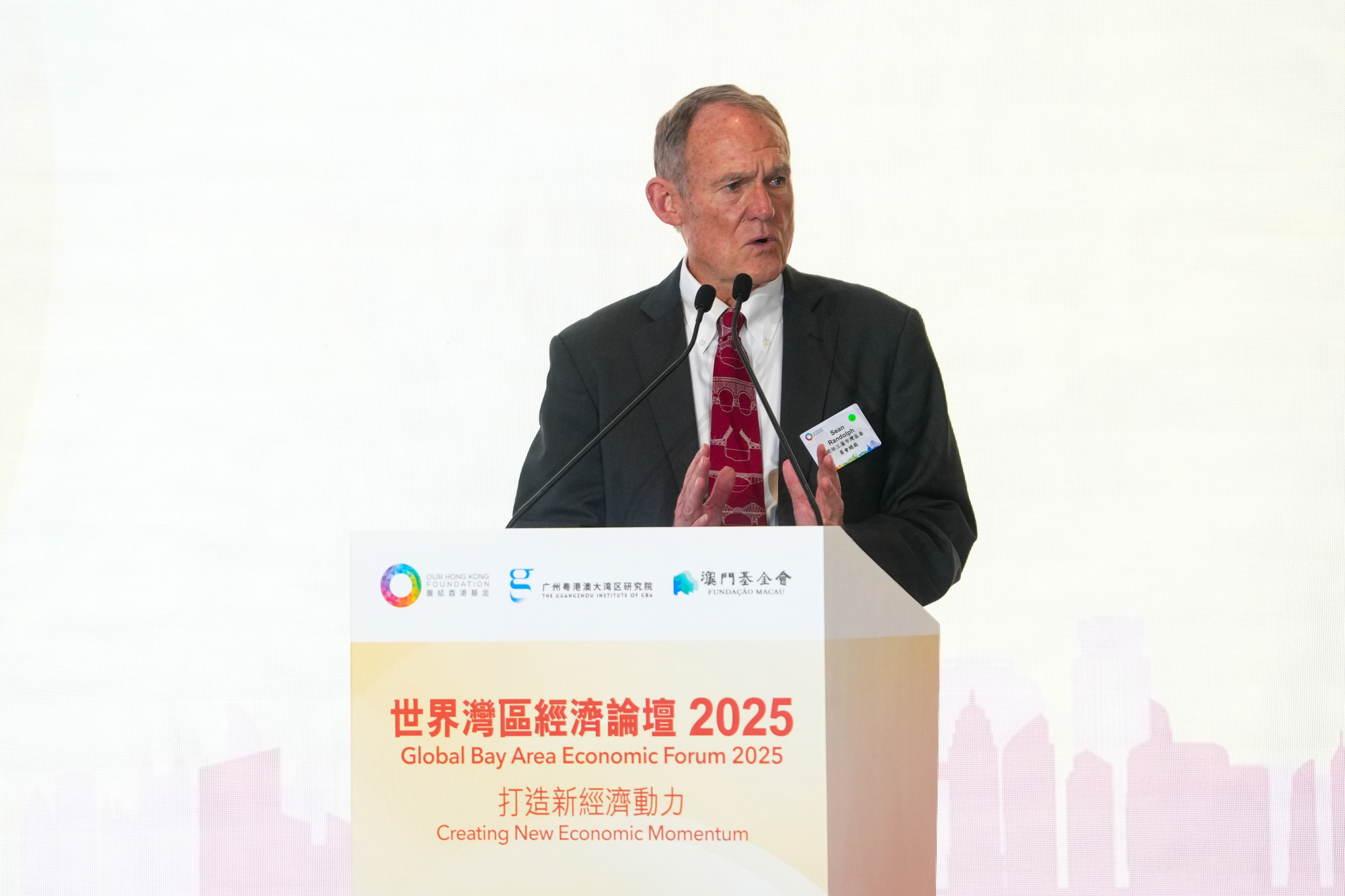
Mr Sean Randolph, Former President and CEO of the Bay Area Council, Senior Director of the Bay Area Council Economic Institute, stated: “The main reasons companies choose to develop in the Bay Area are to connect with industry-leading enterprises and international trade links. The Guangdong-Hong Kong-Macao Greater Bay Area has developed rapidly in recent years, and it is expected that the San Francisco Bay Area and the Guangdong-Hong Kong-Macao Greater Bay Area will have closer connections in the future.”
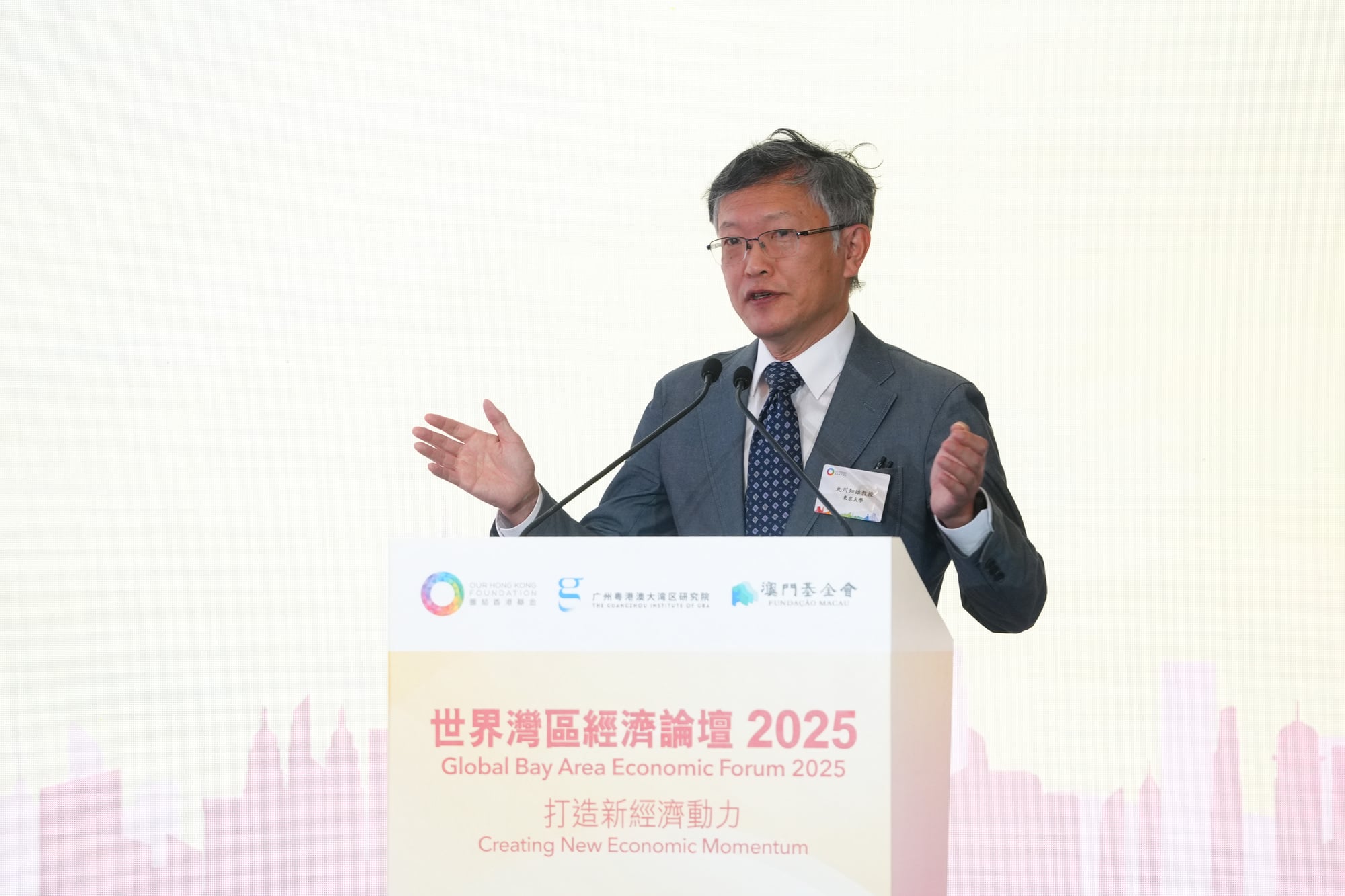
Professor Marukawa Tomoo, Professor of Institute of Social Science of The University of Tokyo, pointed out: “Shenzhen and Guangzhou’s current level of urbanization is the same with the 1st stage of the urban development in Japan. Inflow of migrants is continuing, which resulted in over-congestion and bad housing conditions in the ‘urban villages.’ The next step is the move of urban village residents to the suburbs. However, there are two obstacles to such development. First, the low-income people living in urban villages may not be able to increase their income in the future, which make them difficult to buy housing in the suburbs. Secondly, the big cities and suburbs are not well connected by public transportation.”
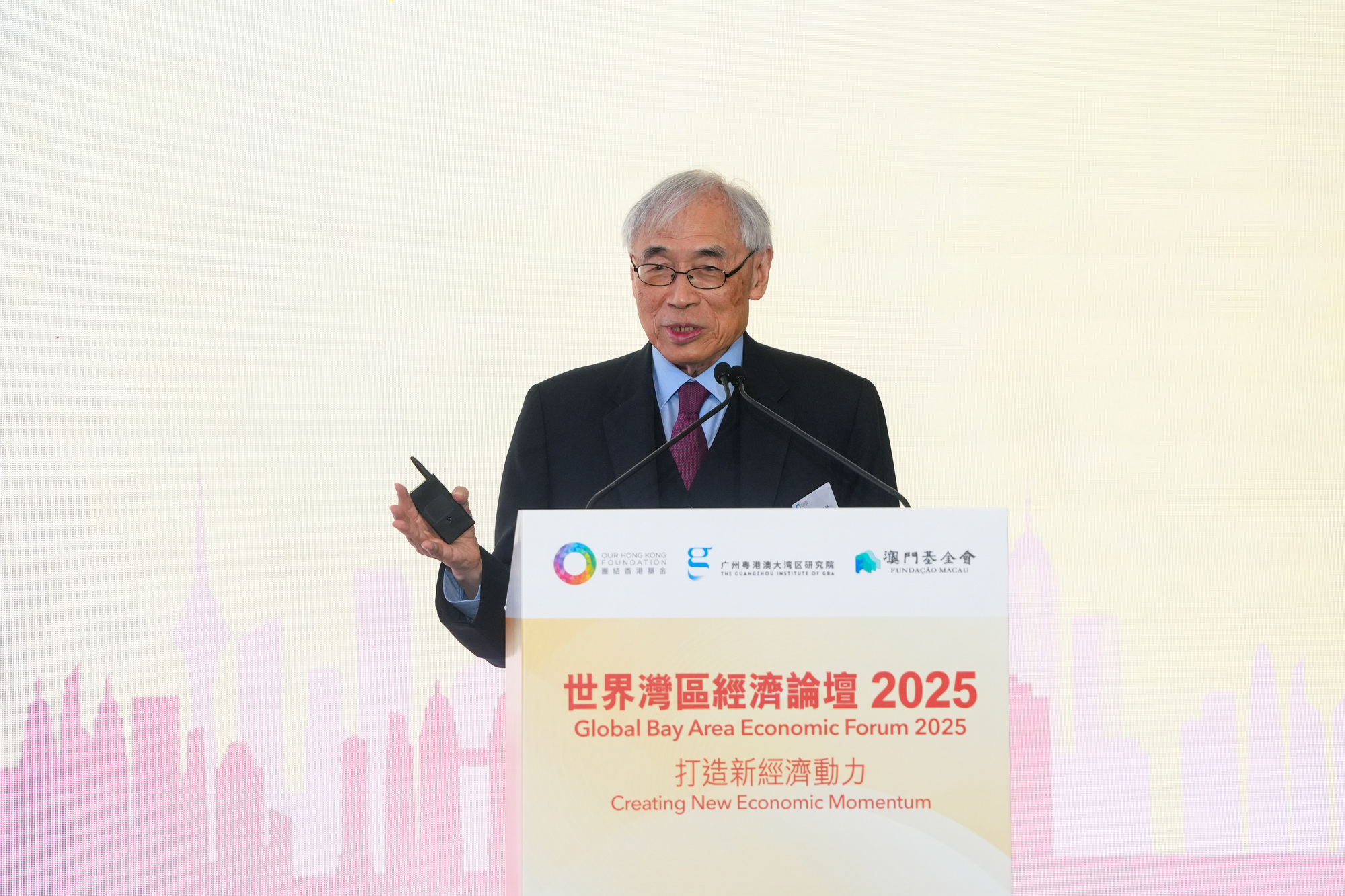
Professor Lawrence Lau, Ralph and Claire Landau Professor of Economics of The Chinese University of Hong Kong, pointed out: “Hong Kong should keep in mind that the economic integration of the GBA is not a zero-sum game, and it must adopt a win-win-win policy in order to succeed. The future of Hong Kong lies with its economic integration into the Greater Bay Area and into southern China.  The long-term prospects for the GBA are excellent if true economic integration can be achieved.”  
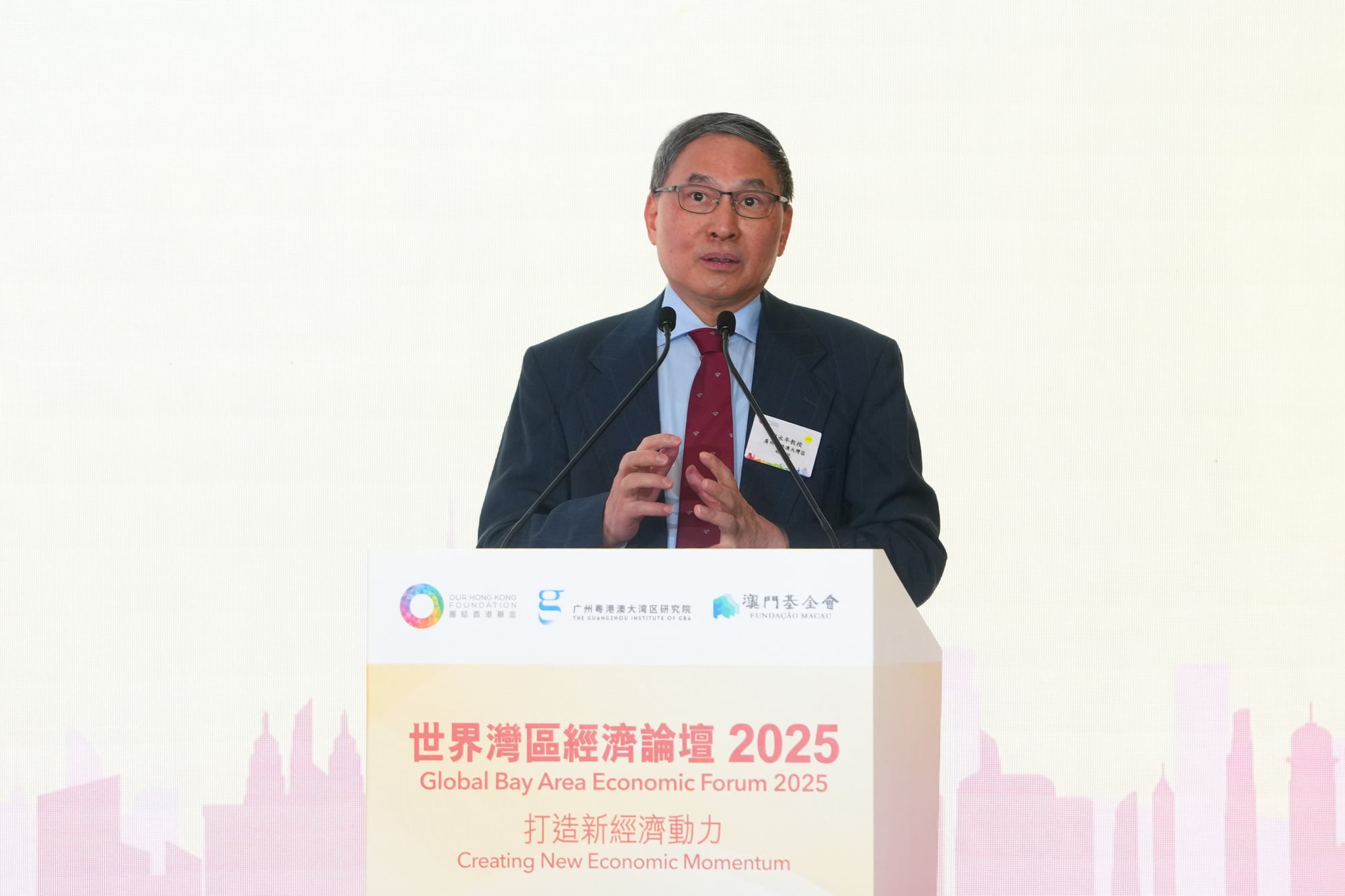
Dr Zheng Yongnian, Dean of School of Public Policy, The Chinese University of Hong Kong, Shenzhen; Director, The Institute for International Affairs, Qianhai; Board Director, Guangzhou Institute of the Greater Bay Area, stated: “In terms of the definition of talent, today's society overly emphasizes academic achievements, thereby neglecting practical applications. In fact, once basic scientific research is transformed into applied technology, it becomes economic activity. In the era of rapid development of artificial intelligence, we not only need academic talents like Nobel Prize winners, but also industrial talents such as Elon Musk and Bill Gates.”
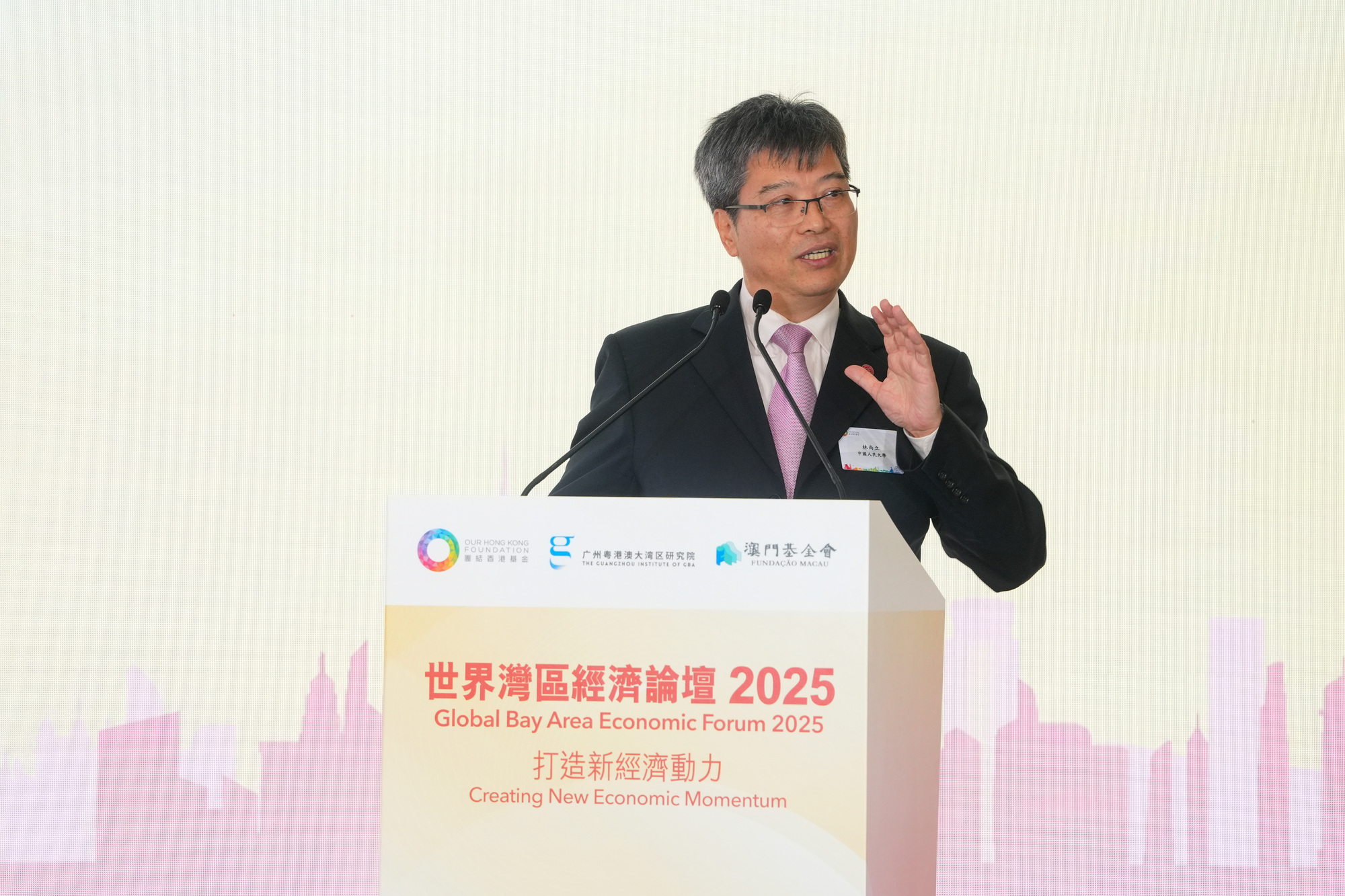
Mr Lin Shangli, President of Renmin University of China, stated: “The Bay Area needs to drive global development through financial economy, manufacturing, and technology. We must leverage national strength and industrial advantages to create a strategic system that connects a broad development community, complements each other's strengths, and builds industrial chains, supply chains, value chains, and innovation chains that influence the world.”
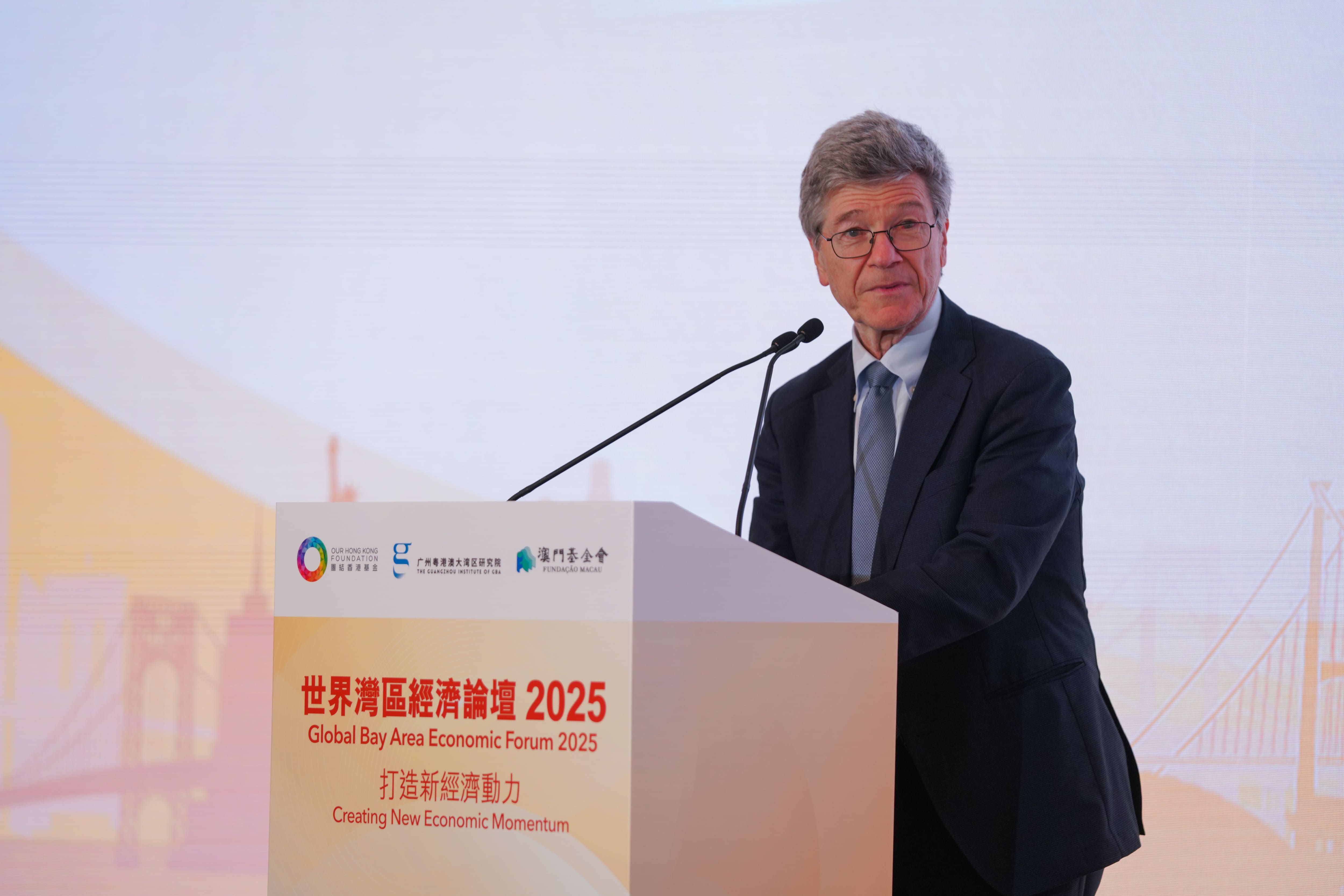
Professor Jeffrey Sachs, Professor of Columbia University, stated: “What Hong Kong can do is save the world through finance, global linkages, and science and technology, which are specialties here.” 


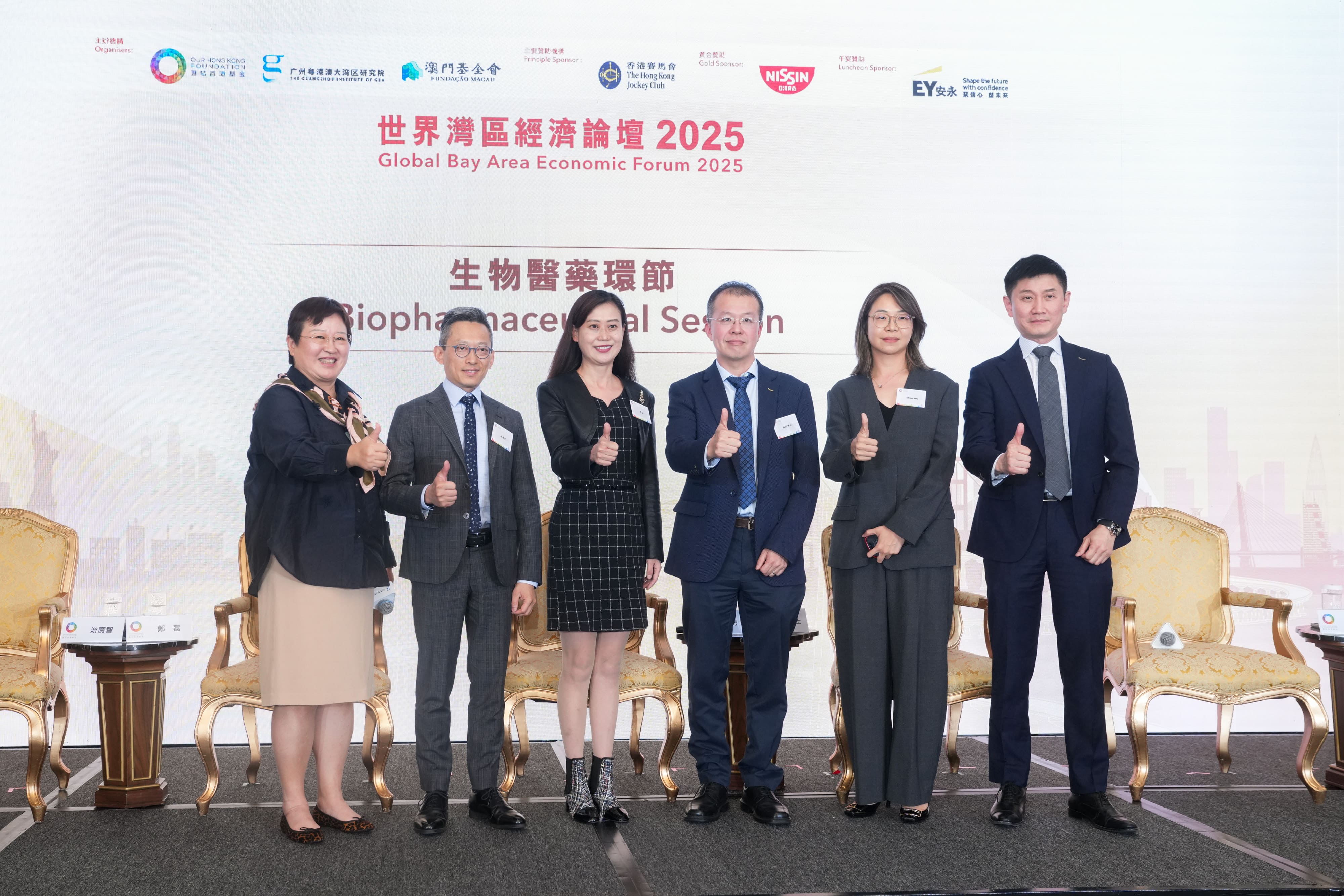
Biopharmaceutical Session

From left: Ms Kang Wei, Former Managing Director of RDPAC; Mr Henry Yau Kwong-Chi, Managing Director of HKU Clinical Trials Centre; Ms Jenny Zheng, Senior Vice President and General Manager of Greater China of Illumina; Dr Lin Kai, Chief Scientific Officer of Sunshine Lake Pharma (HEC Pharm); Ms Shan Wu, President of HKAPI, General Manager of AstraZeneca Hong Kong; Mr John Tan, Director of HKAPI, Head of Hong Kong & SVP of Novartis China. 
Professor Lo Chung-mau, Secretary for Health of the Government of the HKSAR, stated: “We envision Hong Kong as the nexus where Eastern and Western medical innovation converge.”


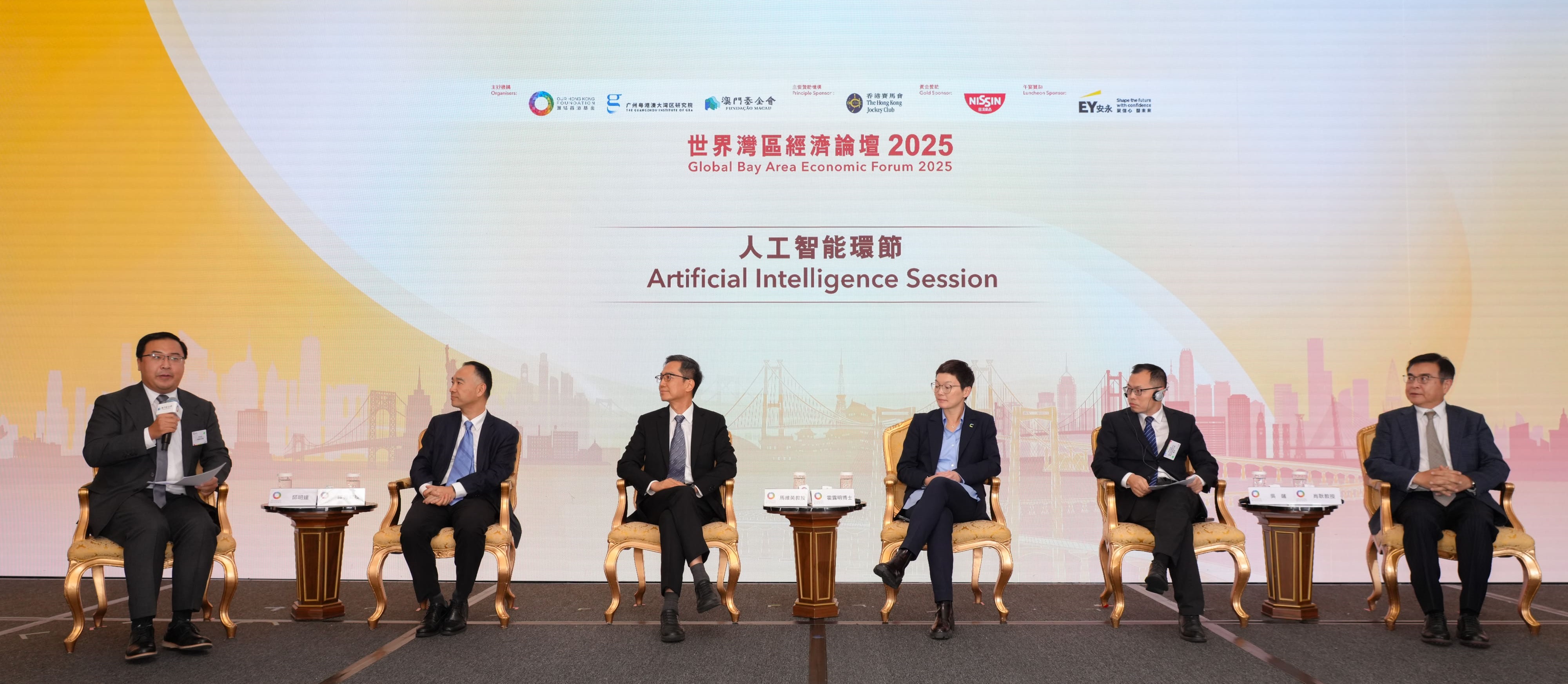
Artificial Intelligence Session

From left: Mr Qiu Mingda, Senior Analyst of China & Northeast Asia of Eurasia Group; Professor Liang Tan, Programme Director for the Customized Programme of Executive Education and Professor of Practice in Management and Strategy of HKU Business School; Professor Ma Wei-ying, Chief of Al, Director of Hong Kong Institute of AI for Science and Chair Professor of Computer Science Department of City University of Hong Kong, Huiyan Chair Professor and Chief Scientist of Institute for AI Industry Research (AIR) of Tsinghua University; Dr Crystal Fok, Director of AI Applications of Cyberport; Mr Wu Sa, Director-General of Guangzhou Municipal Development and Reform Commission and Director of the Guangzhou Leading Group Office for Building Guangdong-Hong Kong-Macao Greater Bay Area; Professor Geng Xiao, Professor and Associate Dean of School of Public Policy of The Chinese University of Hong Kong, Shenzhen; Chairman of Hong Kong Institution for International Finance.
Ms Cheong Man-lei, Under Secretary for Innovation, Technology and Industry of the Government of the HKSAR, stated: “Hong Kong will continue to fully integrate into the national development, give play to its unique advantages and potential to contribute to the nation, and strive to promote AI-driven scientific research, innovation, industrial upgrading, and cross-sector collaboration.” 

Last Updated 4 Nov 2025 (Tue)

(03 November 2025, Hong Kong) The Global Bay Area Economic Forum 2025 hosted by Our Hong Kong Foundation (OHKF), The Guangzhou Institute of the Greater Bay Area (GIG), and Macao Foundation, draws on advanced experiences and practices from the economic development of major bay areas worldwide. It fully seizes opportunities in Bay Area economic growth, establishes a global dialogue platform for bay areas, leverages their unique advantages, better promotes the construction of the Guangdong-Hong Kong-Macao Greater Bay Area (GBA), and echos with the national “15th Five-Year Plan.” The forum brings together distinguished guests, with global industry experts and representatives gathering to jointly explore new pathways for high-quality development of Bay Area economies.

The recently released “15th Five-Year Plan” emphasises core directions such as high-quality development, innovation-driven growth, and regional coordination. The forum focuses on AI-driven industrial upgrading and biopharmaceutical innovation, exploring how the GBA can foster new quality productive forces, build an international sci-tech innovation hub, promote pharmaceutical industry chains, and deeply integrate with global value chains.

The forum is honoured to invite the following to deliver opening remarks:

Mr Wong Wai-lun, Deputy Financial Secretary of the Government of the HKSAR; Mr Deng Haiguang, Vice Chairman of the Guangdong Provincial Committee of the Chinese People's Political Consultative Conference; Dr Bernard Chan, Under Secretary for Commerce and Economic Development of the Government of the HKSAR; Mr Wu Zhiliang, Deputy Director of the Committee on Culture, Historical Data and Studies of the CPPCC National Committee,  and President of the Board of Directors of the Macao Foundation; Mr Bernard Charnwut Chan, Chairman of Our Hong Kong Foundation.

In his video address, Mr Wong Wai-lun, Deputy Financial Secretary of the Government of the HKSAR, stated: “The theme ‘Creating New Economic Momentum’ is both timely and forward-looking, particularly, at the moment, as our country embarks on implementing the 15th Five-Year Plan. The Plan identifies the Guangdong–Hong Kong–Macao Greater Bay Area as one of the engines of high-quality development, and highlights Hong Kong’s role in linking the Chinese Mainland with global markets. We are fostering cooperation in frontier sectors such as artificial intelligence, biomanufacturing, and other key innovative technology industries that identified in our nation’s new development blueprint through initiatives like Hong Kong-Shenzhen Innovation and Technology Park and Northern Metropolis.”

Mr Deng Haiguang, Vice Chairman of the Guangdong Provincial Committee of the Chinese People's Political Consultative Conference, stated: “The Guangdong-Hong Kong-Macao Greater Bay Area (GBA) is now standing prominently among the world's major bay areas with a new posture. Over the past six years, the industrial system of the GBA is continuously advancing. Guangdong has established nine trillion-yuan-level industrial clusters, including new-generation electronic information, green petrochemicals, and new energy. Emerging and future industries such as artificial intelligence, low-altitude economy, and biomanufacturing are flourishing, complementing the well-developed modern service industries in Hong Kong and Macao, such as finance, trade, and legal services.”

In his remarks, Dr Bernard Chan, Under Secretary for Commerce and Economic Development of the Government of the HKSAR, stated: “Hong Kong’s unique combination of the rule of law, a free flow of capital, a transparent and efficient government, and a low, simple, and competitive tax system make it an ideal gateway for international business and investment.”

Mr Wu Zhiliang, Deputy Director of the Committee on Culture, Historical Data and Studies of the CPPCC National Committee, President of the Board of Directors of the Macao Foundation, pointed out: “Macao plays a long-standing role as a bridge for economic and trade exchanges between China and Portuguese-speaking countries by actively developing a digital platform to deepen their collaboration in trade, finance, science and technology innovation, youth entrepreneurship, etc.”

Mr Bernard Charnwut Chan, Chairman of Our Hong Kong Foundation, stated: “Across the world, Bay Area economies have emerged as powerful engines of progress. From the San Francisco Bay Area to the New York Bay Area, from the Tokyo Metropolitan Bay Area to our own Guangdong–Hong Kong–Macao Greater Bay Area, these regions demonstrate how openness, imagination, and collaboration can drive growth and inspire global transformation. Our history as an open economy gives us the flexibility to adapt, while our foundation of One Country, Two Systems ensures the stability that global investors rely upon. These unique advantages allow Hong Kong to contribute meaningfully not only to the development of the GBA, but also to the prosperity of the global community.”

Professor Jeffrey Sachs, Professor of Columbia University, stated: “The Greater Bay Area will be the beating heart of the energy transformation, the ecological transformation that the world urgently needs for the next 25 years. What Hong Kong can do is save the world through finance, global linkages, and science and technology, which are specialties here.”

The forum is divided into two parts: keynote speeches and discussion sessions (see appendix for details), among which the discussion sessions consist of two parts: Biopharmaceutical and Artificial Intelligence.

Professor Lo Chung-mau, Secretary for Health of the Government of the HKSAR, stated: “The biomedical innovation landscape is rapidly evolving, and so are we. Over the past two years, we have systematically transformed vision into infrastructure, infrastructure into capability, and capability into tangible results.  Under the new ‘1+’ drug approval mechanism, 15 new drugs approved, over 70 clinical trials in the pipeline, and a regulatory body ready to serve the region and the world. But our ambition extends beyond our shores. We envision Hong Kong as the nexus where Eastern and Western medical innovation converge”

Ms Cheong Man-lei, Under Secretary for Innovation, Technology and Industry of the Government of the HKSAR, stated: “Hong Kong will continue to fully integrate into the national development, give play to its unique advantages and potential to contribute to the nation, and strive to promote AI-driven scientific research, innovation, industrial upgrading, and cross-sector collaboration.”

The forum has received strong support from the government, industry, and major chambers of commerce, including “Principal Sponsor” The Hong Kong Jockey Club; “Gold Sponsor” Nissin Foods Company Limited; and “Luncheon Sponsor” EY.

-
To Watch:
English: https://bit.ly/4otm4lS
Cantonese: https://bit.ly/4oEnvxX
Putonghua: https://bit.ly/4oTkLwg

From left: Mr Jack Chan, EY China Chairman; EY Greater China Regional Managing Partner; Mr Wu Zhiliang, Deputy Director of the Committee on Culture, Historical Data and Studies of the CPPCC National Committee,  President of the Board of Directors of the Macao Foundation; Mr Ronald Chan, Head of Mainland Affairs of The Hong Kong Jockey Club; Mr Zhu Wei, Deputy Director of the Guangdong Provincial Development and Reform Commission; Mr Hua You, Deputy Commissioner of Office of the Commissioner of the Ministry of Foreign Affairs of the People's Republic of China in Hong Kong SAR; Dr Bernard Chan, Under Secretary for Commerce and Economic Development of the Government of the HKSAR; Mr Deng Haiguang, Vice Chairman of the Guangdong Provincial Committee of the Chinese People's Political Consultative Conference; Mr Lei Bo, General Director of the South China Sea Office of Ministry of Natural Resources; Mr Bernard Charnwut Chan, Chairman of Our Hong Kong Foundation; Dr Zheng Yongnian, Dean of School of Public Policy of The Chinese University of Hong Kong, Shenzhen; Director of The Institute for International Affairs, Qianhai; Board Director of Guangzhou Institute of the Greater Bay Area; Dr Jane Lee, President of Our Hong Kong Foundation. 
From back row, left: Professor Geng Xiao, Professor and Associate Dean of School of Public Policy of Chinese University of Hong Kong, Shenzhen; Chairman of Hong Kong Institution for International Finance; Dr Lin Kai, Chief Scientific Officer of Sunshine Lake Pharma (HEC Pharm); Ms Jenny Zheng, Senior Vice President and General Manager of Greater China of Illumina; Mr Qiu Mingda, Senior Analyst of China & Northeast Asia of Eurasia Group; Ms Shan Wu, President of HKAPI, General Manager of AstraZeneca Hong Kong; Ms Kang Wei, Former Managing Director of RDPAC; Mr Wu Sa, Director-General of Guangzhou Municipal Development and Reform Commission and Director of the Guangzhou Leading Group Office for Building Guangdong-Hong Kong-Macao Greater Bay Area; Ms Simone Song, Founder and Senior Partner of ORI Capital; Mr Marwan Fathallah, President & Chief Executive Officer of Drug Information Association.

From front row, left: Professor Yutaka Matsuo, Professor of the University of Tokyo; Mr Jack Chan, Chairman of EY China; Mr Wu Zhiliang, Deputy Director of the Committee on Culture, Historical Data and Studies of the CPPCC National Committee,  President of the Board of Directors of the Macao Foundation; Mr Ronald Chan, the Head of Mainland Affairs of The Hong Kong Jockey Club; Mr Zhu Wei, Deputy Director of the Guangdong Provincial Development and Reform Commission; Mr Hua You, Deputy Commissioner of Office of the Commissioner of the Ministry of Foreign Affairs of the People's Republic of China in Hong Kong SAR; Dr Bernard Chan, Under Secretary for Commerce and Economic Development of the Government of the HKSAR; Mr Deng Haiguang, Vice Chairman of the Guangdong Provincial Committee of the Chinese People's Political Consultative Conference; Mr Lei Bo, General Director of the South China Sea Office of Ministry of Natural Resources; Mr Bernard Charnwut Chan, Chairman of Our Hong Kong Foundation; Dr Zheng Yongnian, Dean of School of Public Policy of The Chinese University of Hong Kong, Shenzhen; Director, The Institute for International Affairs, Qianhai; Board Director of Guangzhou Institute of the Greater Bay Area; Dr Jane Lee, President of Our Hong Kong Foundation; Mr Tam Yiu chung, former Member of National People's Congress; Mr Sean Randolph, Former President and CEO of the Bay Area Council, Senior Director of the Bay Area Council Economic Institute.  
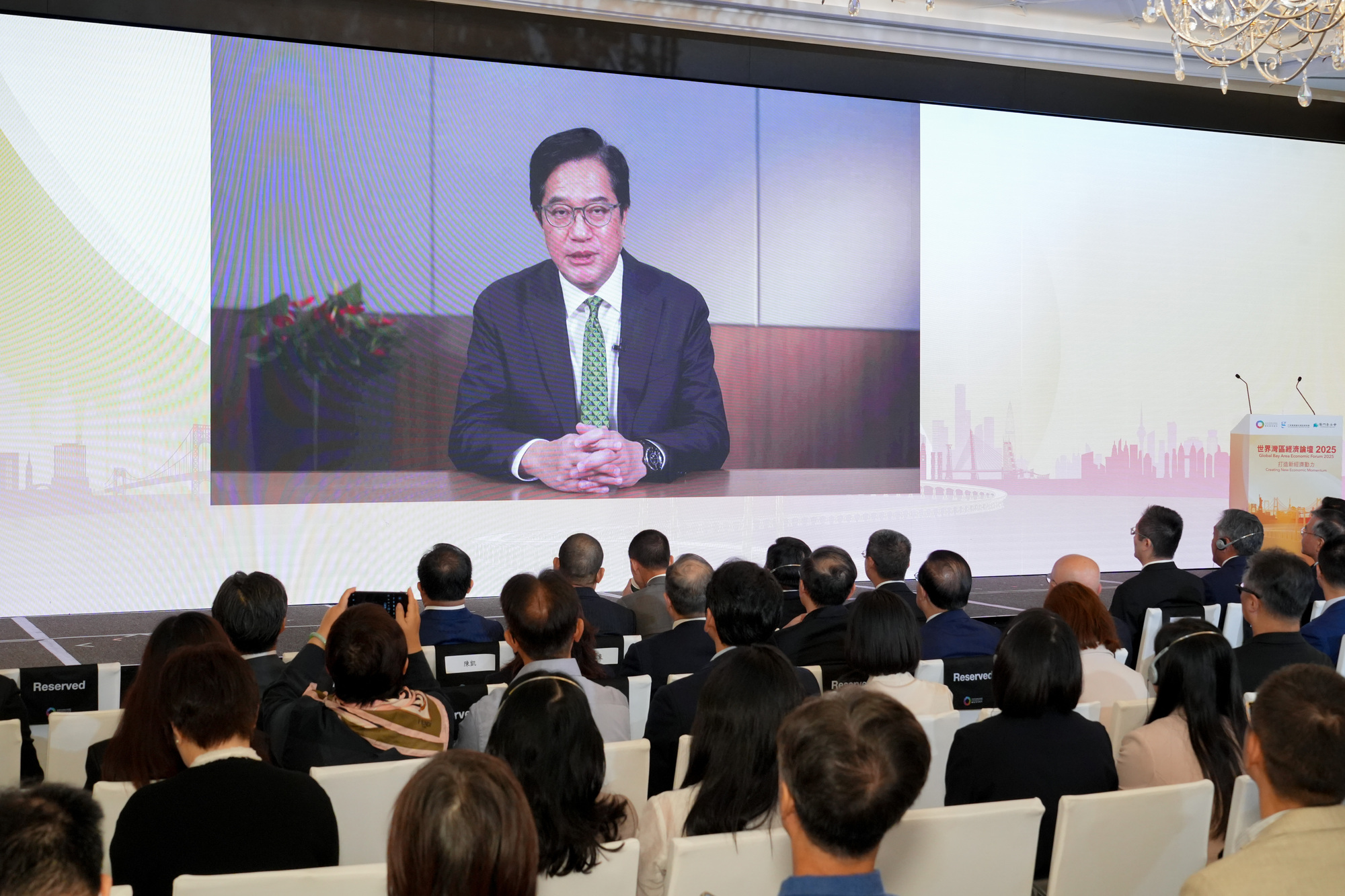
From left: Professor Geng Xiao, Professor and Associate Dean of School of Public Policy of Chinese University of Hong Kong, Shenzhen; Chairman of Hong Kong Institution for International Finance; Mr Lei Bo, General Director of the South China Sea Office of Ministry of Natural Resources; Dr Lin Kai, Chief Scientific Officer of Sunshine Lake Pharma (HEC Pharm); Ms Jenny Zheng, Senior Vice President and General Manager of Greater China of Illumina; Dr Chun Wu, Managing Partner of BCG Greater China, Managing Director and Senior Partner of BCG; Professor Liang Tan, Programme Director for the Customized Programme of Executive Education and Professor of Practice in Management and Strategy of HKU Business School; Mr Jonathan Cheng, Director of Property Investments of Meyer Corporation; Governor of Our Hong Kong Foundation; Professor Lo Chung-mau, The Secretary for Health of the Government of the HKSAR; Dr Allan Zeman, Chairman of Lan Kwai Fong Group; Governor of Our Hong Kong Foundation; Dr Jane Lee, President of Our Hong Kong Foundation; Mr Marwan Fathallah, President & Chief Executive Officer of Drug Information Association; Ms Kang Wei, Former Managing Director of RDPAC; Dr Zhang Wei, Senior Vice President of Head of Medicine of Boehringer Ingelheim Greater China; Ms Simone Song, Founder and Senior Partner of ORI Capital; Mr Henry Yau Kwong-Chi, Managing Director of HKU Clinical Trials Centre. 
Mr Wong Wai-lun, Deputy Financial Secretary of the Government of the HKSAR, stated in his video address: “We are fostering cooperation in frontier sectors such as artificial intelligence, biomanufacturing, and other key innovative technology industries that identified in our nation’s new development blueprint through initiatives like Hong Kong-Shenzhen Innovation and Technology Park and Northern Metropolis.” 
Mr Deng Haiguang, Vice Chairman of the Guangdong Provincial Committee of the Chinese People's Political Consultative Conference, stated: “The Guangdong-Hong Kong-Macao Greater Bay Area (GBA) is now standing prominently among the world's major bay areas with a new posture. The industrial system of the GBA is continuously advancing. Guangdong has established nine trillion-yuan-level industrial clusters, including new-generation electronic information, green petrochemicals, and new energy. Emerging and future industries such as artificial intelligence, low-altitude economy, and biomanufacturing are flourishing, complementing the well-developed modern service industries in Hong Kong and Macao, such as finance, trade, and legal services.”
Dr Bernard Chan, Under Secretary for Commerce and Economic Development of the Government of the HKSAR, stated: “Hong Kong’s unique combination of the rule of law, a free flow of capital, a transparent and efficient government, and a low, simple, and competitive tax system make it an ideal gateway for international business and investment.” 
Mr Wu Zhiliang, Deputy Director of the Committee on Culture, Historical Data and Studies of the CPPCC National Committee, President of the Board of Directors of the Macao Foundation, pointed out: “Macao plays a long-standing role as a bridge for economic and trade exchanges between China and Portuguese-speaking countries by actively developing a digital platform to deepen the Greater Bay Area and Portuguese-speaking countries collaboration in trade, finance, science and technology innovation, youth entrepreneurship, etc.”
Mr Bernard Charnwut Chan, Chairman of Our Hong Kong Foundation, stated: “Our history as an open economy gives us the flexibility to adapt, while our foundation of One Country, Two Systems ensures the stability that global investors rely upon. These unique advantages allow Hong Kong to contribute meaningfully not only to the development of the GBA, but also to the prosperity of the global community.”
Mr Sean Randolph, Former President and CEO of the Bay Area Council, Senior Director of the Bay Area Council Economic Institute, stated: “The main reasons companies choose to develop in the Bay Area are to connect with industry-leading enterprises and international trade links. The Guangdong-Hong Kong-Macao Greater Bay Area has developed rapidly in recent years, and it is expected that the San Francisco Bay Area and the Guangdong-Hong Kong-Macao Greater Bay Area will have closer connections in the future.”
Professor Marukawa Tomoo, Professor of Institute of Social Science of The University of Tokyo, pointed out: “Shenzhen and Guangzhou’s current level of urbanization is the same with the 1st stage of the urban development in Japan. Inflow of migrants is continuing, which resulted in over-congestion and bad housing conditions in the ‘urban villages.’ The next step is the move of urban village residents to the suburbs. However, there are two obstacles to such development. First, the low-income people living in urban villages may not be able to increase their income in the future, which make them difficult to buy housing in the suburbs. Secondly, the big cities and suburbs are not well connected by public transportation.”
Professor Lawrence Lau, Ralph and Claire Landau Professor of Economics of The Chinese University of Hong Kong, pointed out: “Hong Kong should keep in mind that the economic integration of the GBA is not a zero-sum game, and it must adopt a win-win-win policy in order to succeed. The future of Hong Kong lies with its economic integration into the Greater Bay Area and into southern China.  The long-term prospects for the GBA are excellent if true economic integration can be achieved.”  
Dr Zheng Yongnian, Dean of School of Public Policy, The Chinese University of Hong Kong, Shenzhen; Director, The Institute for International Affairs, Qianhai; Board Director, Guangzhou Institute of the Greater Bay Area, stated: “In terms of the definition of talent, today's society overly emphasizes academic achievements, thereby neglecting practical applications. In fact, once basic scientific research is transformed into applied technology, it becomes economic activity. In the era of rapid development of artificial intelligence, we not only need academic talents like Nobel Prize winners, but also industrial talents such as Elon Musk and Bill Gates.”
Mr Lin Shangli, President of Renmin University of China, stated: “The Bay Area needs to drive global development through financial economy, manufacturing, and technology. We must leverage national strength and industrial advantages to create a strategic system that connects a broad development community, complements each other's strengths, and builds industrial chains, supply chains, value chains, and innovation chains that influence the world.”
Professor Jeffrey Sachs, Professor of Columbia University, stated: “What Hong Kong can do is save the world through finance, global linkages, and science and technology, which are specialties here.” 


Biopharmaceutical Session
From left: Ms Kang Wei, Former Managing Director of RDPAC; Mr Henry Yau Kwong-Chi, Managing Director of HKU Clinical Trials Centre; Ms Jenny Zheng, Senior Vice President and General Manager of Greater China of Illumina; Dr Lin Kai, Chief Scientific Officer of Sunshine Lake Pharma (HEC Pharm); Ms Shan Wu, President of HKAPI, General Manager of AstraZeneca Hong Kong; Mr John Tan, Director of HKAPI, Head of Hong Kong & SVP of Novartis China. 
Professor Lo Chung-mau, Secretary for Health of the Government of the HKSAR, stated: “We envision Hong Kong as the nexus where Eastern and Western medical innovation converge.”


Artificial Intelligence Session

From left: Mr Qiu Mingda, Senior Analyst of China & Northeast Asia of Eurasia Group; Professor Liang Tan, Programme Director for the Customized Programme of Executive Education and Professor of Practice in Management and Strategy of HKU Business School; Professor Ma Wei-ying, Chief of Al, Director of Hong Kong Institute of AI for Science and Chair Professor of Computer Science Department of City University of Hong Kong, Huiyan Chair Professor and Chief Scientist of Institute for AI Industry Research (AIR) of Tsinghua University; Dr Crystal Fok, Director of AI Applications of Cyberport; Mr Wu Sa, Director-General of Guangzhou Municipal Development and Reform Commission and Director of the Guangzhou Leading Group Office for Building Guangdong-Hong Kong-Macao Greater Bay Area; Professor Geng Xiao, Professor and Associate Dean of School of Public Policy of The Chinese University of Hong Kong, Shenzhen; Chairman of Hong Kong Institution for International Finance.
Ms Cheong Man-lei, Under Secretary for Innovation, Technology and Industry of the Government of the HKSAR, stated: “Hong Kong will continue to fully integrate into the national development, give play to its unique advantages and potential to contribute to the nation, and strive to promote AI-driven scientific research, innovation, industrial upgrading, and cross-sector collaboration.” 
Last Updated 4 Nov 2025 (Tue)
Support Us
Donate Now
Contact us
img
19/F Nan Fung Tower, 88 Connaught Road Central, Hong Kong
img
+852 2603 3001
Follow us on
imgimgimgimg
imgimgimg
ESG Care Organization
© Our Hong Kong Foundation Limited. All Rights Reserved.
Support Us
Donate Now
Contact us
19/F Nan Fung Tower, 88 Connaught Road Central, Hong Kong
Follow us on
imgimgimgimg
imgimgimg
ESG

© Our Hong Kong Foundation Limited. All Rights Reserved.