









Our Hong Kong Foundation Launches Senior Policy Advocacy Report: 6 Solutions to Enhance Housing and Community for Hong Kong Seniors




Our Hong Kong Foundation Launches Senior Policy Advocacy Report: 6 Solutions to Enhance Housing and Community for Hong Kong Seniors

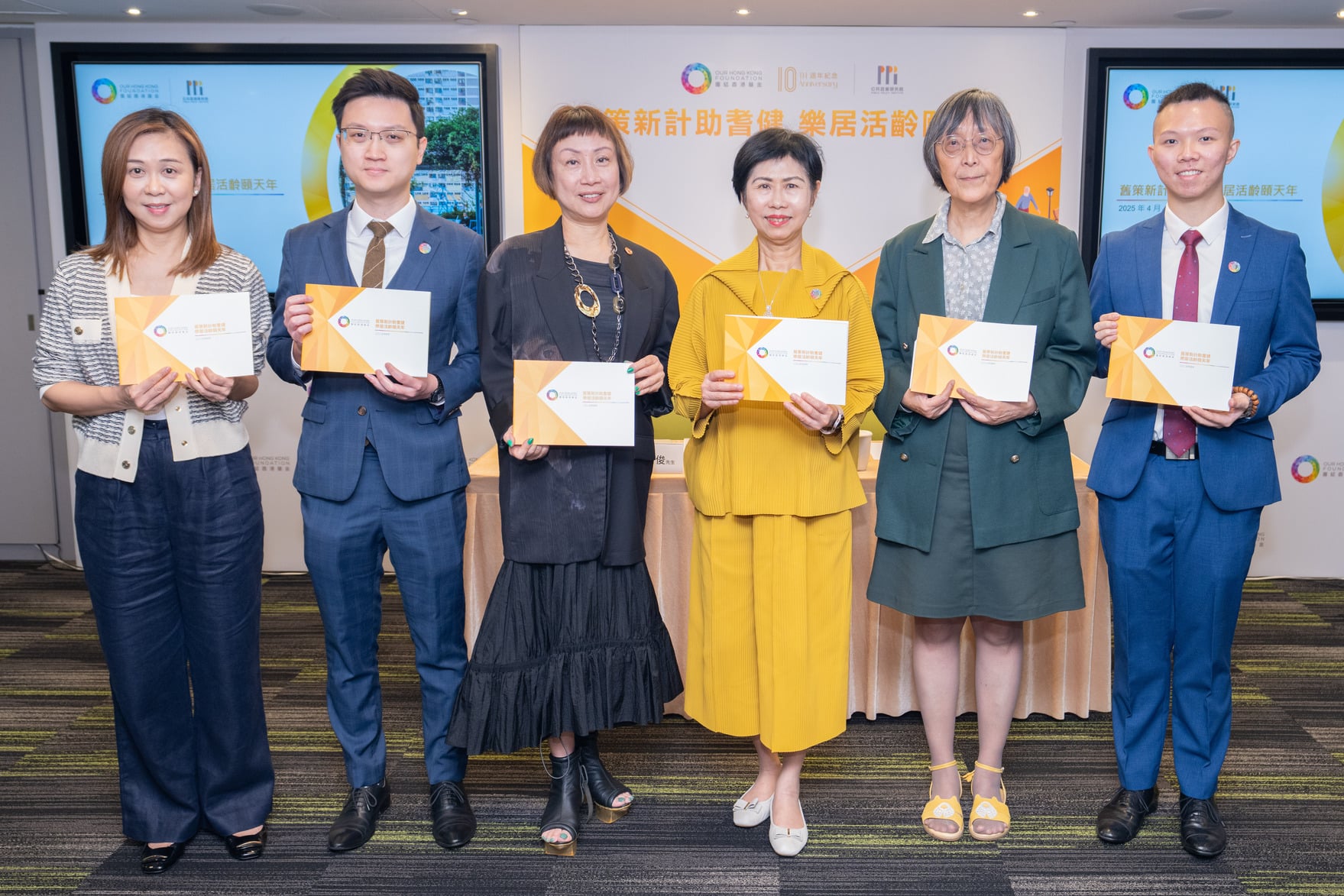
[Hong Kong, April 10, 2025] – Our Hong Kong Foundation (OHKF) today released a new policy advocacy report, “Policy Path to Ageing in Place for Hong Kong: Shaping an Inclusive Housing and Community Landscape”. This study was conducted in a strategic partnership with Chinachem Group, leveraging their industry expertise to propose six policy recommendations aimed at improving the living environments of Hong Kong’s seniors. The goal is to promote ageing in place and alleviate long-term healthcare expenditures.
Hong Kong’s ageing population has become an increasingly pressing issue in recent years, with the fiscal burden of seniors’ healthcare costs drawing significant attention. According to the latest data, government healthcare spending has reached HK$127.9 billion, accounting for 16.26% of total expenditure. Given current fiscal constraints, every aspect of spending must be optimised to maximise impact.
Ageing in place is closely linked to healthcare costs. Hong Kong faces a “double ageing” challenge, as both its population and building infrastructure are growing older. This creates multiple safety risks. Data from the Department of Health in 2018 shows that 74.5% of accidental injuries among the seniors in Hong Kong were due to falls. To reduce the risk of falls and injuries among the seniors, it is essential to start at the source by promoting home modifications and Inclusive Design to enhance home safety, thereby indirectly lowering healthcare costs. OHKF estimates that implementing these recommendations could reduce annual hospitalisation expenses by at least HK$5.67 billion in 2046, when the senior population is anticipated to account for 36% of the total population.
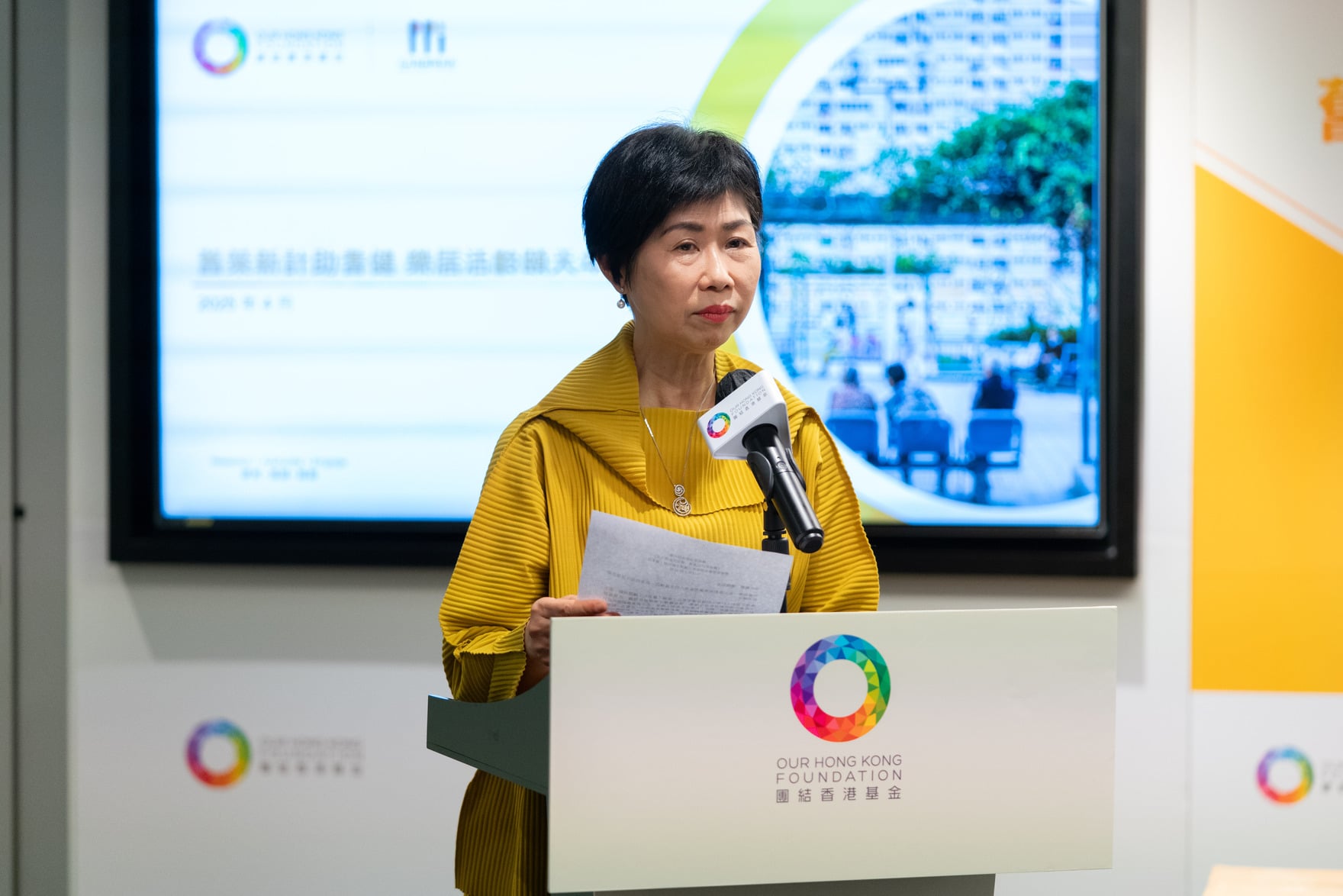
OHKF President Dr Jane Lee said, "We sincerely thank the Chinachem Group team for their full commitment, sharing valuable expertise and practical experience to enhance the research content, making the report's recommendations more aligned with the housing needs of the Hong Kong’s seniors. This collaborative effort demonstrates the corporate responsibility of the business sector in contributing to the society through their professional perspective and expertise." Dr Jane Lee continued, “Ageing in place is not just a welfare issue; it is a societal imperative. Our recommendations emphasise cross-sector collaboration, from co-payment models to cross-service partnerships. By reimagining housing and community systems, Hong Kong can empower seniors to live with dignity and contribute meaningfully to our city’s future.”
The six key recommendations from OHKF to tackle the challenges posed by an ageing population include:
1. Creating diverse strategies to facilitate seniors’ access to home modifications
Leveraging Elderly Health Care Voucher to support all seniors, OHKF suggests incorporating home modification assessments into the Elderly Health Care Voucher Pilot Reward Scheme. By providing cash back to seniors’ accounts, they would be encouraged to seek home modification assessments from therapists. Additionally, the government could consider establishing a new co-payment tool for home modification and renovation implementations, adopting a review mechanism based on age and financial status to determine the proportion of government subsidies and user contributions.
2. Promoting the adoption of Inclusive Design in new housing
Currently, Public Rental Housing and Subsidised Housing in Hong Kong adopt a Universal Design approach, but this “one-size-fits-all” model may not effectively meet the diverse needs of the seniors. OHKF recommends revising design manuals and incorporating relevant provisions into building regulations to promote the adoption of Inclusive Design, allowing for greater flexibility in housing adaptations.
To encourage the private sector to adopt Inclusive Design, the government could integrate an Inclusive Design checklist into building assessment systems like BEAM Plus, offering developers gross floor area concessions or additional plot ratio incentives.
3. Establishing favourable market conditions for private senior housing
Private senior housing projects can meet market demand while easing the Government’s burden. The Government could clearly define “Senior Housing” and introduce a tiered gross floor area concession mechanism, increase land supply for senior housing through restrictive land lease, encourage diverse financing tools to support construction of senior housing projects, and enhance the financial stability of retirees to help them afford better living options.
4. Enhancing property management capabilities to improve the quality of life for community dwelling seniors
The Government should promote the inclusion of age-friendly criteria in standards for property management service procurement. At the same time, it can adopt strategies of "capacity building" and "capacity bridging", such as enhancing targeted vocational training programmes and establishing collaboration mechanisms with social workers of elderly centres and creating a centralised platform to match property management companies with local services. These measures aim to foster cross-sector cooperation.
5. Optimising community resources and facilities in response to demographic changes
Demographic shifts and societal changes have led to mismatches or underutilisation of community resources. The Government could regularly review population changes, adjust resource allocation, and re-plan community centre services to meet evolving needs. It could also encourage the development of online matching platforms to help community service centres identify and book underused resources.
6. Enhancing public spaces to promote the age-friendliness of the community
The Government should regularly evaluate the inclusivity of spaces and collect district-based feedback. Building on this, it could introduce “Lighter, Quicker, Cheaper” (LQC) solutions, such as reserving “white spaces” for temporary installations and offering short-term funding to encourage community participation, to help improve the age-friendliness of public spaces.
Non-Official Member of the Executive Council of the HKSAR Government Dr Lam Ching-choi emphasised, “Elderly care policy involves collaboration between multiple stakeholders and cross-departmental coordination, encompassing broad societal dimensions and profound impacts on citizens' welfare. This necessitates high-level government stewardship to build an age-friendly society collectively. Although the Government established the principle of ‘ageing in place as the core, institutional care as back-up’ over two decades ago, Hong Kong still lacks a comprehensive senior housing strategy. The territory requires the formulation of relevant policies to establish a development framework that actively promotes ageing in place.”
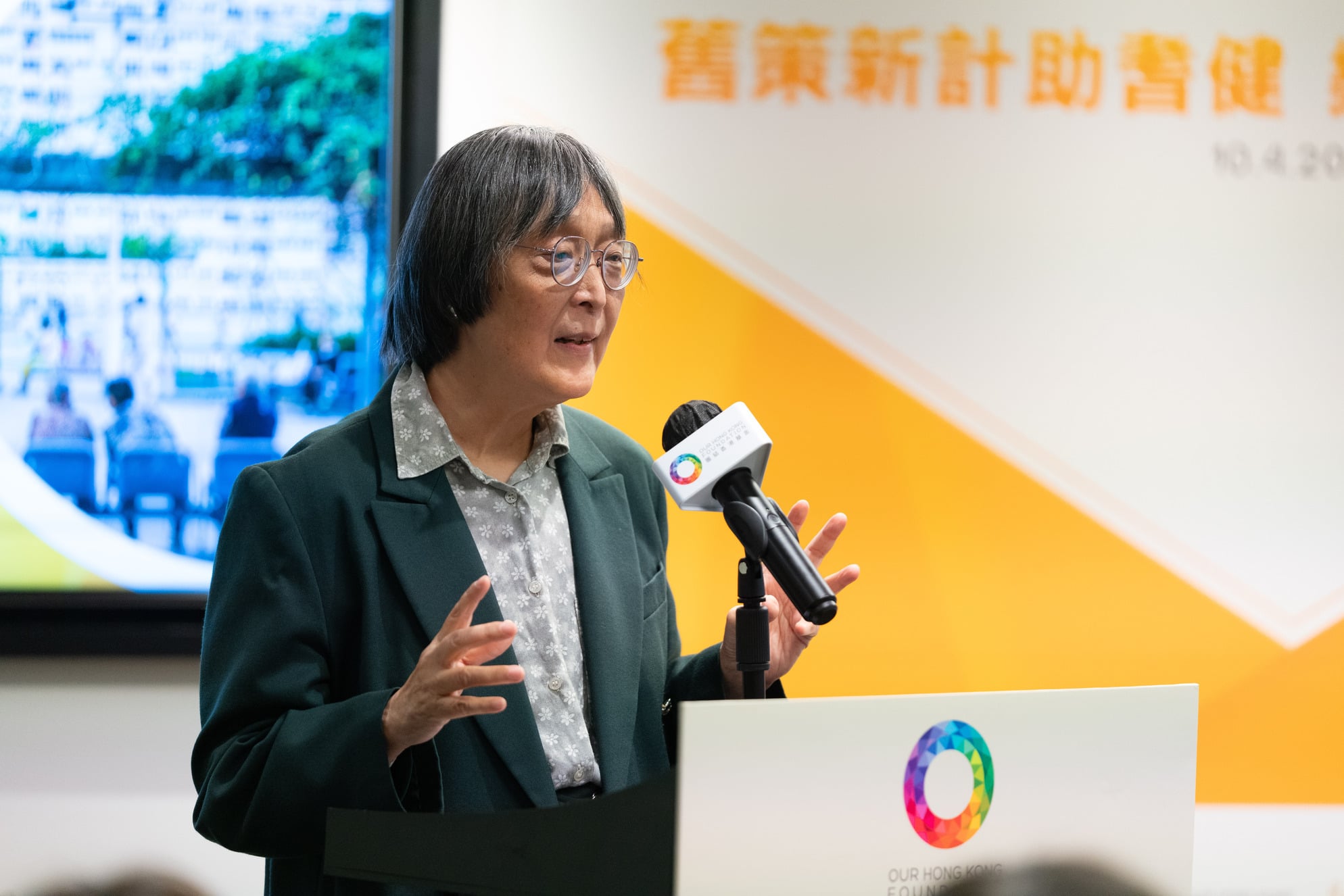
Director of the Chinese University of Hong Kong Jockey Club Institute of Ageing, Professor Jean Woo pointed out, “Healthy ageing is a key factor for ageing in place. It not only means avoiding diseases and reliance on medical treatments but also emphasises enabling older people to maintain autonomy in their lives according to their own values. Therefore, an important prerequisite for ageing in place is to create a living environment and social support system that empowers seniors to experience healthy ageing in their daily lives.”
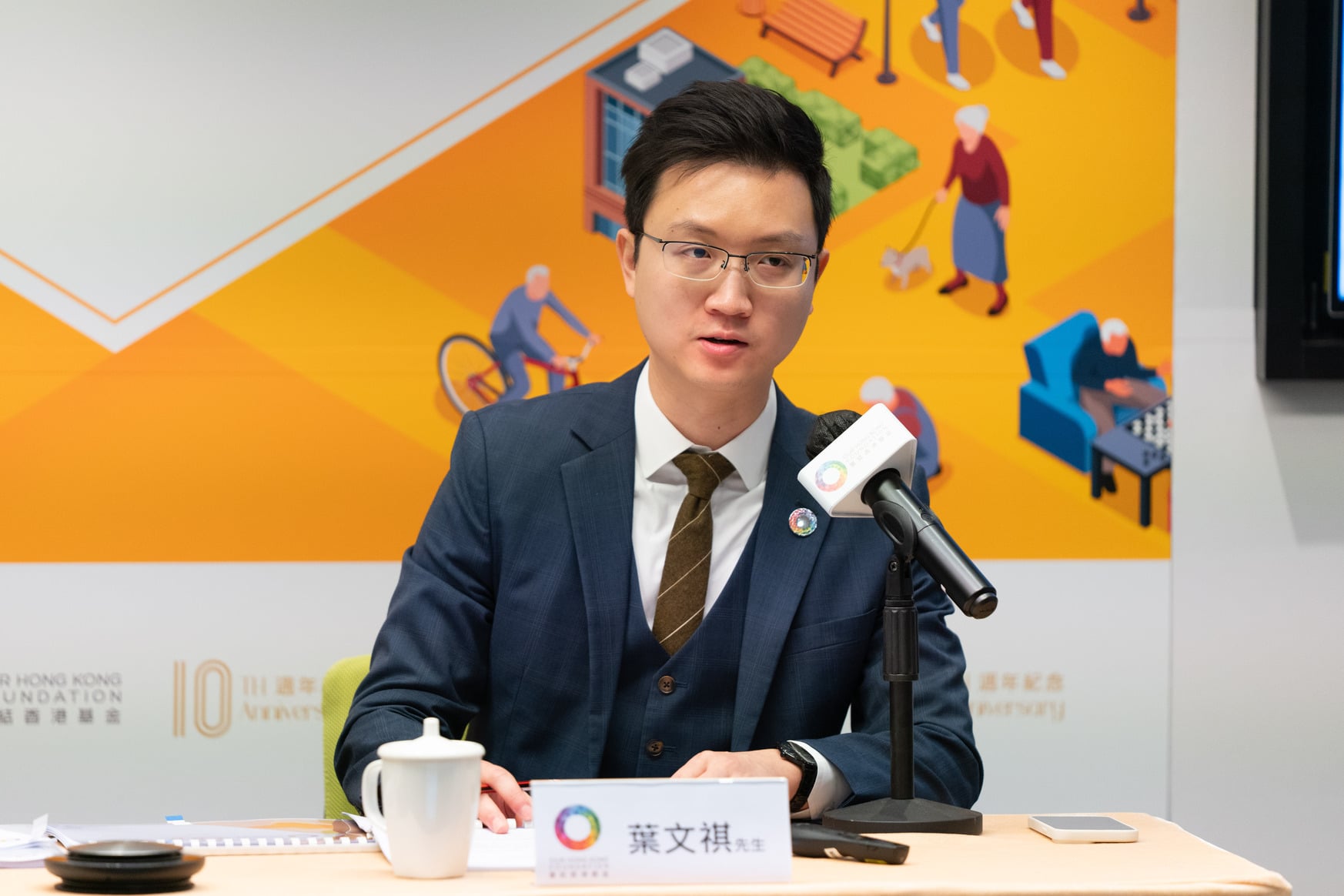
OHKF Vice President and Executive Director of Public Policy Institute Mr Ryan Ip remarked, “Housing is the cornerstone of ageing in place. By expanding access to home modifications, embedding Inclusive Design into our building codes, and incentivising private-sector innovation in senior housing, we can create environments where seniors live safely today and adapt seamlessly tomorrow. This isn’t just about infrastructure—it’s about dignity, sustainability, and a shared commitment to Hong Kong’s future."
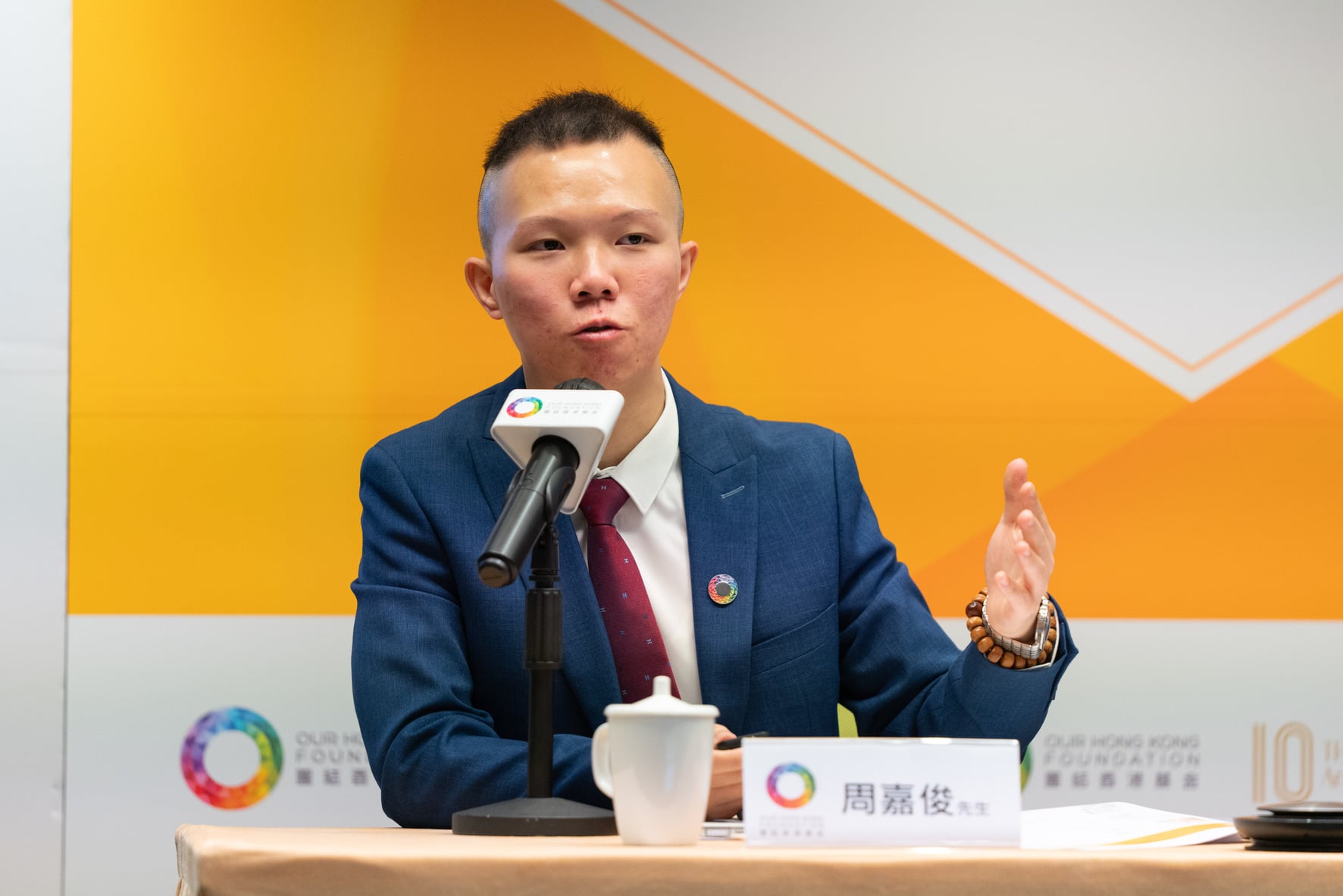
OHKF Head of Healthcare and Social Innovation Mr Dicky Chow commented, “Our findings reveal that ageing in place depends on community cohesion. From empowering property management to cross-sector resource sharing, successful implementation hinges on collaboration between NGOs, business sectors, and policymakers. These are not simply abstract concepts; they are concrete and effective measures. For instance, enhancing home safety to prevent elderly falls can achieve a substantial reduction in medical costs, potentially saving up to HKD 5.67 billion. Most importantly, we want to help create a society where our seniors can thrive and not just survive."
-
Full Contents of “Policy Path to Ageing in Place for Hong Kong: Shaping an Inclusive Housing and Community Landscape”:
English: https://bit.ly/4hL5kSR
Chinese: https://bit.ly/4hEA6wA
Contents PPT and Photos: https://bit.ly/3RJChV0
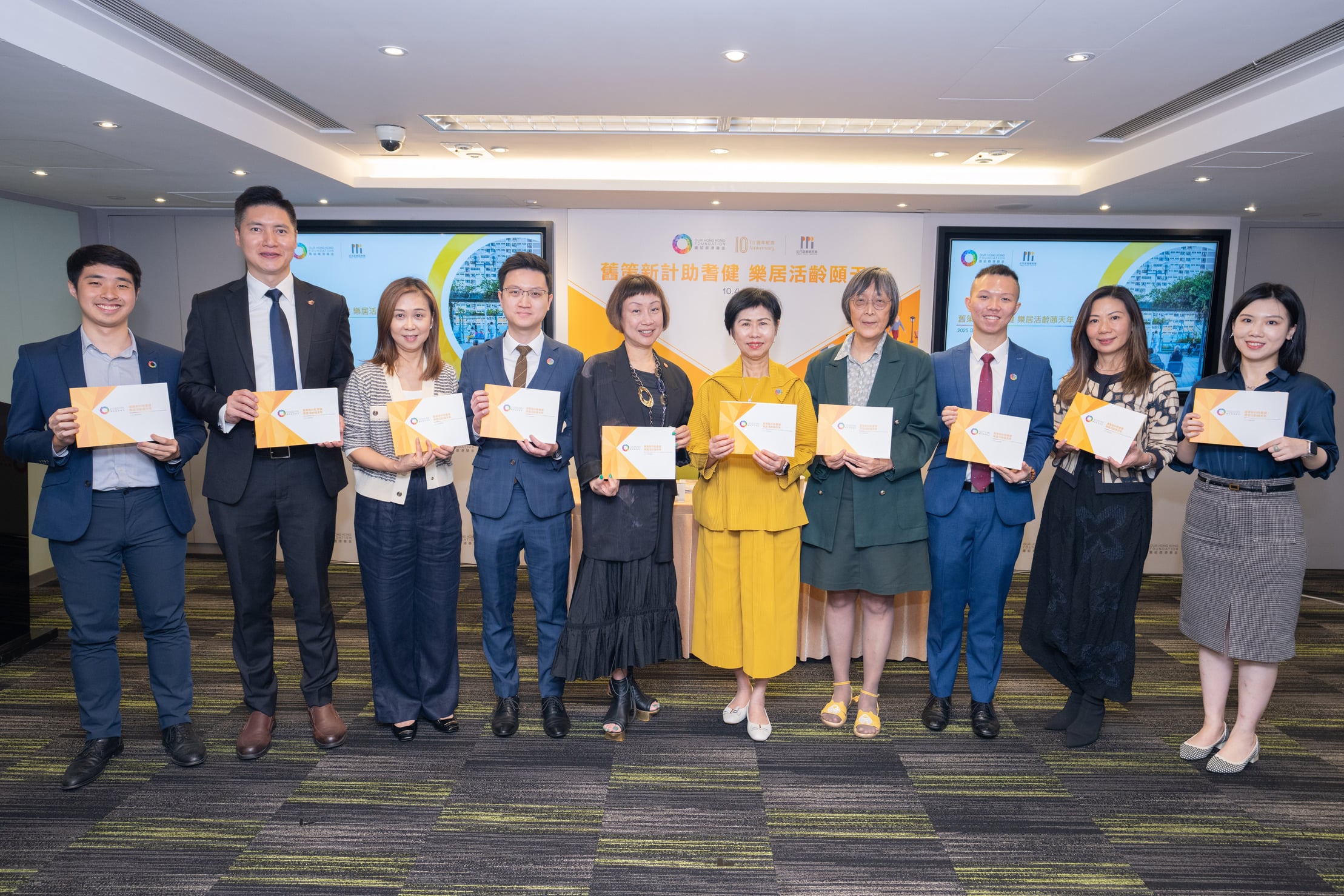


[Hong Kong, April 10, 2025] – Our Hong Kong Foundation (OHKF) today released a new policy advocacy report, “Policy Path to Ageing in Place for Hong Kong: Shaping an Inclusive Housing and Community Landscape”. This study was conducted in a strategic partnership with Chinachem Group, leveraging their industry expertise to propose six policy recommendations aimed at improving the living environments of Hong Kong’s seniors. The goal is to promote ageing in place and alleviate long-term healthcare expenditures.
Hong Kong’s ageing population has become an increasingly pressing issue in recent years, with the fiscal burden of seniors’ healthcare costs drawing significant attention. According to the latest data, government healthcare spending has reached HK$127.9 billion, accounting for 16.26% of total expenditure. Given current fiscal constraints, every aspect of spending must be optimised to maximise impact.
Ageing in place is closely linked to healthcare costs. Hong Kong faces a “double ageing” challenge, as both its population and building infrastructure are growing older. This creates multiple safety risks. Data from the Department of Health in 2018 shows that 74.5% of accidental injuries among the seniors in Hong Kong were due to falls. To reduce the risk of falls and injuries among the seniors, it is essential to start at the source by promoting home modifications and Inclusive Design to enhance home safety, thereby indirectly lowering healthcare costs. OHKF estimates that implementing these recommendations could reduce annual hospitalisation expenses by at least HK$5.67 billion in 2046, when the senior population is anticipated to account for 36% of the total population.
OHKF President Dr Jane Lee said, "We sincerely thank the Chinachem Group team for their full commitment, sharing valuable expertise and practical experience to enhance the research content, making the report's recommendations more aligned with the housing needs of the Hong Kong’s seniors. This collaborative effort demonstrates the corporate responsibility of the business sector in contributing to the society through their professional perspective and expertise." Dr Jane Lee continued, “Ageing in place is not just a welfare issue; it is a societal imperative. Our recommendations emphasise cross-sector collaboration, from co-payment models to cross-service partnerships. By reimagining housing and community systems, Hong Kong can empower seniors to live with dignity and contribute meaningfully to our city’s future.”
The six key recommendations from OHKF to tackle the challenges posed by an ageing population include:
1. Creating diverse strategies to facilitate seniors’ access to home modifications
Leveraging Elderly Health Care Voucher to support all seniors, OHKF suggests incorporating home modification assessments into the Elderly Health Care Voucher Pilot Reward Scheme. By providing cash back to seniors’ accounts, they would be encouraged to seek home modification assessments from therapists. Additionally, the government could consider establishing a new co-payment tool for home modification and renovation implementations, adopting a review mechanism based on age and financial status to determine the proportion of government subsidies and user contributions.
2. Promoting the adoption of Inclusive Design in new housing
Currently, Public Rental Housing and Subsidised Housing in Hong Kong adopt a Universal Design approach, but this “one-size-fits-all” model may not effectively meet the diverse needs of the seniors. OHKF recommends revising design manuals and incorporating relevant provisions into building regulations to promote the adoption of Inclusive Design, allowing for greater flexibility in housing adaptations.
To encourage the private sector to adopt Inclusive Design, the government could integrate an Inclusive Design checklist into building assessment systems like BEAM Plus, offering developers gross floor area concessions or additional plot ratio incentives.
3. Establishing favourable market conditions for private senior housing
Private senior housing projects can meet market demand while easing the Government’s burden. The Government could clearly define “Senior Housing” and introduce a tiered gross floor area concession mechanism, increase land supply for senior housing through restrictive land lease, encourage diverse financing tools to support construction of senior housing projects, and enhance the financial stability of retirees to help them afford better living options.
4. Enhancing property management capabilities to improve the quality of life for community dwelling seniors
The Government should promote the inclusion of age-friendly criteria in standards for property management service procurement. At the same time, it can adopt strategies of "capacity building" and "capacity bridging", such as enhancing targeted vocational training programmes and establishing collaboration mechanisms with social workers of elderly centres and creating a centralised platform to match property management companies with local services. These measures aim to foster cross-sector cooperation.
5. Optimising community resources and facilities in response to demographic changes
Demographic shifts and societal changes have led to mismatches or underutilisation of community resources. The Government could regularly review population changes, adjust resource allocation, and re-plan community centre services to meet evolving needs. It could also encourage the development of online matching platforms to help community service centres identify and book underused resources.
6. Enhancing public spaces to promote the age-friendliness of the community
The Government should regularly evaluate the inclusivity of spaces and collect district-based feedback. Building on this, it could introduce “Lighter, Quicker, Cheaper” (LQC) solutions, such as reserving “white spaces” for temporary installations and offering short-term funding to encourage community participation, to help improve the age-friendliness of public spaces.
Non-Official Member of the Executive Council of the HKSAR Government Dr Lam Ching-choi emphasised, “Elderly care policy involves collaboration between multiple stakeholders and cross-departmental coordination, encompassing broad societal dimensions and profound impacts on citizens' welfare. This necessitates high-level government stewardship to build an age-friendly society collectively. Although the Government established the principle of ‘ageing in place as the core, institutional care as back-up’ over two decades ago, Hong Kong still lacks a comprehensive senior housing strategy. The territory requires the formulation of relevant policies to establish a development framework that actively promotes ageing in place.”
Director of the Chinese University of Hong Kong Jockey Club Institute of Ageing, Professor Jean Woo pointed out, “Healthy ageing is a key factor for ageing in place. It not only means avoiding diseases and reliance on medical treatments but also emphasises enabling older people to maintain autonomy in their lives according to their own values. Therefore, an important prerequisite for ageing in place is to create a living environment and social support system that empowers seniors to experience healthy ageing in their daily lives.”
OHKF Vice President and Executive Director of Public Policy Institute Mr Ryan Ip remarked, “Housing is the cornerstone of ageing in place. By expanding access to home modifications, embedding Inclusive Design into our building codes, and incentivising private-sector innovation in senior housing, we can create environments where seniors live safely today and adapt seamlessly tomorrow. This isn’t just about infrastructure—it’s about dignity, sustainability, and a shared commitment to Hong Kong’s future."
OHKF Head of Healthcare and Social Innovation Mr Dicky Chow commented, “Our findings reveal that ageing in place depends on community cohesion. From empowering property management to cross-sector resource sharing, successful implementation hinges on collaboration between NGOs, business sectors, and policymakers. These are not simply abstract concepts; they are concrete and effective measures. For instance, enhancing home safety to prevent elderly falls can achieve a substantial reduction in medical costs, potentially saving up to HKD 5.67 billion. Most importantly, we want to help create a society where our seniors can thrive and not just survive."
-
Full Contents of “Policy Path to Ageing in Place for Hong Kong: Shaping an Inclusive Housing and Community Landscape”:
English: https://bit.ly/4hL5kSR
Chinese: https://bit.ly/4hEA6wA
Contents PPT and Photos: https://bit.ly/3RJChV0