





OHKF Releases Green Mega Events Research Report: Advocating For a “Mega Event Decarbonisation Roadmap”




OHKF Releases Green Mega Events Research Report: Advocating For a “Mega Event Decarbonisation Roadmap”

Covering Emission Reduction Measures Across All Event Stages
Expected to Generate Close to HKD 1 Billion in Annual Economic Value
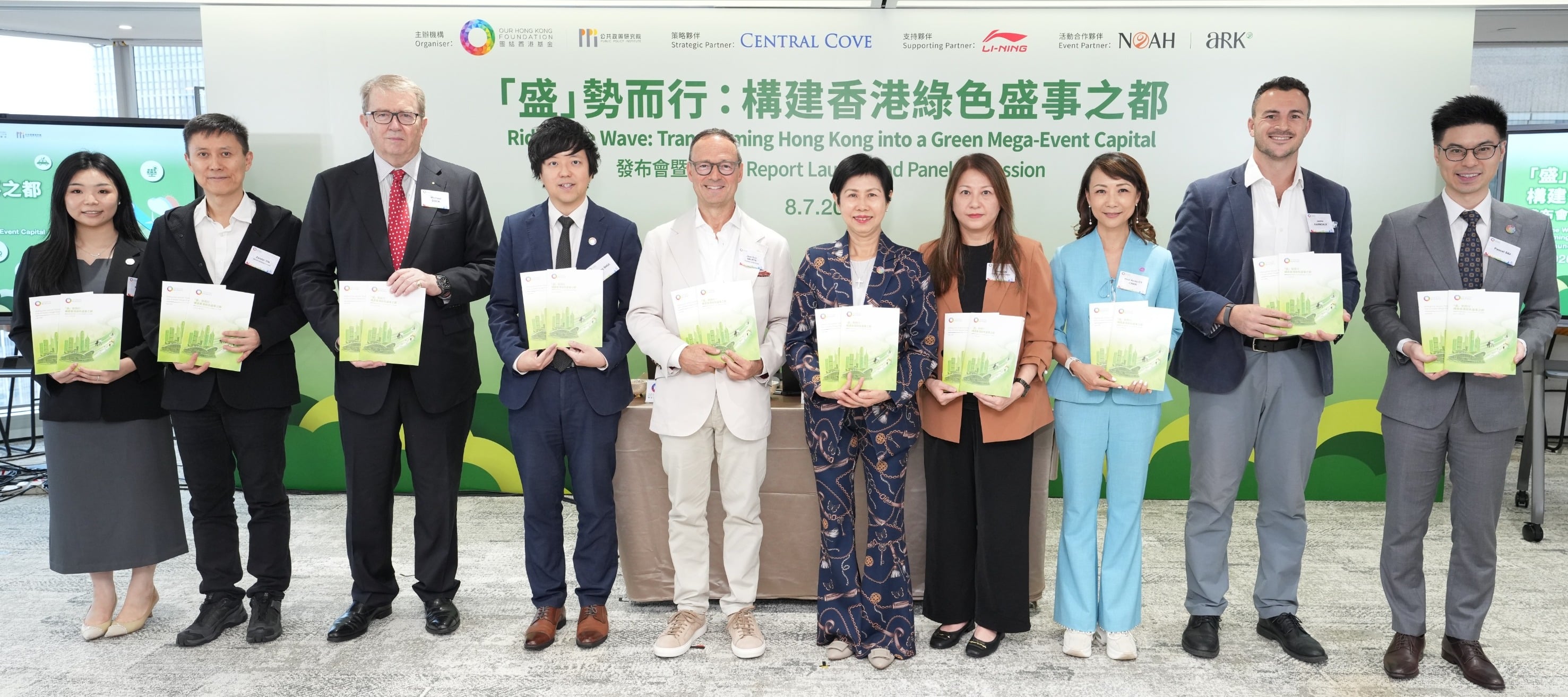
(8th July 2026, Hong Kong) Following the Hong Kong Government’s (the Government) active development of the mega-event economy in recent years, large-scale arts and cultural, sport, and MICE (Meetings, Incentives, Conventions, and Exhibitions) events have become a vital force for attracting tourists, driving consumption and showcasing the city’s international branding. Our Hong Kong Foundation (OHKF) today released a policy research report titled “Riding the Wave: Transforming Hong Kong into a Green Mega-Event Capital” (the Report). The Report highlights how a green mega-event economy drives synergy between economic growth and socio-environmental benefits, creating a strong foundation to establish Hong Kong as a premier international mega-event capital.
A Rising Global Trend: Green Transformation as the Key to Maintaining Competitiveness
OHKF points out that international mega events are placing an increasing emphasis on the environmental footprint of events. The 15th National Games successfully achieved carbon neutrality, while the Paris Olympics reduced emissions by half compared to previous games. Regional competitors such as Singapore and Thailand have also integrated carbon neutrality into their MICE industry planning. With an event’s environmental performance becoming a higher priority for international organisers, sponsors, and event participants, Hong Kong must proactively integrate sustainability into mega-event planning to maintain the city’s long-term competitiveness as a leading international event host.
Data shows that in 2025 alone, a multitude of mega events in Hong Kong attracted approximately three million visitors, generating approximately HKD 9.8 billion in spending and HKD 5.7 billion in value added to the local economy. By leveraging and translating the recommended sustainability requirements into industry capacity and market competitiveness, the Report calculates that Hong Kong can unlock an estimated annual local value-added close to HKD 1 billion. This includes retaining and attracting more high-value international events to Hong Kong, as well as fostering new demand for green event goods and services, such as carbon accounting, reusable booths, recycling services, and low-carbon merchandise.
Three Driving Principles: Balancing Economic and Environmental Benefits
The Report emphasises that the promotion of green mega events will not hinder Hong Kong’s ability to attract events, nor does it prioritise environmental requirements at the expense of economic development. To this end, the Report proposes three core driving principles:
Adhering to “Mega Events First, Green Transformation Follows”: This requires first securing Hong Kong’s status as a major global mega-event hosting ground. Subsequently, through an affordable and phased approach, the city can support organisers, venues, and exhibitors in undergoing a green transition, thereby achieving both economic and environmental goals.
Government-led, Multi-stakeholder Collaboration: Through top-level policy, the Government can actively steer the participation of various stakeholders, including event organisers, venues, exhibitors, suppliers, and talent training institutions.
A Gradual Approach for Market Adaptation: Policies should initially be introduced on a voluntary and pilot basis, with requirements gradually strengthened as market maturity grows, allowing the industry time to build capacity and progressively enhance its capabilities in organising green events.
Building a Green Mega-Event Ecosystem: Four Core Recommendation Directions
Direction 1: Government-led Top-Level Policy Framework for “Green Mega Events”
In the short term, it is recommended that the Government incorporate "Green Mega Events" into the Hong Kong Climate Action Plan 2050, which is expected to be updated in the second half of 2026. This will send a clear policy signal and raise market awareness, thereby guiding organisers, venues, and suppliers to establish transparent and promising transformation roadmaps.
Direction 2: Optimising Funding Mechanisms and Leveraging the Leading Role of the “M” Mark System and the Mega Arts and Cultural Events Fund
Using existing funding channels as entry points, flagship arts, cultural, and sports events can serve as piloting grounds for green initiatives, where successful measures can later be scaled up based on market capacity.
[Pre-event] Progressive Integration of the “Green Event Plan” into Application Requirements: The first phase (2027) includes having the “Green Event Plan” as a voluntary submission. The second phase provides a green bonus (e.g. HKD 1 million) for voluntary applicants, serving not only as a financial incentive, but also a subsidy for the additional expenses incurred from implementing decarbonisation measures. Subject to market readiness, the final phase (on or before 2032) could explore making the “Green Event Plan” a mandatory requirement for funding applications.
[During event] Designate Official Testing Grounds for Green Initiatives: The Government can utilise publicly funded flagship events to pilot sustainable schemes. These include reward systems for sustainable behaviours (e.g. recycling or use of reusable tableware) and kinetic floors and other measures for renewable energy generation.
[Post-event] Implementing Local Carbon Offsetting: Require funded mega events to complete carbon accounting, and gradually implement local carbon offsetting arrangement. Organisers can purchase carbon credits through Hong Kong’s voluntary carbon market, Core Climate, or allocate funds to the newly-established "Green Mega Event Climate Fund" based on an internal carbon price set by the Government.
Direction 3: Driving MICE Events’ Green Transformation via Venue Contracts and Operational Standards
MICE events are concentrated in a few key venues in Hong Kong, rendering it ideal for progressive operational requirements to be introduced through management contracts.
[Overall Development] Commerce and Economic Development Bureau and the Transport and Logistics Bureau are recommended to integrate “Green Operating Clauses” into management contracts for Hong Kong Convention and Exhibition Centre (HKCEC) and AsiaWorld-Expo (AWE): Under these clauses, the authorised management companies would be required to set KPIs including decarbonisation and recycling targets.
[Pre-event] Incentivising use of reusable booths by providing rental discounts: To shift away from the “build and burn” culture, the report recommends that venues adopt international frameworks like Better Stands and offer venue rental discounts to exhibitors using reusable booths.
[During to Post-event] Venues should accurately measure the electricity consumption of individual events to help organisers fulfil ESG reporting requirements, and provide a robust material circulation network to handle event-specific waste (such as exhibition carpets and decorative wood).
Direction 4: Strengthening Supply-chain Support to Facilitate Market Adaptation
Considering the green premiums associated with early-stage transitions toward sustainable goods and services, the Government can intervene through policy support and financial incentives to help the industry overcome entry barriers.
Establish “Green Supplier Directory” and Relaunch "E-Green Voucher Scheme”: The Government can commission credible organisations (e.g. Hong Kong Quality Assurance Agency) to compile a supplier list covering areas such as reusable booth construction, low-carbon merchandise, recycling services, carbon accounting, and sustainability certification. E-vouchers can also be relaunched on a pilot basis (e.g. funding up to HKD 100,000 per event) to encourage organisers to use local green services.
Develop “Green Event Warehouses” and Introduce Recycling Technologies: Spaces within industrial zones or new development areas (e.g. Northern Metropolis) can be purposed as storage facilities for reusable materials (e.g. booths, furniture), effectively reducing cross-border transport carbon footprint. Furthermore, the Recycling Fund and EcoPark can be utilised to encourage enterprises to introduce advanced technologies for processing event-specific waste, such as exhibition carpets and wooden booths.
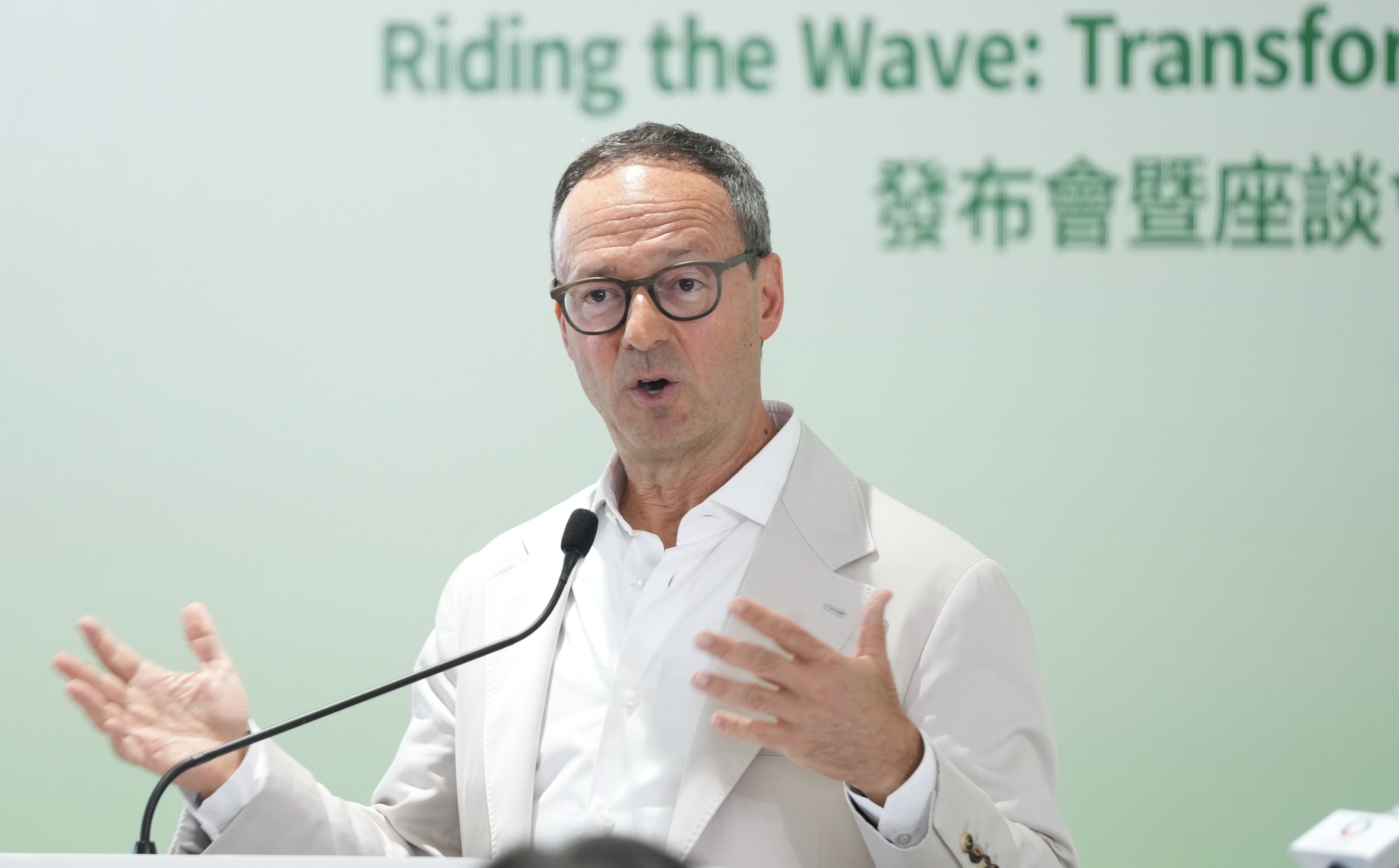
Mr Jean Eric Salata, Founder and Owner of Central Cove Group and Chairman of EQT Group, stated: “Sustainability and profitability are not mutually exclusive. In fact, sustainability is a source of long-term competitiveness, of building a competitive economy, of future-proofing Hong Kong. Ultimately, there is an underlying economic logic driving these initiatives. We have the ingredients: world-class venues, an excellent transport system, and, with the National Games, proof that we can host carbon-neutral events at scale.”
Dr Jane Lee, President of OHKF, noted: "In promoting green mega-events, Hong Kong is building on an existing foundation rather than starting entirely anew. The 15th National Games, Hong Kong Sevens, and the Coldplay concert in Hong Kong have all integrated carbon reduction measures, proving Hong Kong’s vast experience and capability to host green mega events. Leveraging this strong foundation, we must ride the wave and accelerate our transformation into a green mega-event capital.”
Mr Kenny Shui, Vice President of OHKF cum Executive Director of PPI, pointed out: “With the rapid development of the mega-event economy in recent years, promoting green mega-events is a win-win strategy that balances economic and environmental benefits. This move not only ensures that we retain existing international events that value environmental performance, but also allows us to continue attracting more high-profile, high-value-added mega events to Hong Kong. At the same time, it presents new economic opportunities for our green event goods and services industry, driving demand for local carbon accounting, reusable booth construction and sustainability certification.”
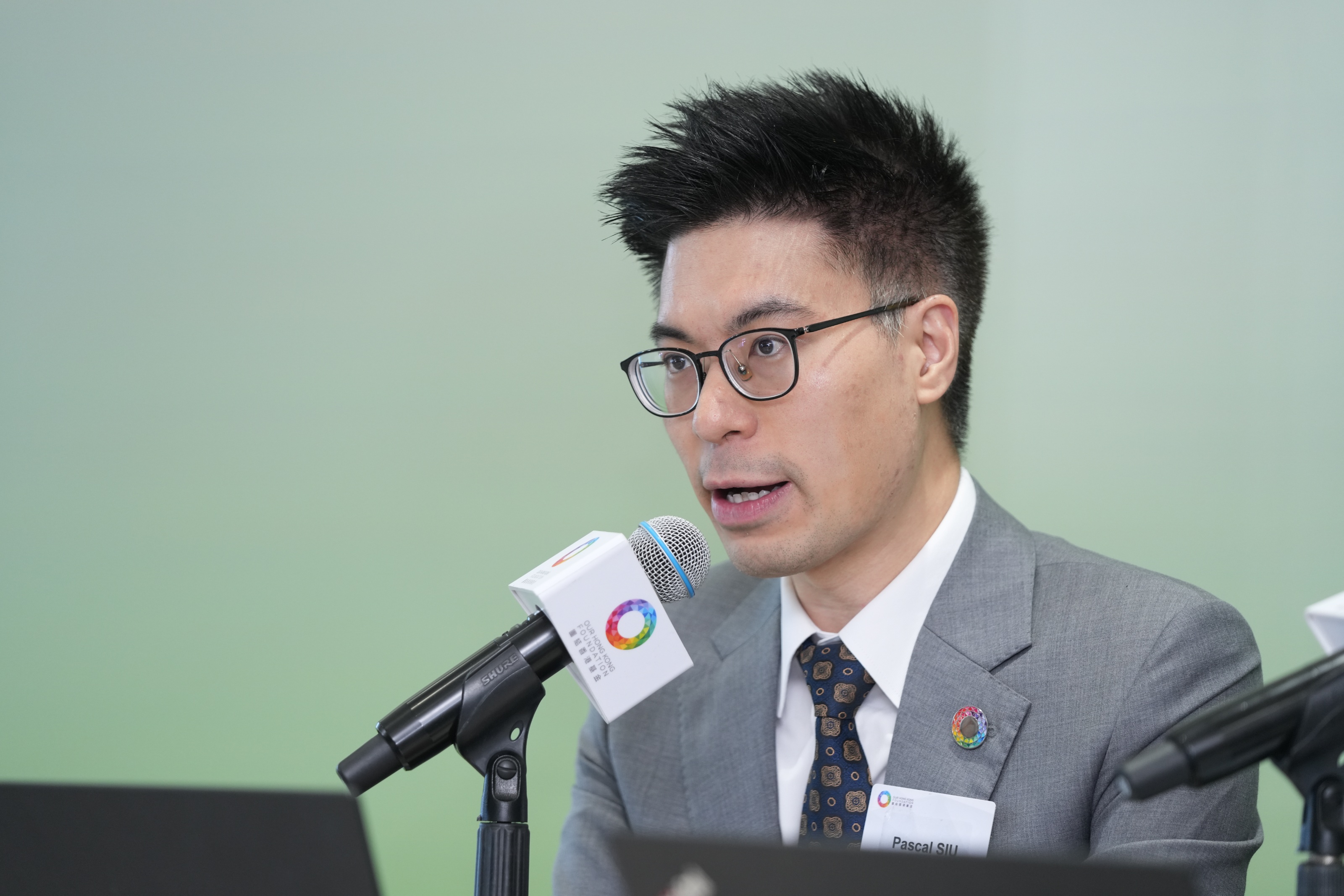
Mr Pascal Siu, Head of Green and Sustainable Research at OHKF, said: “Given their high visibility and public influence, large-scale arts, cultural and sports events are great entry points for driving green transformation. We recommend that the Government leverage existing funding mechanisms such as the “M” Mark system and the Mega Arts and Cultural Events Fund to require the submission of a “Green Event Plan” from organisers before the event; implement locally viable waste and carbon reduction measures during the event; and drive local carbon offsetting after the event. By linking funding with environmental indicators, green requirements can be progressively transformed into standard industry practices.”
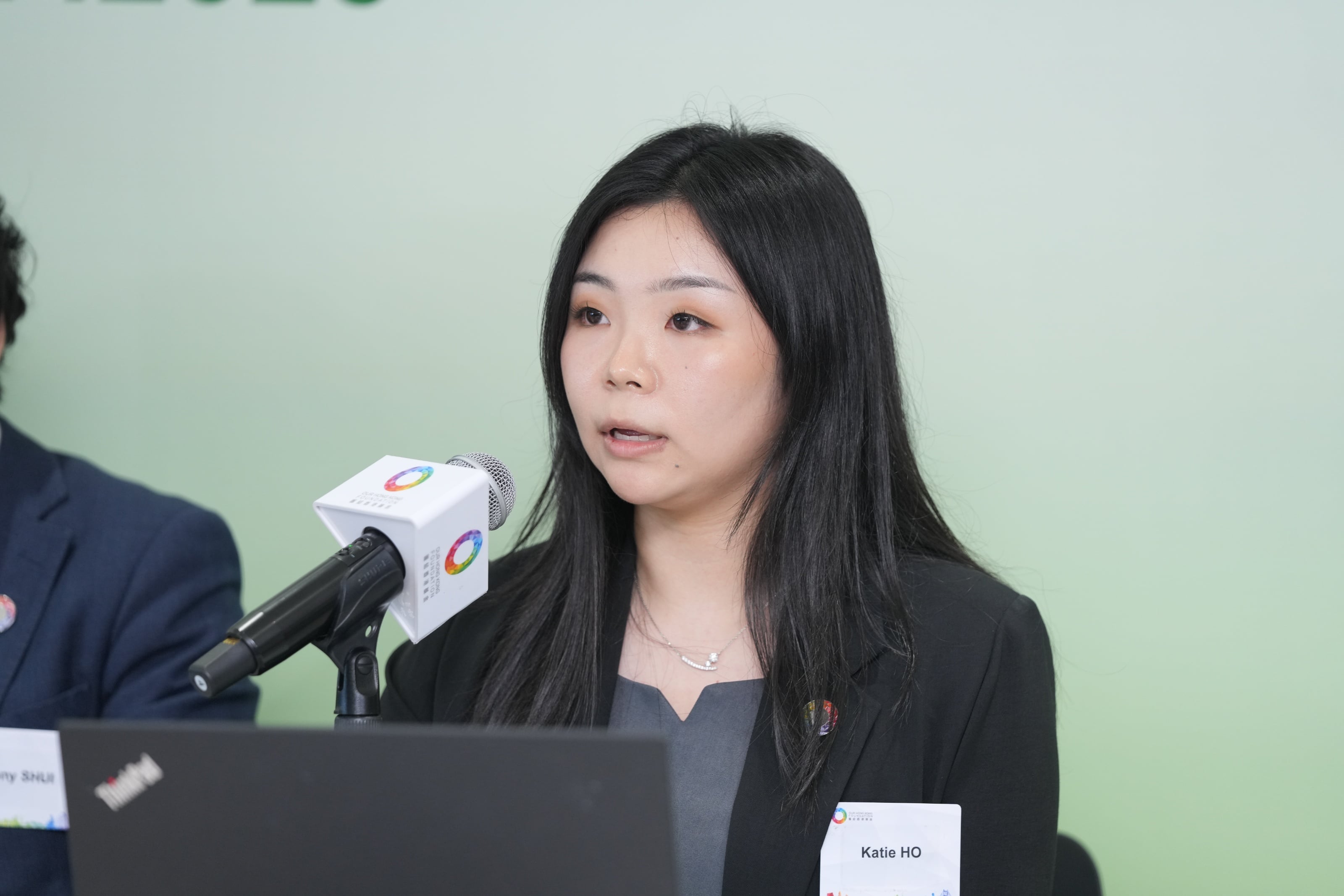
Following the report launch, OHKF hosted a panel discussion featuring Mr Jean Eric Salata, Founder and Owner of Central Cove Group and Chairman of EQT Group; Professor Anna CY Chan, Director of The Hong Kong Academy for Performing Arts; Mr Michael Duck, Executive Vice President of Commercial Development (Asia) at Informa Markets; and Mr Jamie Farndale, General Manager of Club Development and Sustainability at Hong Kong China Rugby. The panel explored how to channel more resources into green mega events and reviewed the current progress of green transformation across cultural, arts, sports, and MICE events.
The event was fully booked and received strong support and participation from distinguished guests across various sectors, with Central Cove Group serving as Strategic Partner, Li Ning Company Limited as Supporting Partner, and ARK GROUP HOLDINGS (HONG KONG) LIMITED as Event Partner.
-
“Riding the Wave: Transforming Hong Kong into a Green Mega-Event Capital”
Full Report: https://bit.ly/4gqKpaL
Presentation Slide: https://bit.ly/4voEy9D


Covering Emission Reduction Measures Across All Event Stages
Expected to Generate Close to HKD 1 Billion in Annual Economic Value
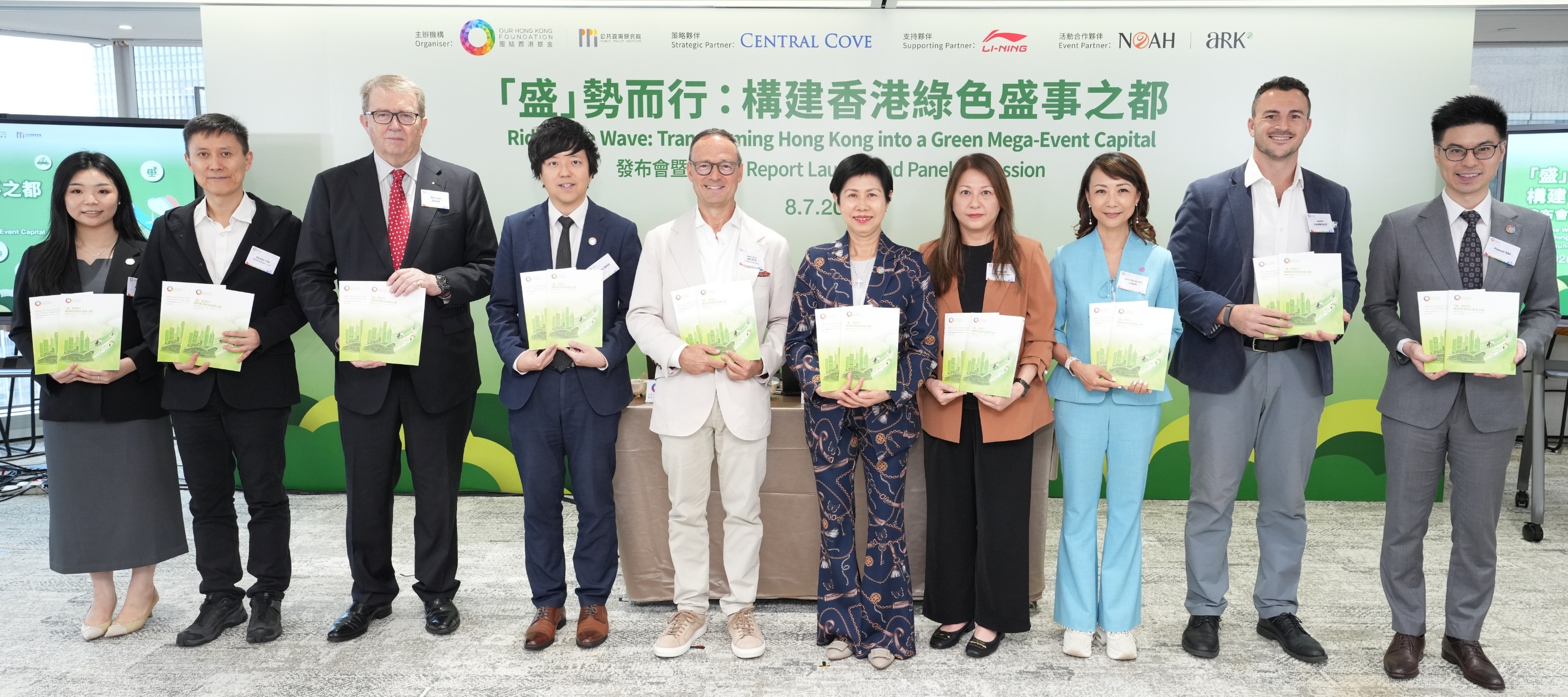
(8th July 2026, Hong Kong) Following the Hong Kong Government’s (the Government) active development of the mega-event economy in recent years, large-scale arts and cultural, sport, and MICE (Meetings, Incentives, Conventions, and Exhibitions) events have become a vital force for attracting tourists, driving consumption and showcasing the city’s international branding. Our Hong Kong Foundation (OHKF) today released a policy research report titled “Riding the Wave: Transforming Hong Kong into a Green Mega-Event Capital” (the Report). The Report highlights how a green mega-event economy drives synergy between economic growth and socio-environmental benefits, creating a strong foundation to establish Hong Kong as a premier international mega-event capital.
A Rising Global Trend: Green Transformation as the Key to Maintaining Competitiveness
OHKF points out that international mega events are placing an increasing emphasis on the environmental footprint of events. The 15th National Games successfully achieved carbon neutrality, while the Paris Olympics reduced emissions by half compared to previous games. Regional competitors such as Singapore and Thailand have also integrated carbon neutrality into their MICE industry planning. With an event’s environmental performance becoming a higher priority for international organisers, sponsors, and event participants, Hong Kong must proactively integrate sustainability into mega-event planning to maintain the city’s long-term competitiveness as a leading international event host.
Data shows that in 2025 alone, a multitude of mega events in Hong Kong attracted approximately three million visitors, generating approximately HKD 9.8 billion in spending and HKD 5.7 billion in value added to the local economy. By leveraging and translating the recommended sustainability requirements into industry capacity and market competitiveness, the Report calculates that Hong Kong can unlock an estimated annual local value-added close to HKD 1 billion. This includes retaining and attracting more high-value international events to Hong Kong, as well as fostering new demand for green event goods and services, such as carbon accounting, reusable booths, recycling services, and low-carbon merchandise.
Three Driving Principles: Balancing Economic and Environmental Benefits
The Report emphasises that the promotion of green mega events will not hinder Hong Kong’s ability to attract events, nor does it prioritise environmental requirements at the expense of economic development. To this end, the Report proposes three core driving principles:
Adhering to “Mega Events First, Green Transformation Follows”: This requires first securing Hong Kong’s status as a major global mega-event hosting ground. Subsequently, through an affordable and phased approach, the city can support organisers, venues, and exhibitors in undergoing a green transition, thereby achieving both economic and environmental goals.
Government-led, Multi-stakeholder Collaboration: Through top-level policy, the Government can actively steer the participation of various stakeholders, including event organisers, venues, exhibitors, suppliers, and talent training institutions.
A Gradual Approach for Market Adaptation: Policies should initially be introduced on a voluntary and pilot basis, with requirements gradually strengthened as market maturity grows, allowing the industry time to build capacity and progressively enhance its capabilities in organising green events.
Building a Green Mega-Event Ecosystem: Four Core Recommendation Directions
Direction 1: Government-led Top-Level Policy Framework for “Green Mega Events”
In the short term, it is recommended that the Government incorporate "Green Mega Events" into the Hong Kong Climate Action Plan 2050, which is expected to be updated in the second half of 2026. This will send a clear policy signal and raise market awareness, thereby guiding organisers, venues, and suppliers to establish transparent and promising transformation roadmaps.
Direction 2: Optimising Funding Mechanisms and Leveraging the Leading Role of the “M” Mark System and the Mega Arts and Cultural Events Fund
Using existing funding channels as entry points, flagship arts, cultural, and sports events can serve as piloting grounds for green initiatives, where successful measures can later be scaled up based on market capacity.
[Pre-event] Progressive Integration of the “Green Event Plan” into Application Requirements: The first phase (2027) includes having the “Green Event Plan” as a voluntary submission. The second phase provides a green bonus (e.g. HKD 1 million) for voluntary applicants, serving not only as a financial incentive, but also a subsidy for the additional expenses incurred from implementing decarbonisation measures. Subject to market readiness, the final phase (on or before 2032) could explore making the “Green Event Plan” a mandatory requirement for funding applications.
[During event] Designate Official Testing Grounds for Green Initiatives: The Government can utilise publicly funded flagship events to pilot sustainable schemes. These include reward systems for sustainable behaviours (e.g. recycling or use of reusable tableware) and kinetic floors and other measures for renewable energy generation.
[Post-event] Implementing Local Carbon Offsetting: Require funded mega events to complete carbon accounting, and gradually implement local carbon offsetting arrangement. Organisers can purchase carbon credits through Hong Kong’s voluntary carbon market, Core Climate, or allocate funds to the newly-established "Green Mega Event Climate Fund" based on an internal carbon price set by the Government.
Direction 3: Driving MICE Events’ Green Transformation via Venue Contracts and Operational Standards
MICE events are concentrated in a few key venues in Hong Kong, rendering it ideal for progressive operational requirements to be introduced through management contracts.
[Overall Development] Commerce and Economic Development Bureau and the Transport and Logistics Bureau are recommended to integrate “Green Operating Clauses” into management contracts for Hong Kong Convention and Exhibition Centre (HKCEC) and AsiaWorld-Expo (AWE): Under these clauses, the authorised management companies would be required to set KPIs including decarbonisation and recycling targets.
[Pre-event] Incentivising use of reusable booths by providing rental discounts: To shift away from the “build and burn” culture, the report recommends that venues adopt international frameworks like Better Stands and offer venue rental discounts to exhibitors using reusable booths.
[During to Post-event] Venues should accurately measure the electricity consumption of individual events to help organisers fulfil ESG reporting requirements, and provide a robust material circulation network to handle event-specific waste (such as exhibition carpets and decorative wood).
Direction 4: Strengthening Supply-chain Support to Facilitate Market Adaptation
Considering the green premiums associated with early-stage transitions toward sustainable goods and services, the Government can intervene through policy support and financial incentives to help the industry overcome entry barriers.
Establish “Green Supplier Directory” and Relaunch "E-Green Voucher Scheme”: The Government can commission credible organisations (e.g. Hong Kong Quality Assurance Agency) to compile a supplier list covering areas such as reusable booth construction, low-carbon merchandise, recycling services, carbon accounting, and sustainability certification. E-vouchers can also be relaunched on a pilot basis (e.g. funding up to HKD 100,000 per event) to encourage organisers to use local green services.
Develop “Green Event Warehouses” and Introduce Recycling Technologies: Spaces within industrial zones or new development areas (e.g. Northern Metropolis) can be purposed as storage facilities for reusable materials (e.g. booths, furniture), effectively reducing cross-border transport carbon footprint. Furthermore, the Recycling Fund and EcoPark can be utilised to encourage enterprises to introduce advanced technologies for processing event-specific waste, such as exhibition carpets and wooden booths.
Mr Jean Eric Salata, Founder and Owner of Central Cove Group and Chairman of EQT Group, stated: “Sustainability and profitability are not mutually exclusive. In fact, sustainability is a source of long-term competitiveness, of building a competitive economy, of future-proofing Hong Kong. Ultimately, there is an underlying economic logic driving these initiatives. We have the ingredients: world-class venues, an excellent transport system, and, with the National Games, proof that we can host carbon-neutral events at scale.”
Dr Jane Lee, President of OHKF, noted: "In promoting green mega-events, Hong Kong is building on an existing foundation rather than starting entirely anew. The 15th National Games, Hong Kong Sevens, and the Coldplay concert in Hong Kong have all integrated carbon reduction measures, proving Hong Kong’s vast experience and capability to host green mega events. Leveraging this strong foundation, we must ride the wave and accelerate our transformation into a green mega-event capital.”
Mr Kenny Shui, Vice President of OHKF cum Executive Director of PPI, pointed out: “With the rapid development of the mega-event economy in recent years, promoting green mega-events is a win-win strategy that balances economic and environmental benefits. This move not only ensures that we retain existing international events that value environmental performance, but also allows us to continue attracting more high-profile, high-value-added mega events to Hong Kong. At the same time, it presents new economic opportunities for our green event goods and services industry, driving demand for local carbon accounting, reusable booth construction and sustainability certification.”
Mr Pascal Siu, Head of Green and Sustainable Research at OHKF, said: “Given their high visibility and public influence, large-scale arts, cultural and sports events are great entry points for driving green transformation. We recommend that the Government leverage existing funding mechanisms such as the “M” Mark system and the Mega Arts and Cultural Events Fund to require the submission of a “Green Event Plan” from organisers before the event; implement locally viable waste and carbon reduction measures during the event; and drive local carbon offsetting after the event. By linking funding with environmental indicators, green requirements can be progressively transformed into standard industry practices.”
Following the report launch, OHKF hosted a panel discussion featuring Mr Jean Eric Salata, Founder and Owner of Central Cove Group and Chairman of EQT Group; Professor Anna CY Chan, Director of The Hong Kong Academy for Performing Arts; Mr Michael Duck, Executive Vice President of Commercial Development (Asia) at Informa Markets; and Mr Jamie Farndale, General Manager of Club Development and Sustainability at Hong Kong China Rugby. The panel explored how to channel more resources into green mega events and reviewed the current progress of green transformation across cultural, arts, sports, and MICE events.
The event was fully booked and received strong support and participation from distinguished guests across various sectors, with Central Cove Group serving as Strategic Partner, Li Ning Company Limited as Supporting Partner, and ARK GROUP HOLDINGS (HONG KONG) LIMITED as Event Partner.
-
“Riding the Wave: Transforming Hong Kong into a Green Mega-Event Capital”
Full Report: https://bit.ly/4gqKpaL
Presentation Slide: https://bit.ly/4voEy9D