





中国实现百年蓝图建文明法治社会




中国实现百年蓝图建文明法治社会

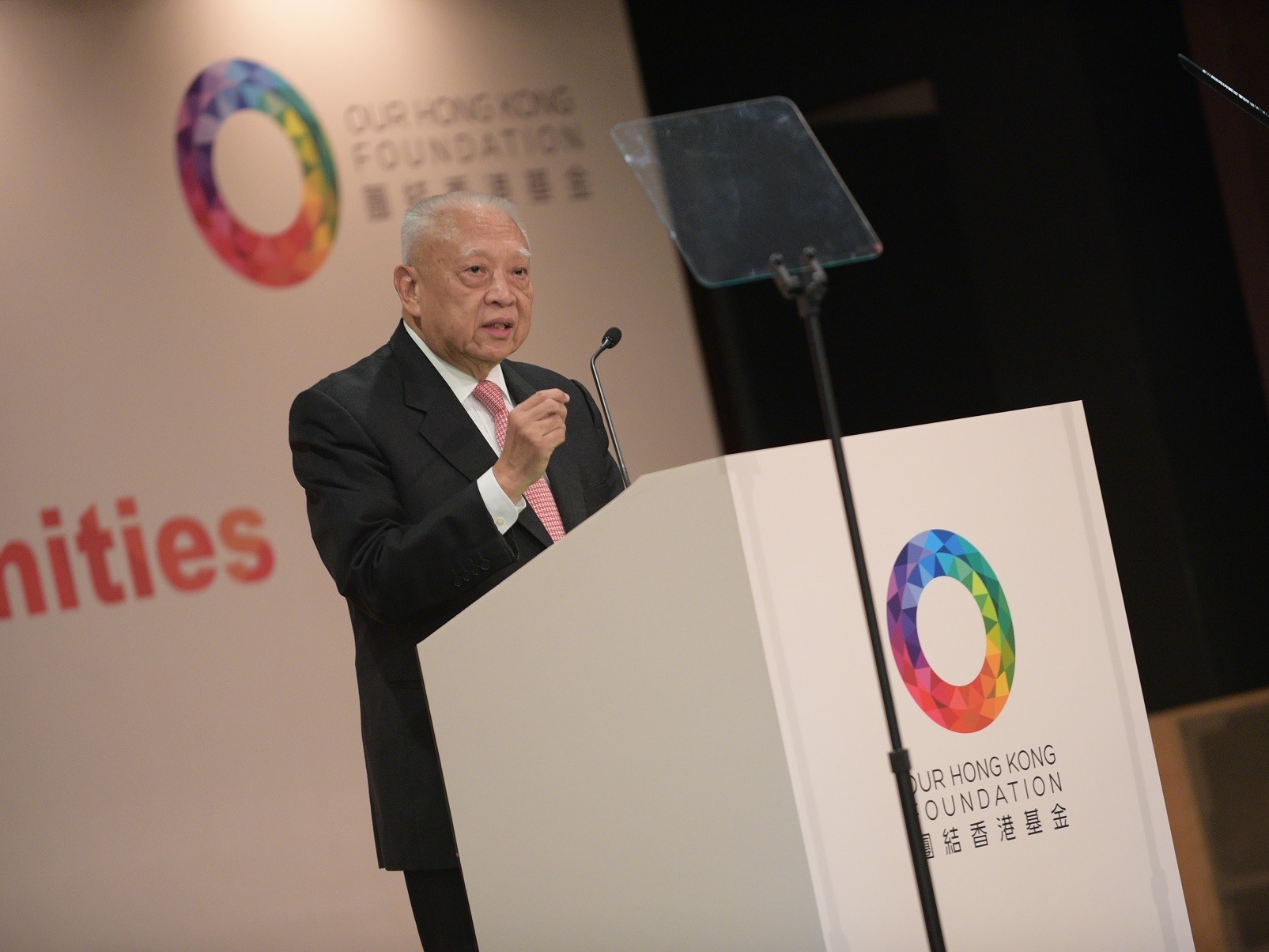
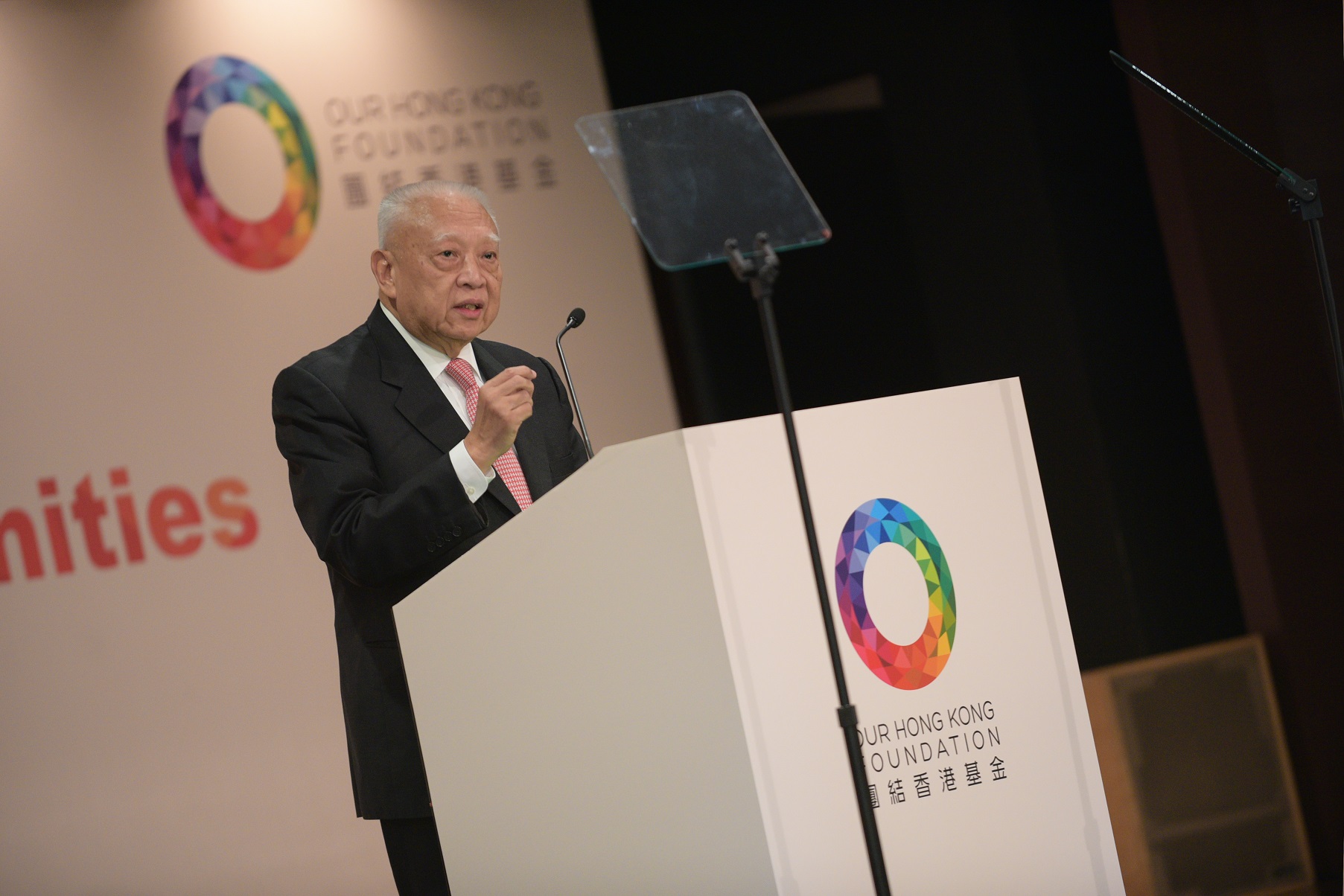
团结香港基金创办人兼主席董建华先生于2015年12月14日出席由团结香港基金主办的“今日中国:新前景、新机遇”论坛,发表主题演讲。论坛假香港会展中心举行,邀请到来自美、英、法三位政商界着名翘楚,以及香港兰桂坊集团主席盛智文先生出席演讲,香港冯氏集团主席冯国经博士担任主持。论坛吸引逾600多人出席,主要为青年人,分别来自30个青年团体和10间大专院校。以下为董建华先生的发言辞:
各位朋友、嘉宾:
午安!
多谢您出席这个论坛。今天十分难得可以请来四位杰出的嘉宾,为我们讨论一个我们都关心,亦是与我们前途息息相关的议题。四位讲者与我们分享他们的智慧和经验,在此,我向他们深表谢意。我亦非常感谢各位嘉宾抽空出席。
我们举办这个论坛目的,是在中国正在迅速成长和发展的时候,探讨世界和香港如何能抓紧这个机遇。今天,不论在本地市场、学术界、以及国际舞台都在谈论中国的经济发展和影响。我们透过脸书、推特等网络媒体,经常接收到有关中国的信息及新闻,有时你们会以为自己了解中国的状况,但有时亦觉得不大清晰。中国发展一日千里,我们要不断更新对中国的认识,才能明智地评估中国现时的地位,以及将来的机遇。
今天我们有幸邀请到来自美国、英国、法国和本港的四位杰出讲者,从国际视野角度透析中国的现在和将来。我想以我的观察和经验,先和大家谈一谈形成今日中国的那些重要历程及发展。在过去几十年,我有幸得以近距离观察到中国的伟大成就──包括许多的波折及深刻的教训。可以说中国的成功绝非偶然,而是靠坚守其基本信念。中国一直都在追求互惠协作的信念,这个原则正正在中国国家主席习近平于过去两个半月的外交活动中,表露无遗。
习近平主席在此期间进行了六次国事访问,首先访问美国、随之到了英国、越南、新加坡、津巴布韦、以及南非。访问期间,他又参加了五个多边会议,包括在纽约的联合国重要会议、土耳其的20国集团领导人峰会、马尼拉的亚洲太平洋经济合作会议、巴黎气候变化大会、以及中非合作论坛约翰内斯堡峰会。他还参加了金砖国家领导人非正式会晤,此外,他在多边会议期间会见了30 位国家或地区的领导人,就双方共同关心的话题进行双边讨论。在这两个半月,除外访活动之外,习主席在北京处理国家事务时,分别与到访中国的德国总理默克尔和法国总统奥朗德会面,举行双边会议。
习主席的频密的外交活动,突显了中国对良好国际关系的高度重视。他给予外国领袖的信息都是清晰明确的。在和平共处、互相尊重、互不干涉内政以及发挥双方优势的原则下,达致互利共赢、共享繁荣的局面。习主席强调,中国认为,我们活在一个互相依靠的世界,一个面对挑战及转变的世界,只有各国之间携手合作,才能克服各种困难,例如经济增长放缓、恐怖主义威胁、以及气候变化危机。
习主席及随访人员所到之处,都受到了尊重与热情接待。
请允许我讲述一下中国近年在国际事务上所作的贡献。第一,在世界经济从2008年金融海啸中复苏过程中,中国发挥了举足轻重的作用。从2009-2011年,中国对世界经济增长所作的贡献,超逾一半。最近,虽然中国经济进入新常态,以每年百分之七的速度增长,但对世界经济增长的贡献仍维持在30%。
第二,中国在解决或缓解全球重点争议,包括朝鲜、阿富汗、伊朗等危机中,发挥了建设性作用。中国也与联合国安理会其他常任理事国一起,向世界各地派出维和部队,参与联合国维和工作。
第三,中国正寻求方法促进全球尤其是发展中国家的经济增长。中国的“一带一路”计划不仅有利于中国,也将惠及东南亚、南亚和中亚各国,在中东及欧洲的国家也可得益。各国对亚洲基础设施投资银行的支持,显示了许多国家为了自身利益皆乐见这计划得以成功推动。 在非洲, 较早前于约翰内斯堡举行的中非合作峰会上,也寻求方法利用中国的“新常态”经济,以及非洲为不再过度依赖自然资源,逐步转型所作的努力,让双方进一步落实优势互补,互利共赢。 会谈的结果让人充满希望。
第四,我们应该庆幸巴黎的气候变化会议可达成协议。自从在哥本哈根的会议失败后,中国的国策是致力推动巴黎会议取得成功。中国和美国是两个温室效应气体排放量最多的国家,在这次巴黎气候会议协议达成上,过程中出现很多困难,中国代表扮演重要角色,最终促使协议达至成功。
以上,是中国积极参与国际事务,与世界各国携手向前的事例。
中国过去的剖析
我现在谈谈中国的过去和现况。
今天的中国,洋溢着乐观和希望。 这与她的过去截然不同。了解昨日的中国有助我们理解今天的中国。
中国的衰落始于清朝末年,孙中山先生于1911年10月发动的辛亥革命,推翻了满清政府,欲为中国带来新的希望。然而,接下来的却是内乱、军阀割据、内战、及日军的侵略占领,带来了持久的伤痛与破坏。
直到1949年,中华人民共和国成立,经历了多年战乱及破坏的中国一贫如洗, 许多地方的人们食不果腹。基建、住房、教育、医疗卫生设施及其他的社会福利均百废待兴,亦需建立新的政治体制,虽然工作繁重,但是中国终于统一了,国家建设的工作,亦可以开展。
当然,文化大革命期间中国犯过错误。但自1978年,邓小平提出改革开放的政策促使真正的发展,令国家踏上一条走向发展成为现代化大国不可逆转的大道。
中国现今登上国际舞台
今天的中国,市场经济制度茁壮成长,主要的基建设施已具规模。 教育、医疗及其它社会福利也全面普及。1978年至今,超过三十多年来经济以每年接近10%的速度增长。就算以今天新常态下,经济仍然能够以每年7%速度增长。 城市化进程稳步前进,人民生活显着改善。这一切使近7亿人民得以脱贫。
今天的中国,是全球第二大经济体系,拥有全世界最多的外汇储备, 同时也是全球两个最大的贸易国之一。在人类历史上,在如此短时间内达成这么巨大成就,是无其他国家能及的成就。
许多人都想知道中国是如何创造出这一奇迹的。 这当中有部分是外在因素。 中国从空前扩张的国际贸易及高效推动生产力的科学技术中受益匪浅。中国有效地抓住了这独特的机遇。
但更重要的是内在原因。首先是领导班子交接制度化,以能者当之为基础,让领导层权力顺利移交。另一原因,是国家领导人能制订具前瞻性的长期宏观经济及地缘政治策略,以及贯彻执行非常复杂的政策。领导人在意识形态和原则的指导下, 不怕挑战旧思维,并在必要时做出灵活的新尝试。 这个新思维,是让中国高速发展的重要原因。
另一个重要的原因是中国人民的勤奋和要成功的决心,加上不断提升的自由度,激发了国民创业创新的热情。如今民营企业已经占国民生产总值的60%,这一比重仍然继续上升。
促进经济发展和扶助人民脱贫,是中国自从改革开发以来一直坚持的目标。2008年金融风暴后,另一个新焦点是应付国内外因金融风暴所引起的挑战。优先处理这些事项是正确的方向,可惜国家投放不够关注力在其他重要事项,例如环境保护和管治,管治不够着力便导致贪腐问题恶化。但庆幸中国政治制度可以迅速及有效回应和纠正这些错误。这方面的工作仍然继续,并且得到人民的支持。初步已取得的成效,令人鼓舞。
未来的愿景
以上简述了中国的过去与现状,中国的未来又如何呢?
要了解中国正在走的方向,我们需要知道她对未来的愿景,以及看得到她所规划的路线图和蓝图。
2049年的目标
在2049年,中华人民共和国将迎来百年华诞,中国的愿景是届时跻身发达国家行列。我们预期看到的是强大的中国经济在未来数十年间将继续壮大,迎接共和国百年盛典。 这不仅是一个经济目标。国家领导人清楚意识到追求纯经济指标并不足够。我们是要有一个发展良好的经济、财富均衡分配,小康的生活水平,健康的生活环境,以及一个文明、正义和依法治国的社会。这就是中国未来几十年间的愿景。为达到这一目标,经济结构将会有进一步的调整,对经济增长的追求也将更加重质而非量。
既然中国已有清晰的愿景,该如何达至呢?
2020年的路线图和蓝图
最近,经常会看到一些中国的腐败官员和国企高管被检控的消息。的确,反腐行动是国家建设策略之一,并且是中国愿景的一个重要部分,这一策略不仅是为了在经济上建设小康社会,更为了进一步改革社会和政治体制,在廉洁、爱民的党的领导下,建立一个公正平等的法制社会。
“十三五”规划预期于明年3月提交全国人民代表大会表决。
此规划预期到2020年时,国民生产总值将较2010年翻一番。中国的领导人知道自1978年改革开放以来,10%的经济增长率难以持续。在这个五年计划中,中国将进入一个“新常态”。中国经济从过份依赖出口、投资、廉价劳工,正逐步靠向消费、服务业、科技及知识的经济发展方式转型。
这一“新常态”是将来成功之匙,它有五大基石所支持。首先是创新,这将成为经济增长新动力;其次是区域协调发展,避免重叠;第三是可持续发展;第四是坚持改革开放;最后是共享繁荣。对于中国这样一个大国,新常态将开启崭新的世界,但它也是进一步发展的唯一方法。
目前国家仍面临着巨大的挑战,尤其在工业产能过剩、老年化社会、对改善医疗服务的需求以及消除贫困等领域。国家会处理这些挑战。 “十三五”计划中,中国将帮助余下的7000万人在2020年前脱贫。
要完成中国的愿景、路线图、蓝图并非易事,过程中将充满着预料中的或突发性的国内和国外的挑战。我们是有理由乐观:
1、中国经济体系强大、人力资源充沛、有一个日趋成熟的中产阶级市场,以及科技的不断发展;
2、中国领导人清楚明白,要达到经济和社会发展目标,一定要不断改革,依法施政、建立公义社会、共享繁荣、并须由一个廉洁和勤政的政党所领导。
3、国际上,中国会尽一切努力,去寻求和平和共享繁荣,并与邻国和其他国家共同发展以提高生活质素。中国古语有云:“睦邻天下兴”。 即使从自身利益出发,中国也将发展和维持睦邻友好关系,并积极发展友好的新型大国关系。中国亦会继续深化和扩阔对外开放。
成功达到2049年的愿景,就是实现了中国梦。还有一段长时间才到2049年,在实现中国梦的路途上,会有不同的内在和外来的挑战。 但是以中华人民共和国建国66年来我们所取得的成就,加上我们政治制度的优势和勤奋人民的支持,我有信心中国将能完成愿景,实现梦想。
香港如何能获益
我请大家将注意力放回香港。尽管世界上发生了许多波折,但香港始终是一块福地。2008年出现的金融危机,令一些国家至今仍未能恢复元气。但从2011年起,香港的失业率就维持在3.3% 的低位,家庭收入平均每年增长6%,特区政府也持续录得巨额盈余。
香港的成功有多方面的原由,但其中很重要的一点就是中国内地经济的发展,对香港起到了非常积极的影响。纵观历史,香港的命运确实与中国内地密不可分。
中国因素是香港最大的竞争优势。在 “一国两制”之下,我们受惠于 “一国”所带给我们的经济增长利益。同时“两制”让我们可以保持既有的生活方式,包括继续实行普通法的司法制度。有了这些优势使香港有别于其他地方包括新加坡或上海。
第二项优势源于香港作为国际化大都会的地位。事实上,香港较亚洲区内任何城市都更加国际化。香港有相当多的人拥有海外教育背景,或有海外联系。这使得香港能够在中国与世界其他地区之间扮演“超级连系人”的重要角色。
第三是我们有全亚洲最好的服务产业,包括金融、法律、医疗及教育领域;作为一个着名的旅游中心,我们拥有世界级酒店与餐厅,丰盛多采的娱乐及会展盛事,自然风光也相当明媚。
我们的第四项优势在于拥有畅通无阻的渠道,以汇集全球资讯、资金及人才,加之对中国内地市场的了解,为创新提供了独一无二的沃土。
这四大优势让香港处于一个独特的地位,承接中国发展大潮带来的利益。当中国正持续向2049的目标迈进,其经济会持续增长,人民币将逐步加强兑换能力,人民生活标准会提高,国家将需要高质量的专业服务,这恰是香港的强势所在。作为一个“超级连系人”,香港能有效地协助“十三五”、“一带一路”等规划与国际接轨。最终,中国为各地区平衡发展所做的努力,亦将会为香港的企业家打开更广阔的市场。而在改革开放三十年间,香港工商界在中国沿海地区,尤其是珠三角及广东地区发展中的功绩有目共睹。
亚洲区的经济将持续增长,香港位于亚洲中心,能为亚洲各国提供多样的高质专业服务,我们过往几十年中所做到的,也将在未来延续、甚至做得更多。
中国的崛起为香港提供一浪又一浪独特的、史无前例的机遇。在“一国两制”下的香港,前景一片光明。
香港当然亦面对多项挑战,包括我们立法机构和政治制度的纷争及停滞不前、许多港人对国家的现况缺乏了解、以及政府急需因应世界迅速改变而发挥更积极角色。我抱有信心,只要大家同心同德,这些问题在未来几年会顺利解决。
拥抱中国:我们的目标 我们的将来
最后,我想对香港人,尤其是香港年青人说几句话。因为我们现在谈的是未来,是你们的未来。
在过去一年,我特别仔细去听取年青人的呼声。
我知道香港年青人有多方面的关注,追求一个更公平公义的社会,渴望更多他们能负担置业的住屋、更理想的教育制度装备自己,以应付转变中的世界。这是你们的诉求,是我的期盼,也是我们的共同期望,是我们共同努力的目标。
我相信大多数香港人都希望我们能够更积极地参与和支持中国的崛起,并从中受益。这是我们应当承担的使命。
然而,要达致这目标,我们必须更清楚了解中国,了解中国的历史、文化,国家的挑战与机遇。
我们应如何去了解中国?“千里之行,始于足下”。我认为最好的方法是亲身穿梭祖国大地,与祖国人民交流,了解他们面对的挑战和心中的期许。到内地求学交流也是一个好主意,亦可以在毕业后报读内地的研究生课程,或到中国企业实习。 无论如何,投资时间和精力多了解内地状况和到内地学习都是必要的。
深入认识中国,会让你更能掌握工作上和事业上所遇到的机遇和挑战,不论你日后选择在什麽地区工作或开展什麽类型的事业,都是如此,可以让你一生受用不尽。
希望您愿意为此做出努力,团结香港基金支持你的每一步行动。
英文演讲原文
Friends and guests, Good afternoon and thank you for joining us!
It’s not often that we can gather such a distinguished group of speakers as we have today to discuss a topic which is so close to our hearts, and so important to our future. I would like to extend my heartfelt gratitude to the speakers for agreeing to share their wisdom and experiences, and to our guests for giving up their time to be with us.
Our mission today is to shed light on how the world and Hong Kong can ride the wave of China’s rapid growth and development. China and her economic future and influence are topics on everyone’s lips – in local markets, in the academic world, and on the world stage. In this modern age of Facebook and Twitter, we constantly get snippets of information about what is happening inside China. And sometimes, you may think you know what is going on there, but sometimes you may not be so sure. China has been developing so fast that we need to be constantly on the alert to keep up with what is happening there, so that we can more intelligently assess her position today and her opportunities in the future. And this forum is put together for that very purpose.
Today, we have the honor of the presence at our forum of four distinguished speakers to give us their views on China from a world perspective – one each from the United States, Britain, France, and one from our very own Hong Kong.
Before they take turns to speak, I would like to first share my own observations and experience to highlight some of the important events and developments that have shaped modern day China. Over the past few decades, I have had the privilege of observing China’s enormous success at close range – the many twists and turns and the many hard lessons that were learnt. And all I can say is that the success of modern day China is not accidental. It has been made possible by adhering to her fundamental beliefs. One of these beliefs is the need for interdependence and collaboration with the outside world. China’s desire to putting this principle into practice could not be better demonstrated than by the diplomacy championed by President Xi Jinping in the past two and a half months.
During this period of time, President Xi undertook six state visits, beginning with the United States, followed by the United Kingdom, Vietnam, Singapore, Zimbabwe and South Africa. In between those meetings, he also attended 5 multilateral conferences, beginning with a number of important meetings at the United Nations in New York, and then on to the G20 Summit in Turkey, followed by the APEC meeting in Manila, the climate change conference in Paris, and, finally, the summit at the Forum on China-Africa Cooperation in Johannesburg. While at the fringes of the G20 Summit, he also attended the BRIC head of state informal meeting. Furthermore, taking advantage of the multilateral meetings, Mr. Xi met more than 30 state or government leaders on the fringes of the multilateral meetings for separate bilateral discussions over issues of mutual interest. During those two and a half months, in between overseas visits, Mr. Xi attended to the affairs of the state in Beijing. During that time, he separately received visits from Chancellor Merkel of Germany and President Hollande of France for bilateral meetings.
The intensity of President Xi’s activities highlights the great importance China attaches to good international relations. And his message to his hosts overseas was loud and clear – that China desires to pursue peace and shared prosperity under the principles of mutual respect, non-interference, and leveraging each other’s strengths to create win-win situations. President Xi stressed China’s recognition that we live in an interdependent world, a world that faces many challenges as well as changes; and it is only through collaboration that we can overcome the many difficulties the world faces, such as economic growth, fighting terrorism, or overcoming climate change.
In these gatherings, President Xi and his colleagues were received with great respect and enthusiasm everywhere they went.
Allow me to elaborate on some of China’s contributions internationally in recent years. First, China played a significant role in helping the world to recover from the global financial crisis of 2008, contributing over 50% of global economic growth from 2009 to 2011. More recently, even though the Chinese economy has entered into a “new normal,” growing at about 7%, her contribution to world growth still stands at about 30%.
Second, China has been playing a significant role in helping to resolve or mitigate crises in global hot-spots, such as North Korea, Afghanistan, and Iran. She also leads all other UN Security Council Permanent Member nations in providing UN peace keeping forces around the world.
Third, China is looking for ways to bolster economic growth globally, but particularly in the developing world. Her “One Belt / One Road” strategy will not only help China, but also many countries in Southeast Asia, South Asia, and Central Asia. Countries in the Middle East and Europe may also benefit. The support for Asian Investment and Infrastructure Bank suggests enormous interest of many countries to turn this initiative into reality. In Africa, at the recent China-Africa summit in Johannesburg, the two partners sought ways to leverage China’s “new normal” economy, and Africa’s effort to move away from overreliance on natural resources, to another win-win situation. The meeting ended on a hopeful note.
Fourth, we should all rejoice that the Paris climate change conferences have come to a successful conclusion. Since Copenhagen’s unsuccessful conference, China’s national policy has been to work toward a successful conclusion in Paris. Some two years ago, China and the United States, as the two largest emitters of greenhouse gases, agreed to together take a strong lead to ensure the Paris conference will come to a successful conclusion. This has now come to fruition.
I hope this can give you an idea of how much China has become engaged with the rest of the world.
Insights from the Past
Let me now move on to the topic of China’s past and present.
China today is a story of hope and optimism. China’s past is a different story, and appreciating her past is one way to better assess her future.
China’s decline began towards the end of the Qing Dynasty. The revolution in October 1911, which was started by Dr. Sun Yat-sen, brought about the fall of the Qing Dynasty, and, at the same time, ushered in high hopes for China’s renewal. But unfortunately chaos, warlordism, civil war and the Japanese invasion and occupation ensued, all of which caused a prolonged period of pain and destruction.
It was not until 1949 that the People’s Republic of China was established. But, by that time, after years of disorder and devastation, the country was financially bankrupt and there was hunger in parts of the country. Infrastructure, housing, schools, health care facilities and other social welfare services needed to be built. New political institutions needed to be established. The work ahead was enormous, but, at last, the country was united as one and true nation building could begin.
Of course, mistakes were made during the Cultural Revolution. But since the reform and opening up policy, which was initiated by Deng Xiaoping in 1978, real development took hold, launching China on an irreversible trajectory toward modern statehood.
Ascendance to the world stage Today
Today, a market economy is thriving. Essential physical infrastructure has been built. Education, health care and other social services has been made widely available. Since 1978, for over thirty years the economy expanded at a rate of close to 10% per annum. Today, even under the new normal, the economy is expanding at 7%. Urbanization has progressed and livelihoods have improved dramatically. Throughout all this, 700 million people were lifted out of poverty.
Today, China is the second largest economy in the world, holds the world’s largest foreign exchange reserves, and is one of the two largest trading nations in the world. Never before in the history of mankind, has so much been achieved for so many people in such a short period of time.
Many wonder how China’s miracle has come about. Some of the reasons are external. The unprecedented expansion of global trade and the heightened use of science and technology to improve productivity globally have benefited China to a great extent. Indeed, China has been able to seize upon these unique opportunities very effectively.
But more important are the internal reasons. First, the smooth transfer of leadership, based on meritocracy has been institutionalized. Second, is the ability of the Chinese leadership to formulate sound long-term macroeconomic and geopolitical policies, and to effectively implement very complex policy initiatives. Leaders, under the guidance of their ideology and principles, were not intimidated by the necessity to challenge old thinking and make fresh changes. They responded promptly and acted flexibly. This mindset is the key to set China on the trajectory of high-speed growth.
Third, is because of the hard work of the Chinese people and their determination to succeed. Additionally, the expansion of freedom in the country has lifted the innate entrepreneurial and innovative spirit of the Chinese people. Today, private sector enterprises account for more than 60% of the GDP of the country, and that figure is continuing to rise.
Throughout this period since reform and opening, China’s singular focus was on speeding growth and lifting people out of poverty. Post 2008, the focus was also on combating the financial crisis at home and globally. They were the right priorities, but unfortunately, insufficient attention was paid to other important issues, such as on environmental protection and governance, the lack of which exacerbated corruption. Fortunately, China’s political system can respond quickly and effectively to correct these errors. This is being done, and being done with the support of the people. Indeed, initial results are encouraging.
A Vision for the Future
So much about the past and the present. What about the future?
To understand what China is going through, we need to know her vision of the future, and visualize her roadmap and blueprint that have been laid out.
Objective of 2049
Let me talk about this vision. By 2049 when the People’s Republic marks its centennial, China’s vision is to join the ranks of the developed countries of the world. What we would expect to see is that the already giant economy will once again transform itself in the decades towards that next centenary. This will not just be an economic target alone. China's leadership well recognizes that a pure economic target is not enough. A well-developed economy, a fair distribution of wealth, a decent living standard, a healthy environment, a civil and upright society, and a just society governed by the rule of law – this is China's vision for the next few decades. To that end, its economic structure needs to be adjusted accordingly and growth will be more focused on overall quality rather than quantity.
So while China's vision is clear, how will it get there?
The strategic roadmap and blueprint for the run-up to 2020
These days, one often reads or hears about corrupt officials or executives of SOEs getting prosecuted. Indeed, the anti-corruption campaign is an important part of China's four-pronged nation building strategy and a critical part of its vision. The strategy is to build not only a well-off society, but also further reform the social and political institutions to ensure a fair, equitable society governed by law rather than individuals, and led by a party that's clean, conscientious and cares for her people.
With regard to the 13th Five-Year Plan, the timetable is for the National People’s Congress to pass the plan in March of next year. In this plan, China expects her GDP to double by 2020, as compared to that of 2010. Chinese leaders understood that the 10% per annum growth rate since reform and opening began in 1978 is unsustainable. Through this new Five-Year Plan, China will take a path of a “New Normal,” moving away from an overreliance on exports, investments, and cheap labor, to one that relies on consumption, on the services sector, and on science, technology and knowledge.
This “New Normal” holds the key for future success. It is supported by five anchors. The first is innovation, which can move the economy forward; second, is coordinated development of her various regions to avoid duplication; third is sustainable development; fourth is continued reform and opening-up; and fifth is the sharing of prosperity for all. For a country of this size, this “New Normal” is a brave new world, but it is the only way to move forward.
The country is still faced with enormous challenges, particularly in the areas of industrial overcapacity, an ageing society, the need for healthcare improvements, and the eradication of poverty. All these challenges will be tackled. Indeed, the upcoming Five-Year Plan vows that the remaining 70 million people who still live in poverty in China shall be lifted out of poverty by 2020.
Realizing China’s vision, roadmap and blueprint, is not easy. The road is fraught with challenges, predictable and unpredictable, domestic and international. However, there is reason to be optimistic:
1) China will benefit from the enormous size of her economy, a huge population, a large and maturing middle-class market, together with progress in science and technology.
2) Chinese leaders clearly understand that only with persistent reform, the implementation of the rule of law, the building of a just society, the sharing of prosperity, and leadership by a clean, conscientious party, will China be able to achieve its economic and social development goals.
3) Internationally, China will do her best to embrace peace and shared prosperity, growing together with its neighbors and beyond to achieve better standards of living. As the Chinese saying goes, "peace with neighbors brings prosperity at home." Even for its own self-interest, China will develop and maintain a good neighbor policy while keeping amicable relations with other big powers based on the new concept of major power relationships. China will also continue her effort to deepen and to broaden her opening up to the outside world.
Realizing Vision 2049 is realizing the Chinese dream. 2049 is many years away. The road forward will be full of challenges, both domestic and international. But, given what we have achieved in the last 66 years since the establishment of the People’s Republic of China, I am full of hope that, with the political institutions and the support of the hard-working people, there is a good chance to deliver that vision and dream.
How Hong Kong stands to benefit
I would now like to turn your attention to Hong Kong. In our recent history, despite the ups and downs all over the world, Hong Kong has been a reasonably fortunate place. The financial crisis of 2008 left such a long tail of destruction that today some countries are still trying to recover. But, from 2011 onward, Hong Kong’s unemployment was only 3.3%. Our household income since 2011 has increased an average of 6% per annum. We continue to run huge fiscal surpluses.
There are many reasons for this, but one of the most important reason is the economic growth in China, which has really bolstered Hong Kong. Indeed, throughout Hong Kong’s history, our fate has been inextricably linked to Mainland China.
Indeed, the China factor is Hong Kong’s number one competitive advantage. Under “One Country, Two Systems,” we can enjoy the “one country” aspect as China’s economy continues to grow. At the same time, we maintain our way of life, including practicing our common law legal system under the “two systems”. Having the best of both worlds makes us unique compared with cities such as Singapore and Shanghai.
Second is the competitive advantage derived from its status as a cosmopolitan, international city. Hong Kong is more international than any other city in Asia. We have a substantial proportion of people who have been educated overseas, or have overseas links. These advantages make Hong Kong a “super connector” between China and the rest of the world.
Third is our competitive advantage of having the best service industry in Asia, including financial services, legal services, and services in health care and education. We are a center for tourism with world-class hotels and restaurants, offering a robust year-round calendar of entertainment and conference events. Hong Kong also has stunning natural scenery.
Our fourth competitive advantage is our easy access to information, capital and talent around the world. These factors together with our knowledge of China’s market provide a unique soil for innovation.
These four big competitive advantages place Hong Kong in a unique position to ride China’s wave of development. As China marches forward towards her vision 2049, her economy will continue to grow, the RMB will move toward greater convertibility, her standard of living will improve, and the country will require professional services of a high standard, all of which Hong Kong can provide. As super connector, Hong Kong can link the 13th Five-Year Plan and the “One Belt, One Road” strategy to a global audience. And finally, China’s effort to balance her own regional development will open up many new frontiers for Hong Kong entrepreneurs, particularly those with experience in the Pearl River Delta of Guangdong.
The Asian regional economy will also continue to grow. Hong Kong, situated in the heart of Asia, can provide high-end services to the region, as we have done for decades, except now we can do more.
China’s current rise promises another surge of opportunities for Hong Kong, unavailable anywhere else, and not seen in history before. The prospect for Hong Kong’s future under “One Country, Two Systems” is bright.
Hong Kong is not without its challenges. The stagnation in our legislature and generally in our political system, the total lack of understanding of what’s going on in the mainland by many people, and the need for more proactive government involvement in a rapidly changing world, are all issues that need to be confronted. I am hopeful that, in the years to come, these issues can eventually be successfully tackled.
Embracing China: Our goal, our future
To conclude, I would like to say a few words to the people of Hong Kong, and in particular to the young people. Because it is the future we are talking about. It is your future we are talking about.
Over the past ear, I paid special attention to the voices of Hong Kong’s youth.
I know that you have many concerns about Hong Kong. You would like to see a more just and fair society, more affordable homes, a better education system that can equip you in a changing world, and, understandably, more opportunities for upward mobility. This is your wish, this is my wish, this is the wish of all of us, and it’s the direction that we should be moving in.
I am sure the majority of Hong Kong people want us to participate actively to support China’s rise, and to benefit from China’s rise. I believe many youth will think the same way. Yes, it is for us to take this on.
However, to do this effectively, we must understand China better, her history and her culture, her challenges and opportunities.
How would you get to know China better? To start with, I suggest you devote your time and effort to criss-cross China, to visit and engage people on the mainland, to understand their challenges and their aspirations, spend some time in schools on the mainland through exchange programs, take some post-graduate courses there, or intern in a business in China. In whatever form, a commitment of time and energy will be necessary.
Well equipped with your knowledge of China, you will be better prepared to take on whatever challenges or jobs or careers you may wish to take on, whether it is in China, Hong Kong or around the world. You are so lucky to be young at this time. I wish I am young. From my own experience, anything you do that will make Hong Kong and China better, will be that much more of a fulfilling life.
If you should undertake such an effort, I just want you to know, Our Hong Kong Foundation will be putting into place plans and programs to assist you along the way.
Thank you!


团结香港基金创办人兼主席董建华先生于2015年12月14日出席由团结香港基金主办的“今日中国:新前景、新机遇”论坛,发表主题演讲。论坛假香港会展中心举行,邀请到来自美、英、法三位政商界着名翘楚,以及香港兰桂坊集团主席盛智文先生出席演讲,香港冯氏集团主席冯国经博士担任主持。论坛吸引逾600多人出席,主要为青年人,分别来自30个青年团体和10间大专院校。以下为董建华先生的发言辞:
各位朋友、嘉宾:
午安!
多谢您出席这个论坛。今天十分难得可以请来四位杰出的嘉宾,为我们讨论一个我们都关心,亦是与我们前途息息相关的议题。四位讲者与我们分享他们的智慧和经验,在此,我向他们深表谢意。我亦非常感谢各位嘉宾抽空出席。
我们举办这个论坛目的,是在中国正在迅速成长和发展的时候,探讨世界和香港如何能抓紧这个机遇。今天,不论在本地市场、学术界、以及国际舞台都在谈论中国的经济发展和影响。我们透过脸书、推特等网络媒体,经常接收到有关中国的信息及新闻,有时你们会以为自己了解中国的状况,但有时亦觉得不大清晰。中国发展一日千里,我们要不断更新对中国的认识,才能明智地评估中国现时的地位,以及将来的机遇。
今天我们有幸邀请到来自美国、英国、法国和本港的四位杰出讲者,从国际视野角度透析中国的现在和将来。我想以我的观察和经验,先和大家谈一谈形成今日中国的那些重要历程及发展。在过去几十年,我有幸得以近距离观察到中国的伟大成就──包括许多的波折及深刻的教训。可以说中国的成功绝非偶然,而是靠坚守其基本信念。中国一直都在追求互惠协作的信念,这个原则正正在中国国家主席习近平于过去两个半月的外交活动中,表露无遗。
习近平主席在此期间进行了六次国事访问,首先访问美国、随之到了英国、越南、新加坡、津巴布韦、以及南非。访问期间,他又参加了五个多边会议,包括在纽约的联合国重要会议、土耳其的20国集团领导人峰会、马尼拉的亚洲太平洋经济合作会议、巴黎气候变化大会、以及中非合作论坛约翰内斯堡峰会。他还参加了金砖国家领导人非正式会晤,此外,他在多边会议期间会见了30 位国家或地区的领导人,就双方共同关心的话题进行双边讨论。在这两个半月,除外访活动之外,习主席在北京处理国家事务时,分别与到访中国的德国总理默克尔和法国总统奥朗德会面,举行双边会议。
习主席的频密的外交活动,突显了中国对良好国际关系的高度重视。他给予外国领袖的信息都是清晰明确的。在和平共处、互相尊重、互不干涉内政以及发挥双方优势的原则下,达致互利共赢、共享繁荣的局面。习主席强调,中国认为,我们活在一个互相依靠的世界,一个面对挑战及转变的世界,只有各国之间携手合作,才能克服各种困难,例如经济增长放缓、恐怖主义威胁、以及气候变化危机。
习主席及随访人员所到之处,都受到了尊重与热情接待。
请允许我讲述一下中国近年在国际事务上所作的贡献。第一,在世界经济从2008年金融海啸中复苏过程中,中国发挥了举足轻重的作用。从2009-2011年,中国对世界经济增长所作的贡献,超逾一半。最近,虽然中国经济进入新常态,以每年百分之七的速度增长,但对世界经济增长的贡献仍维持在30%。
第二,中国在解决或缓解全球重点争议,包括朝鲜、阿富汗、伊朗等危机中,发挥了建设性作用。中国也与联合国安理会其他常任理事国一起,向世界各地派出维和部队,参与联合国维和工作。
第三,中国正寻求方法促进全球尤其是发展中国家的经济增长。中国的“一带一路”计划不仅有利于中国,也将惠及东南亚、南亚和中亚各国,在中东及欧洲的国家也可得益。各国对亚洲基础设施投资银行的支持,显示了许多国家为了自身利益皆乐见这计划得以成功推动。 在非洲, 较早前于约翰内斯堡举行的中非合作峰会上,也寻求方法利用中国的“新常态”经济,以及非洲为不再过度依赖自然资源,逐步转型所作的努力,让双方进一步落实优势互补,互利共赢。 会谈的结果让人充满希望。
第四,我们应该庆幸巴黎的气候变化会议可达成协议。自从在哥本哈根的会议失败后,中国的国策是致力推动巴黎会议取得成功。中国和美国是两个温室效应气体排放量最多的国家,在这次巴黎气候会议协议达成上,过程中出现很多困难,中国代表扮演重要角色,最终促使协议达至成功。
以上,是中国积极参与国际事务,与世界各国携手向前的事例。
中国过去的剖析
我现在谈谈中国的过去和现况。
今天的中国,洋溢着乐观和希望。 这与她的过去截然不同。了解昨日的中国有助我们理解今天的中国。
中国的衰落始于清朝末年,孙中山先生于1911年10月发动的辛亥革命,推翻了满清政府,欲为中国带来新的希望。然而,接下来的却是内乱、军阀割据、内战、及日军的侵略占领,带来了持久的伤痛与破坏。
直到1949年,中华人民共和国成立,经历了多年战乱及破坏的中国一贫如洗, 许多地方的人们食不果腹。基建、住房、教育、医疗卫生设施及其他的社会福利均百废待兴,亦需建立新的政治体制,虽然工作繁重,但是中国终于统一了,国家建设的工作,亦可以开展。
当然,文化大革命期间中国犯过错误。但自1978年,邓小平提出改革开放的政策促使真正的发展,令国家踏上一条走向发展成为现代化大国不可逆转的大道。
中国现今登上国际舞台
今天的中国,市场经济制度茁壮成长,主要的基建设施已具规模。 教育、医疗及其它社会福利也全面普及。1978年至今,超过三十多年来经济以每年接近10%的速度增长。就算以今天新常态下,经济仍然能够以每年7%速度增长。 城市化进程稳步前进,人民生活显着改善。这一切使近7亿人民得以脱贫。
今天的中国,是全球第二大经济体系,拥有全世界最多的外汇储备, 同时也是全球两个最大的贸易国之一。在人类历史上,在如此短时间内达成这么巨大成就,是无其他国家能及的成就。
许多人都想知道中国是如何创造出这一奇迹的。 这当中有部分是外在因素。 中国从空前扩张的国际贸易及高效推动生产力的科学技术中受益匪浅。中国有效地抓住了这独特的机遇。
但更重要的是内在原因。首先是领导班子交接制度化,以能者当之为基础,让领导层权力顺利移交。另一原因,是国家领导人能制订具前瞻性的长期宏观经济及地缘政治策略,以及贯彻执行非常复杂的政策。领导人在意识形态和原则的指导下, 不怕挑战旧思维,并在必要时做出灵活的新尝试。 这个新思维,是让中国高速发展的重要原因。
另一个重要的原因是中国人民的勤奋和要成功的决心,加上不断提升的自由度,激发了国民创业创新的热情。如今民营企业已经占国民生产总值的60%,这一比重仍然继续上升。
促进经济发展和扶助人民脱贫,是中国自从改革开发以来一直坚持的目标。2008年金融风暴后,另一个新焦点是应付国内外因金融风暴所引起的挑战。优先处理这些事项是正确的方向,可惜国家投放不够关注力在其他重要事项,例如环境保护和管治,管治不够着力便导致贪腐问题恶化。但庆幸中国政治制度可以迅速及有效回应和纠正这些错误。这方面的工作仍然继续,并且得到人民的支持。初步已取得的成效,令人鼓舞。
未来的愿景
以上简述了中国的过去与现状,中国的未来又如何呢?
要了解中国正在走的方向,我们需要知道她对未来的愿景,以及看得到她所规划的路线图和蓝图。
2049年的目标
在2049年,中华人民共和国将迎来百年华诞,中国的愿景是届时跻身发达国家行列。我们预期看到的是强大的中国经济在未来数十年间将继续壮大,迎接共和国百年盛典。 这不仅是一个经济目标。国家领导人清楚意识到追求纯经济指标并不足够。我们是要有一个发展良好的经济、财富均衡分配,小康的生活水平,健康的生活环境,以及一个文明、正义和依法治国的社会。这就是中国未来几十年间的愿景。为达到这一目标,经济结构将会有进一步的调整,对经济增长的追求也将更加重质而非量。
既然中国已有清晰的愿景,该如何达至呢?
2020年的路线图和蓝图
最近,经常会看到一些中国的腐败官员和国企高管被检控的消息。的确,反腐行动是国家建设策略之一,并且是中国愿景的一个重要部分,这一策略不仅是为了在经济上建设小康社会,更为了进一步改革社会和政治体制,在廉洁、爱民的党的领导下,建立一个公正平等的法制社会。
“十三五”规划预期于明年3月提交全国人民代表大会表决。
此规划预期到2020年时,国民生产总值将较2010年翻一番。中国的领导人知道自1978年改革开放以来,10%的经济增长率难以持续。在这个五年计划中,中国将进入一个“新常态”。中国经济从过份依赖出口、投资、廉价劳工,正逐步靠向消费、服务业、科技及知识的经济发展方式转型。
这一“新常态”是将来成功之匙,它有五大基石所支持。首先是创新,这将成为经济增长新动力;其次是区域协调发展,避免重叠;第三是可持续发展;第四是坚持改革开放;最后是共享繁荣。对于中国这样一个大国,新常态将开启崭新的世界,但它也是进一步发展的唯一方法。
目前国家仍面临着巨大的挑战,尤其在工业产能过剩、老年化社会、对改善医疗服务的需求以及消除贫困等领域。国家会处理这些挑战。 “十三五”计划中,中国将帮助余下的7000万人在2020年前脱贫。
要完成中国的愿景、路线图、蓝图并非易事,过程中将充满着预料中的或突发性的国内和国外的挑战。我们是有理由乐观:
1、中国经济体系强大、人力资源充沛、有一个日趋成熟的中产阶级市场,以及科技的不断发展;
2、中国领导人清楚明白,要达到经济和社会发展目标,一定要不断改革,依法施政、建立公义社会、共享繁荣、并须由一个廉洁和勤政的政党所领导。
3、国际上,中国会尽一切努力,去寻求和平和共享繁荣,并与邻国和其他国家共同发展以提高生活质素。中国古语有云:“睦邻天下兴”。 即使从自身利益出发,中国也将发展和维持睦邻友好关系,并积极发展友好的新型大国关系。中国亦会继续深化和扩阔对外开放。
成功达到2049年的愿景,就是实现了中国梦。还有一段长时间才到2049年,在实现中国梦的路途上,会有不同的内在和外来的挑战。 但是以中华人民共和国建国66年来我们所取得的成就,加上我们政治制度的优势和勤奋人民的支持,我有信心中国将能完成愿景,实现梦想。
香港如何能获益
我请大家将注意力放回香港。尽管世界上发生了许多波折,但香港始终是一块福地。2008年出现的金融危机,令一些国家至今仍未能恢复元气。但从2011年起,香港的失业率就维持在3.3% 的低位,家庭收入平均每年增长6%,特区政府也持续录得巨额盈余。
香港的成功有多方面的原由,但其中很重要的一点就是中国内地经济的发展,对香港起到了非常积极的影响。纵观历史,香港的命运确实与中国内地密不可分。
中国因素是香港最大的竞争优势。在 “一国两制”之下,我们受惠于 “一国”所带给我们的经济增长利益。同时“两制”让我们可以保持既有的生活方式,包括继续实行普通法的司法制度。有了这些优势使香港有别于其他地方包括新加坡或上海。
第二项优势源于香港作为国际化大都会的地位。事实上,香港较亚洲区内任何城市都更加国际化。香港有相当多的人拥有海外教育背景,或有海外联系。这使得香港能够在中国与世界其他地区之间扮演“超级连系人”的重要角色。
第三是我们有全亚洲最好的服务产业,包括金融、法律、医疗及教育领域;作为一个着名的旅游中心,我们拥有世界级酒店与餐厅,丰盛多采的娱乐及会展盛事,自然风光也相当明媚。
我们的第四项优势在于拥有畅通无阻的渠道,以汇集全球资讯、资金及人才,加之对中国内地市场的了解,为创新提供了独一无二的沃土。
这四大优势让香港处于一个独特的地位,承接中国发展大潮带来的利益。当中国正持续向2049的目标迈进,其经济会持续增长,人民币将逐步加强兑换能力,人民生活标准会提高,国家将需要高质量的专业服务,这恰是香港的强势所在。作为一个“超级连系人”,香港能有效地协助“十三五”、“一带一路”等规划与国际接轨。最终,中国为各地区平衡发展所做的努力,亦将会为香港的企业家打开更广阔的市场。而在改革开放三十年间,香港工商界在中国沿海地区,尤其是珠三角及广东地区发展中的功绩有目共睹。
亚洲区的经济将持续增长,香港位于亚洲中心,能为亚洲各国提供多样的高质专业服务,我们过往几十年中所做到的,也将在未来延续、甚至做得更多。
中国的崛起为香港提供一浪又一浪独特的、史无前例的机遇。在“一国两制”下的香港,前景一片光明。
香港当然亦面对多项挑战,包括我们立法机构和政治制度的纷争及停滞不前、许多港人对国家的现况缺乏了解、以及政府急需因应世界迅速改变而发挥更积极角色。我抱有信心,只要大家同心同德,这些问题在未来几年会顺利解决。
拥抱中国:我们的目标 我们的将来
最后,我想对香港人,尤其是香港年青人说几句话。因为我们现在谈的是未来,是你们的未来。
在过去一年,我特别仔细去听取年青人的呼声。
我知道香港年青人有多方面的关注,追求一个更公平公义的社会,渴望更多他们能负担置业的住屋、更理想的教育制度装备自己,以应付转变中的世界。这是你们的诉求,是我的期盼,也是我们的共同期望,是我们共同努力的目标。
我相信大多数香港人都希望我们能够更积极地参与和支持中国的崛起,并从中受益。这是我们应当承担的使命。
然而,要达致这目标,我们必须更清楚了解中国,了解中国的历史、文化,国家的挑战与机遇。
我们应如何去了解中国?“千里之行,始于足下”。我认为最好的方法是亲身穿梭祖国大地,与祖国人民交流,了解他们面对的挑战和心中的期许。到内地求学交流也是一个好主意,亦可以在毕业后报读内地的研究生课程,或到中国企业实习。 无论如何,投资时间和精力多了解内地状况和到内地学习都是必要的。
深入认识中国,会让你更能掌握工作上和事业上所遇到的机遇和挑战,不论你日后选择在什麽地区工作或开展什麽类型的事业,都是如此,可以让你一生受用不尽。
希望您愿意为此做出努力,团结香港基金支持你的每一步行动。
英文演讲原文
Friends and guests, Good afternoon and thank you for joining us!
It’s not often that we can gather such a distinguished group of speakers as we have today to discuss a topic which is so close to our hearts, and so important to our future. I would like to extend my heartfelt gratitude to the speakers for agreeing to share their wisdom and experiences, and to our guests for giving up their time to be with us.
Our mission today is to shed light on how the world and Hong Kong can ride the wave of China’s rapid growth and development. China and her economic future and influence are topics on everyone’s lips – in local markets, in the academic world, and on the world stage. In this modern age of Facebook and Twitter, we constantly get snippets of information about what is happening inside China. And sometimes, you may think you know what is going on there, but sometimes you may not be so sure. China has been developing so fast that we need to be constantly on the alert to keep up with what is happening there, so that we can more intelligently assess her position today and her opportunities in the future. And this forum is put together for that very purpose.
Today, we have the honor of the presence at our forum of four distinguished speakers to give us their views on China from a world perspective – one each from the United States, Britain, France, and one from our very own Hong Kong.
Before they take turns to speak, I would like to first share my own observations and experience to highlight some of the important events and developments that have shaped modern day China. Over the past few decades, I have had the privilege of observing China’s enormous success at close range – the many twists and turns and the many hard lessons that were learnt. And all I can say is that the success of modern day China is not accidental. It has been made possible by adhering to her fundamental beliefs. One of these beliefs is the need for interdependence and collaboration with the outside world. China’s desire to putting this principle into practice could not be better demonstrated than by the diplomacy championed by President Xi Jinping in the past two and a half months.
During this period of time, President Xi undertook six state visits, beginning with the United States, followed by the United Kingdom, Vietnam, Singapore, Zimbabwe and South Africa. In between those meetings, he also attended 5 multilateral conferences, beginning with a number of important meetings at the United Nations in New York, and then on to the G20 Summit in Turkey, followed by the APEC meeting in Manila, the climate change conference in Paris, and, finally, the summit at the Forum on China-Africa Cooperation in Johannesburg. While at the fringes of the G20 Summit, he also attended the BRIC head of state informal meeting. Furthermore, taking advantage of the multilateral meetings, Mr. Xi met more than 30 state or government leaders on the fringes of the multilateral meetings for separate bilateral discussions over issues of mutual interest. During those two and a half months, in between overseas visits, Mr. Xi attended to the affairs of the state in Beijing. During that time, he separately received visits from Chancellor Merkel of Germany and President Hollande of France for bilateral meetings.
The intensity of President Xi’s activities highlights the great importance China attaches to good international relations. And his message to his hosts overseas was loud and clear – that China desires to pursue peace and shared prosperity under the principles of mutual respect, non-interference, and leveraging each other’s strengths to create win-win situations. President Xi stressed China’s recognition that we live in an interdependent world, a world that faces many challenges as well as changes; and it is only through collaboration that we can overcome the many difficulties the world faces, such as economic growth, fighting terrorism, or overcoming climate change.
In these gatherings, President Xi and his colleagues were received with great respect and enthusiasm everywhere they went.
Allow me to elaborate on some of China’s contributions internationally in recent years. First, China played a significant role in helping the world to recover from the global financial crisis of 2008, contributing over 50% of global economic growth from 2009 to 2011. More recently, even though the Chinese economy has entered into a “new normal,” growing at about 7%, her contribution to world growth still stands at about 30%.
Second, China has been playing a significant role in helping to resolve or mitigate crises in global hot-spots, such as North Korea, Afghanistan, and Iran. She also leads all other UN Security Council Permanent Member nations in providing UN peace keeping forces around the world.
Third, China is looking for ways to bolster economic growth globally, but particularly in the developing world. Her “One Belt / One Road” strategy will not only help China, but also many countries in Southeast Asia, South Asia, and Central Asia. Countries in the Middle East and Europe may also benefit. The support for Asian Investment and Infrastructure Bank suggests enormous interest of many countries to turn this initiative into reality. In Africa, at the recent China-Africa summit in Johannesburg, the two partners sought ways to leverage China’s “new normal” economy, and Africa’s effort to move away from overreliance on natural resources, to another win-win situation. The meeting ended on a hopeful note.
Fourth, we should all rejoice that the Paris climate change conferences have come to a successful conclusion. Since Copenhagen’s unsuccessful conference, China’s national policy has been to work toward a successful conclusion in Paris. Some two years ago, China and the United States, as the two largest emitters of greenhouse gases, agreed to together take a strong lead to ensure the Paris conference will come to a successful conclusion. This has now come to fruition.
I hope this can give you an idea of how much China has become engaged with the rest of the world.
Insights from the Past
Let me now move on to the topic of China’s past and present.
China today is a story of hope and optimism. China’s past is a different story, and appreciating her past is one way to better assess her future.
China’s decline began towards the end of the Qing Dynasty. The revolution in October 1911, which was started by Dr. Sun Yat-sen, brought about the fall of the Qing Dynasty, and, at the same time, ushered in high hopes for China’s renewal. But unfortunately chaos, warlordism, civil war and the Japanese invasion and occupation ensued, all of which caused a prolonged period of pain and destruction.
It was not until 1949 that the People’s Republic of China was established. But, by that time, after years of disorder and devastation, the country was financially bankrupt and there was hunger in parts of the country. Infrastructure, housing, schools, health care facilities and other social welfare services needed to be built. New political institutions needed to be established. The work ahead was enormous, but, at last, the country was united as one and true nation building could begin.
Of course, mistakes were made during the Cultural Revolution. But since the reform and opening up policy, which was initiated by Deng Xiaoping in 1978, real development took hold, launching China on an irreversible trajectory toward modern statehood.
Ascendance to the world stage Today
Today, a market economy is thriving. Essential physical infrastructure has been built. Education, health care and other social services has been made widely available. Since 1978, for over thirty years the economy expanded at a rate of close to 10% per annum. Today, even under the new normal, the economy is expanding at 7%. Urbanization has progressed and livelihoods have improved dramatically. Throughout all this, 700 million people were lifted out of poverty.
Today, China is the second largest economy in the world, holds the world’s largest foreign exchange reserves, and is one of the two largest trading nations in the world. Never before in the history of mankind, has so much been achieved for so many people in such a short period of time.
Many wonder how China’s miracle has come about. Some of the reasons are external. The unprecedented expansion of global trade and the heightened use of science and technology to improve productivity globally have benefited China to a great extent. Indeed, China has been able to seize upon these unique opportunities very effectively.
But more important are the internal reasons. First, the smooth transfer of leadership, based on meritocracy has been institutionalized. Second, is the ability of the Chinese leadership to formulate sound long-term macroeconomic and geopolitical policies, and to effectively implement very complex policy initiatives. Leaders, under the guidance of their ideology and principles, were not intimidated by the necessity to challenge old thinking and make fresh changes. They responded promptly and acted flexibly. This mindset is the key to set China on the trajectory of high-speed growth.
Third, is because of the hard work of the Chinese people and their determination to succeed. Additionally, the expansion of freedom in the country has lifted the innate entrepreneurial and innovative spirit of the Chinese people. Today, private sector enterprises account for more than 60% of the GDP of the country, and that figure is continuing to rise.
Throughout this period since reform and opening, China’s singular focus was on speeding growth and lifting people out of poverty. Post 2008, the focus was also on combating the financial crisis at home and globally. They were the right priorities, but unfortunately, insufficient attention was paid to other important issues, such as on environmental protection and governance, the lack of which exacerbated corruption. Fortunately, China’s political system can respond quickly and effectively to correct these errors. This is being done, and being done with the support of the people. Indeed, initial results are encouraging.
A Vision for the Future
So much about the past and the present. What about the future?
To understand what China is going through, we need to know her vision of the future, and visualize her roadmap and blueprint that have been laid out.
Objective of 2049
Let me talk about this vision. By 2049 when the People’s Republic marks its centennial, China’s vision is to join the ranks of the developed countries of the world. What we would expect to see is that the already giant economy will once again transform itself in the decades towards that next centenary. This will not just be an economic target alone. China's leadership well recognizes that a pure economic target is not enough. A well-developed economy, a fair distribution of wealth, a decent living standard, a healthy environment, a civil and upright society, and a just society governed by the rule of law – this is China's vision for the next few decades. To that end, its economic structure needs to be adjusted accordingly and growth will be more focused on overall quality rather than quantity.
So while China's vision is clear, how will it get there?
The strategic roadmap and blueprint for the run-up to 2020
These days, one often reads or hears about corrupt officials or executives of SOEs getting prosecuted. Indeed, the anti-corruption campaign is an important part of China's four-pronged nation building strategy and a critical part of its vision. The strategy is to build not only a well-off society, but also further reform the social and political institutions to ensure a fair, equitable society governed by law rather than individuals, and led by a party that's clean, conscientious and cares for her people.
With regard to the 13th Five-Year Plan, the timetable is for the National People’s Congress to pass the plan in March of next year. In this plan, China expects her GDP to double by 2020, as compared to that of 2010. Chinese leaders understood that the 10% per annum growth rate since reform and opening began in 1978 is unsustainable. Through this new Five-Year Plan, China will take a path of a “New Normal,” moving away from an overreliance on exports, investments, and cheap labor, to one that relies on consumption, on the services sector, and on science, technology and knowledge.
This “New Normal” holds the key for future success. It is supported by five anchors. The first is innovation, which can move the economy forward; second, is coordinated development of her various regions to avoid duplication; third is sustainable development; fourth is continued reform and opening-up; and fifth is the sharing of prosperity for all. For a country of this size, this “New Normal” is a brave new world, but it is the only way to move forward.
The country is still faced with enormous challenges, particularly in the areas of industrial overcapacity, an ageing society, the need for healthcare improvements, and the eradication of poverty. All these challenges will be tackled. Indeed, the upcoming Five-Year Plan vows that the remaining 70 million people who still live in poverty in China shall be lifted out of poverty by 2020.
Realizing China’s vision, roadmap and blueprint, is not easy. The road is fraught with challenges, predictable and unpredictable, domestic and international. However, there is reason to be optimistic:
1) China will benefit from the enormous size of her economy, a huge population, a large and maturing middle-class market, together with progress in science and technology.
2) Chinese leaders clearly understand that only with persistent reform, the implementation of the rule of law, the building of a just society, the sharing of prosperity, and leadership by a clean, conscientious party, will China be able to achieve its economic and social development goals.
3) Internationally, China will do her best to embrace peace and shared prosperity, growing together with its neighbors and beyond to achieve better standards of living. As the Chinese saying goes, "peace with neighbors brings prosperity at home." Even for its own self-interest, China will develop and maintain a good neighbor policy while keeping amicable relations with other big powers based on the new concept of major power relationships. China will also continue her effort to deepen and to broaden her opening up to the outside world.
Realizing Vision 2049 is realizing the Chinese dream. 2049 is many years away. The road forward will be full of challenges, both domestic and international. But, given what we have achieved in the last 66 years since the establishment of the People’s Republic of China, I am full of hope that, with the political institutions and the support of the hard-working people, there is a good chance to deliver that vision and dream.
How Hong Kong stands to benefit
I would now like to turn your attention to Hong Kong. In our recent history, despite the ups and downs all over the world, Hong Kong has been a reasonably fortunate place. The financial crisis of 2008 left such a long tail of destruction that today some countries are still trying to recover. But, from 2011 onward, Hong Kong’s unemployment was only 3.3%. Our household income since 2011 has increased an average of 6% per annum. We continue to run huge fiscal surpluses.
There are many reasons for this, but one of the most important reason is the economic growth in China, which has really bolstered Hong Kong. Indeed, throughout Hong Kong’s history, our fate has been inextricably linked to Mainland China.
Indeed, the China factor is Hong Kong’s number one competitive advantage. Under “One Country, Two Systems,” we can enjoy the “one country” aspect as China’s economy continues to grow. At the same time, we maintain our way of life, including practicing our common law legal system under the “two systems”. Having the best of both worlds makes us unique compared with cities such as Singapore and Shanghai.
Second is the competitive advantage derived from its status as a cosmopolitan, international city. Hong Kong is more international than any other city in Asia. We have a substantial proportion of people who have been educated overseas, or have overseas links. These advantages make Hong Kong a “super connector” between China and the rest of the world.
Third is our competitive advantage of having the best service industry in Asia, including financial services, legal services, and services in health care and education. We are a center for tourism with world-class hotels and restaurants, offering a robust year-round calendar of entertainment and conference events. Hong Kong also has stunning natural scenery.
Our fourth competitive advantage is our easy access to information, capital and talent around the world. These factors together with our knowledge of China’s market provide a unique soil for innovation.
These four big competitive advantages place Hong Kong in a unique position to ride China’s wave of development. As China marches forward towards her vision 2049, her economy will continue to grow, the RMB will move toward greater convertibility, her standard of living will improve, and the country will require professional services of a high standard, all of which Hong Kong can provide. As super connector, Hong Kong can link the 13th Five-Year Plan and the “One Belt, One Road” strategy to a global audience. And finally, China’s effort to balance her own regional development will open up many new frontiers for Hong Kong entrepreneurs, particularly those with experience in the Pearl River Delta of Guangdong.
The Asian regional economy will also continue to grow. Hong Kong, situated in the heart of Asia, can provide high-end services to the region, as we have done for decades, except now we can do more.
China’s current rise promises another surge of opportunities for Hong Kong, unavailable anywhere else, and not seen in history before. The prospect for Hong Kong’s future under “One Country, Two Systems” is bright.
Hong Kong is not without its challenges. The stagnation in our legislature and generally in our political system, the total lack of understanding of what’s going on in the mainland by many people, and the need for more proactive government involvement in a rapidly changing world, are all issues that need to be confronted. I am hopeful that, in the years to come, these issues can eventually be successfully tackled.
Embracing China: Our goal, our future
To conclude, I would like to say a few words to the people of Hong Kong, and in particular to the young people. Because it is the future we are talking about. It is your future we are talking about.
Over the past ear, I paid special attention to the voices of Hong Kong’s youth.
I know that you have many concerns about Hong Kong. You would like to see a more just and fair society, more affordable homes, a better education system that can equip you in a changing world, and, understandably, more opportunities for upward mobility. This is your wish, this is my wish, this is the wish of all of us, and it’s the direction that we should be moving in.
I am sure the majority of Hong Kong people want us to participate actively to support China’s rise, and to benefit from China’s rise. I believe many youth will think the same way. Yes, it is for us to take this on.
However, to do this effectively, we must understand China better, her history and her culture, her challenges and opportunities.
How would you get to know China better? To start with, I suggest you devote your time and effort to criss-cross China, to visit and engage people on the mainland, to understand their challenges and their aspirations, spend some time in schools on the mainland through exchange programs, take some post-graduate courses there, or intern in a business in China. In whatever form, a commitment of time and energy will be necessary.
Well equipped with your knowledge of China, you will be better prepared to take on whatever challenges or jobs or careers you may wish to take on, whether it is in China, Hong Kong or around the world. You are so lucky to be young at this time. I wish I am young. From my own experience, anything you do that will make Hong Kong and China better, will be that much more of a fulfilling life.
If you should undertake such an effort, I just want you to know, Our Hong Kong Foundation will be putting into place plans and programs to assist you along the way.
Thank you!