







Promoting Green Transport in Time; Improving Supporting Facilities Is Transformation Key




Promoting Green Transport in Time; Improving Supporting Facilities Is Transformation Key

The source text is in Chinese. This English version is for reference only. In case of any discrepancy between this English version and the Chinese version, the Chinese version shall prevail.
The Environment and Ecology Bureau has recently announced the Green Transformation Roadmap of Public Buses and Taxis, outlining a clear timeline towards a zero-carbon transport system in Hong Kong and underlining the Government's firm and vigorous commitment to green transport. Since the launch of the Hong Kong Roadmap on Popularisation of Electric Vehicles in 2021, significant progress has been made in promoting private electric vehicles (EVs). The recent announcement has gone a step further in formulating specific measures to encourage the transition of public buses and taxis to EVs. Now that the technology of EVs is maturing and supporting facilities are gradually falling into place, it is the optimal time to accelerate the green transformation.
Clear Advantages of EV; Costs to Be Reduced Gradually
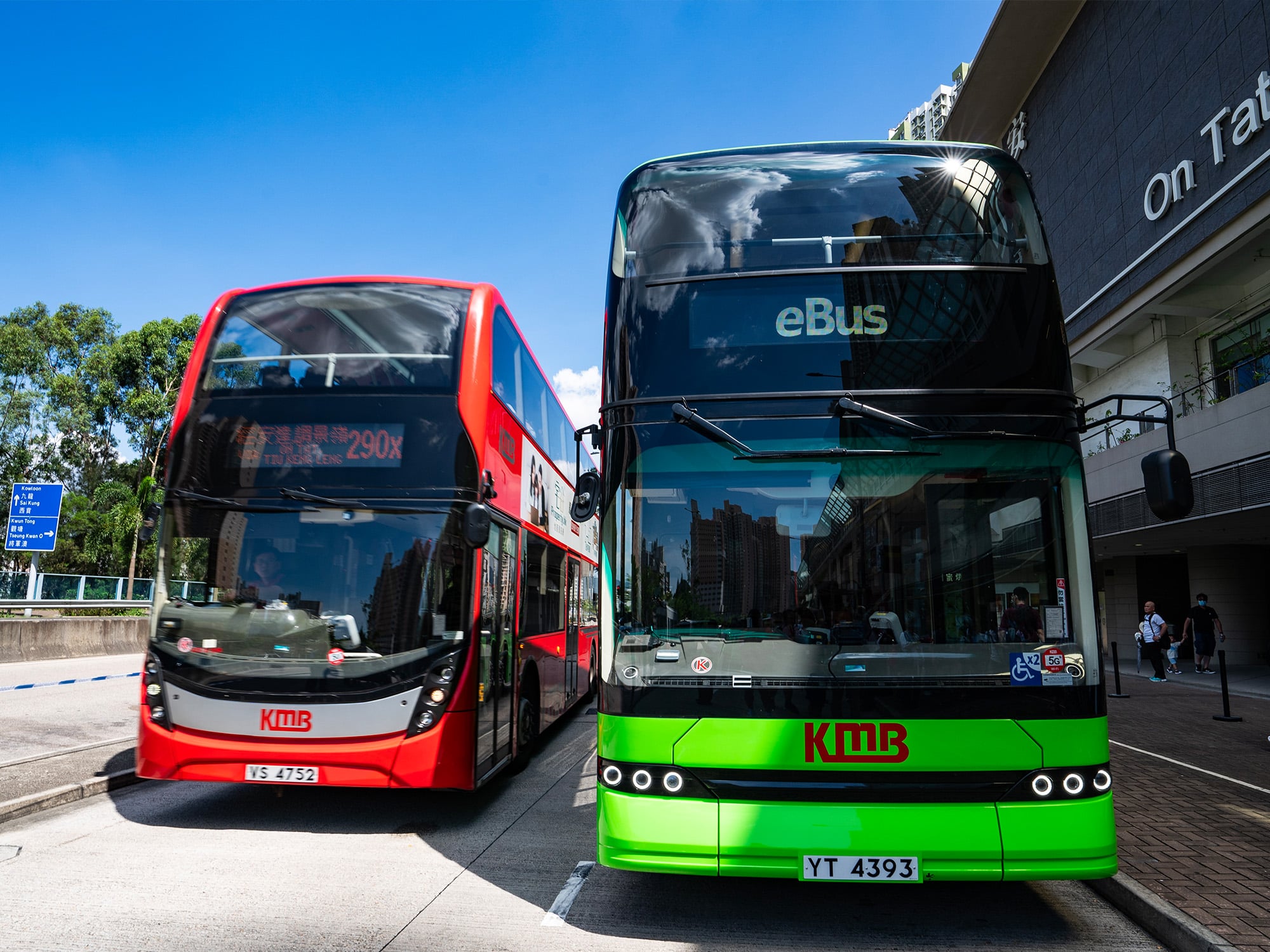
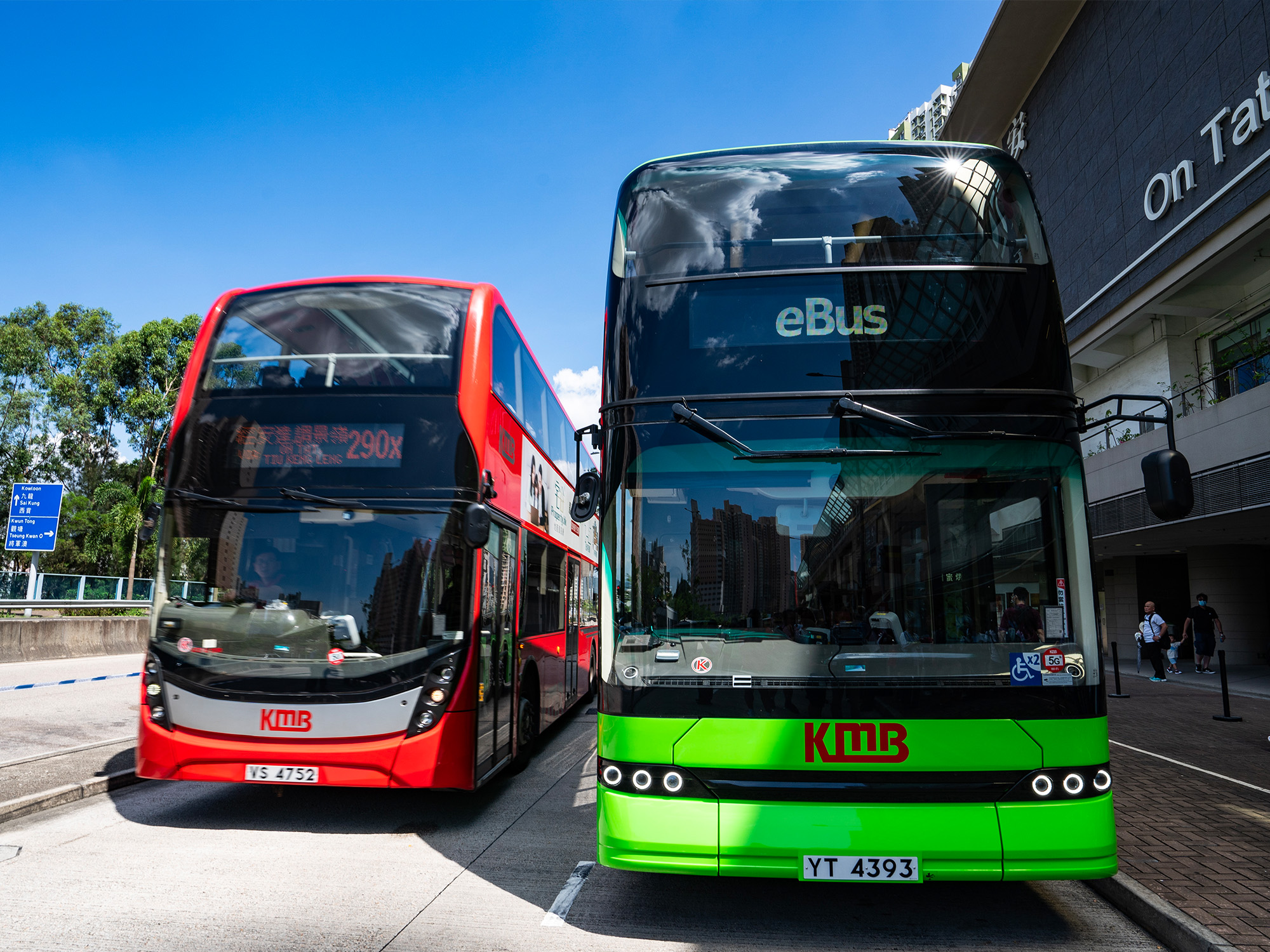
As EV technology reaches maturity and enters the mass production phase, the prices of EVs will become increasingly competitive. Currently, private EVs are highly cost-effective, given their lower price, compared to traditional fuel-propelled alternatives. Regarding buses, the current cost of an ordinary diesel buses is approximately HKD 3 million, while that of an electric bus (e-bus) is about 50% higher. Nevertheless, there is considerable room for downward adjustment. As for energy costs, EVs have clear advantages over traditional fuel-propelled vehicles, with the difference between fuel and electricity costs per kilometre often more than two times. Moreover, with fewer mechanical components, the maintenance cost of EVs is generally lower. Therefore, the overall costs for operators switching to EVs will be further reduced in the long term.
At present, there are around 6,000 franchised buses and 18,000 taxis in Hong Kong. Although replacing retired buses and taxis is the operators' responsibility, given the additional cost of replacing traditional fuel-propelled vehicles with green ones, it is reasonable for the Government to provide appropriate subsidies at the initial stage. According to the Government's proposed subsidy ratio, the total subsidy amount will be around HKD 500 to 600 million, but beyond encouraging the industry to expedite the transformation, the public will immediately experience the benefits of electric transport, including a significant reduction in smoke and heat emissions and no burden of fare increases due to the transformation. This measure can be a timely and short-term one to terminate when the prices of EVs decrease in the future.
Enhance Efficiency: Address Insufficient Charging Facilities and Improve Supporting Facilities
To fully achieve the electrification of transport, it is recommended that the Government meets different demands by optimising charging arrangements such as speed, locations, and pricing. Hong Kong has over 70,000 private EVs on the roads daily, and the number is growing rapidly. However, as of September 2024, only 9,107 public chargers were available in Hong Kong, of which 5,373 were medium-speed chargers and 1,579 were quick ones, with an average of merely one public charger for every eight private EVs.
A few years ago, the Government launched the "EV-charging at Home Subsidy Scheme" to subsidise the installation of charging facilities in private residential estates, aiming to cover about 140,000 private parking spaces in around 700 car parks of existing private residential buildings and estates. Unfortunately, some estates could not benefit from the scheme owing to restrictions imposed by owners’ corporations, and power voltage limitations. In some cases, estates are levying additional charging fees on top of parking fees by placing chargers in hourly rental spaces, and besides, the limited number of chargers are often occupied by transient vehicles. All these factors hindered the effectiveness of the scheme. Therefore, the Government should implement enhancements to hardware support and management measures designed to fulfil the demands of users.
Concerning taxis, LPG taxi drivers have to wait for refilling at filling stations during shift-changing hours, thus affecting both their operation and limiting the availability of taxis for the public. To meet the unique operational needs of the taxi industry, additional high-speed chargers must be installed at convenient locations without obstructing traffic. However, a major obstacle to the taxi industry’s transition to EVs is the limited number of suitable locations in Hong Kong. Fortunately, the charging technology is advancing rapidly, paving the way for reducing charging times. Furthermore, by tracking electricity usage per shift and charging, it would not be necessary for taxi drivers to fully charge their taxis before a shift change, allowing taxi drivers to charge at different periods and improving operational efficiency.
For the bus industry, in addition to supplying general charging facilities at bus depots for overnight charging, quick chargers could be installed at bus termini and public transport interchanges for daytime replenishment. The Government could also install standard chargers on less busy streets for overnight charging of non-franchised e-buses, so as to encourage the transformation of the entire bus industry.
Hydrogen Vehicles: Northern Metropolis as Green Transport Test Ground to Tackle Challenges
While the Government is promoting EVs, it is also actively exploring the application of hydrogen vehicles and has released the Strategy of Hydrogen Development in Hong Kong and related guidelines. In view of the high cost of green hydrogen arising from the immaturity of the technology and the need to establish a new hydrogen refuelling system, it appears challenging to fully promote hydrogen vehicles. Nonetheless, technological advancements believably would gradually overcome these barriers. For instance, a Japanese manufacturer has developed hydrogen storage tanks that allow replacement at any time. By resolving the difficulty of installing hydrogen refuelling facilities, hydrogen vehicles may offer greater convenience and eco-friendliness than EVs. In the future, more innovative green transport options will likely emerge. The Government should closely monitor these technological developments, initiate timely pilot schemes, and leverage the Northern Metropolis as a testing ground for innovative green transport technologies.


The source text is in Chinese. This English version is for reference only. In case of any discrepancy between this English version and the Chinese version, the Chinese version shall prevail.
The Environment and Ecology Bureau has recently announced the Green Transformation Roadmap of Public Buses and Taxis, outlining a clear timeline towards a zero-carbon transport system in Hong Kong and underlining the Government's firm and vigorous commitment to green transport. Since the launch of the Hong Kong Roadmap on Popularisation of Electric Vehicles in 2021, significant progress has been made in promoting private electric vehicles (EVs). The recent announcement has gone a step further in formulating specific measures to encourage the transition of public buses and taxis to EVs. Now that the technology of EVs is maturing and supporting facilities are gradually falling into place, it is the optimal time to accelerate the green transformation.
Clear Advantages of EV; Costs to Be Reduced Gradually
As EV technology reaches maturity and enters the mass production phase, the prices of EVs will become increasingly competitive. Currently, private EVs are highly cost-effective, given their lower price, compared to traditional fuel-propelled alternatives. Regarding buses, the current cost of an ordinary diesel buses is approximately HKD 3 million, while that of an electric bus (e-bus) is about 50% higher. Nevertheless, there is considerable room for downward adjustment. As for energy costs, EVs have clear advantages over traditional fuel-propelled vehicles, with the difference between fuel and electricity costs per kilometre often more than two times. Moreover, with fewer mechanical components, the maintenance cost of EVs is generally lower. Therefore, the overall costs for operators switching to EVs will be further reduced in the long term.
At present, there are around 6,000 franchised buses and 18,000 taxis in Hong Kong. Although replacing retired buses and taxis is the operators' responsibility, given the additional cost of replacing traditional fuel-propelled vehicles with green ones, it is reasonable for the Government to provide appropriate subsidies at the initial stage. According to the Government's proposed subsidy ratio, the total subsidy amount will be around HKD 500 to 600 million, but beyond encouraging the industry to expedite the transformation, the public will immediately experience the benefits of electric transport, including a significant reduction in smoke and heat emissions and no burden of fare increases due to the transformation. This measure can be a timely and short-term one to terminate when the prices of EVs decrease in the future.
Enhance Efficiency: Address Insufficient Charging Facilities and Improve Supporting Facilities
To fully achieve the electrification of transport, it is recommended that the Government meets different demands by optimising charging arrangements such as speed, locations, and pricing. Hong Kong has over 70,000 private EVs on the roads daily, and the number is growing rapidly. However, as of September 2024, only 9,107 public chargers were available in Hong Kong, of which 5,373 were medium-speed chargers and 1,579 were quick ones, with an average of merely one public charger for every eight private EVs.
A few years ago, the Government launched the "EV-charging at Home Subsidy Scheme" to subsidise the installation of charging facilities in private residential estates, aiming to cover about 140,000 private parking spaces in around 700 car parks of existing private residential buildings and estates. Unfortunately, some estates could not benefit from the scheme owing to restrictions imposed by owners’ corporations, and power voltage limitations. In some cases, estates are levying additional charging fees on top of parking fees by placing chargers in hourly rental spaces, and besides, the limited number of chargers are often occupied by transient vehicles. All these factors hindered the effectiveness of the scheme. Therefore, the Government should implement enhancements to hardware support and management measures designed to fulfil the demands of users.
Concerning taxis, LPG taxi drivers have to wait for refilling at filling stations during shift-changing hours, thus affecting both their operation and limiting the availability of taxis for the public. To meet the unique operational needs of the taxi industry, additional high-speed chargers must be installed at convenient locations without obstructing traffic. However, a major obstacle to the taxi industry’s transition to EVs is the limited number of suitable locations in Hong Kong. Fortunately, the charging technology is advancing rapidly, paving the way for reducing charging times. Furthermore, by tracking electricity usage per shift and charging, it would not be necessary for taxi drivers to fully charge their taxis before a shift change, allowing taxi drivers to charge at different periods and improving operational efficiency.
For the bus industry, in addition to supplying general charging facilities at bus depots for overnight charging, quick chargers could be installed at bus termini and public transport interchanges for daytime replenishment. The Government could also install standard chargers on less busy streets for overnight charging of non-franchised e-buses, so as to encourage the transformation of the entire bus industry.
Hydrogen Vehicles: Northern Metropolis as Green Transport Test Ground to Tackle Challenges
While the Government is promoting EVs, it is also actively exploring the application of hydrogen vehicles and has released the Strategy of Hydrogen Development in Hong Kong and related guidelines. In view of the high cost of green hydrogen arising from the immaturity of the technology and the need to establish a new hydrogen refuelling system, it appears challenging to fully promote hydrogen vehicles. Nonetheless, technological advancements believably would gradually overcome these barriers. For instance, a Japanese manufacturer has developed hydrogen storage tanks that allow replacement at any time. By resolving the difficulty of installing hydrogen refuelling facilities, hydrogen vehicles may offer greater convenience and eco-friendliness than EVs. In the future, more innovative green transport options will likely emerge. The Government should closely monitor these technological developments, initiate timely pilot schemes, and leverage the Northern Metropolis as a testing ground for innovative green transport technologies.