









Hong Kong Housing Landscape Navigator 2025




Hong Kong Housing Landscape Navigator 2025

Hong Kong’s housing landscape faces continued challenges. In the face of headwinds, dwindling private housing land sales and ballooning public housing construction expenditures have dominated headlines, while the role and necessity of subsidised housing have also come under scrutiny. Our Hong Kong Foundation released its Hong Kong Housing Landscape Navigator 2025, providing an in-depth analysis of the latest housing supply trends and recurring market themes.
Private Housing Supply
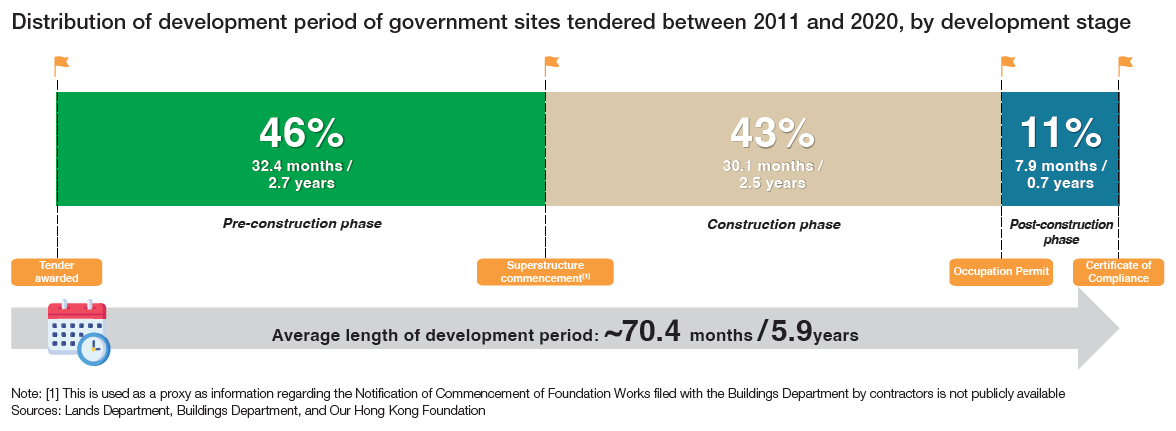
Average annual completions will be around 17,100 units in 2025–2029. However, completions will be front-loaded in 2025 and 2026. The land sale market has been shrouded by conservatism, which has led to a decline in successful government land tenders, plot sizes, and accommodation values since 2022/23. Our analysis shows that development periods have lengthened by 33% in recent years, and that more than half (57%) of the development period involved the pre- and post-construction phases. Development periods could be significantly lengthened due to site complexities and requirements to construct public facilities.
Public Housing Supply
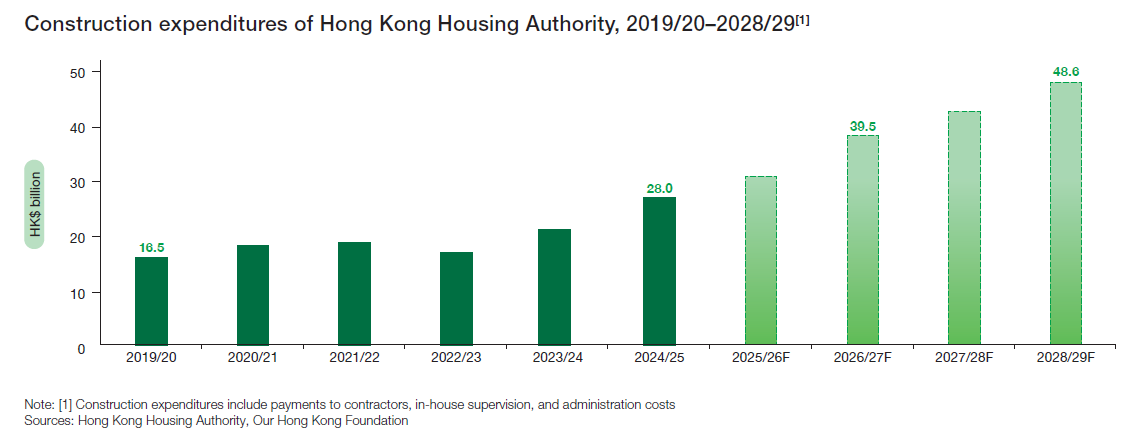
Forecasts suggest that traditional public housing completions alone will reach 32,100 units per annum between 2025/26 and 2029/30, exceeding the Long Term Housing Strategy target. Adding up the Light Public Housing, which implementation is on track, average annual public housing completions would reach 37,700 units over the next five years. The previously observed problem of back-loaded supply is easing, and the Composite Waiting Time for Subsidised Rental Housing is expected to show a downward trend. Nevertheless, the positive outlook comes with a hefty price tag. The Hong Kong Housing Authority’s annual construction expenditures are forecasted to increase by 73% in the coming four years. Given the supply buffer in the future, the authorities should reconsider the cost-effectiveness of development sites.
Subsidised Housing Spotlight
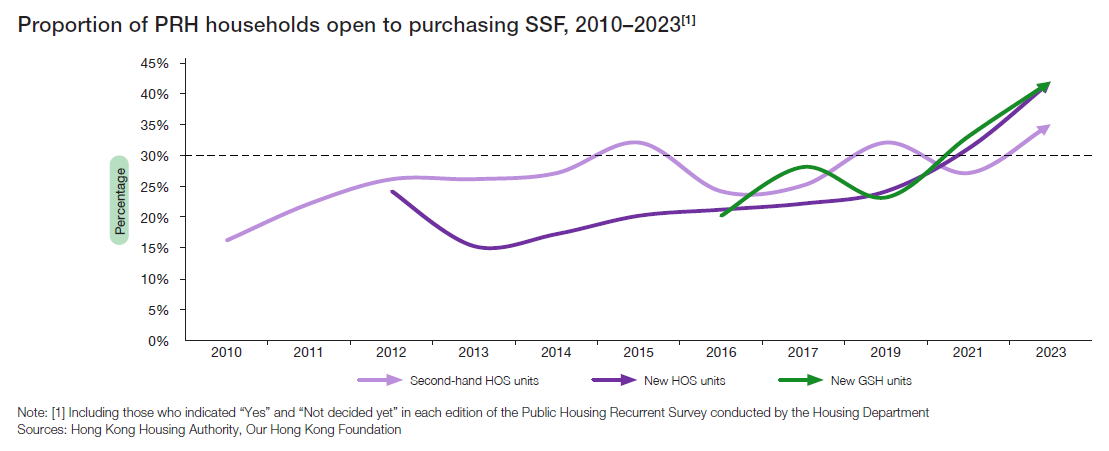
As home prices have trended downward since the peak in 2021, the overlap in lump sum prices of subsidised and private housing has expanded. However, only units between HK$3–5 million are susceptible to potential competition between the subsidised and private housing markets. For low- to middle-income families below the median household income level, subsidised housing remains their first step towards home ownership. Our analysis also shows that subsidised housing has a greater impact on public rental housing unit recovery and turnover than combating tenancy abuse. With over 30% of public rental housing households open to purchasing subsidised housing, the potential number of recovered units is significant.




Hong Kong’s housing landscape faces continued challenges. In the face of headwinds, dwindling private housing land sales and ballooning public housing construction expenditures have dominated headlines, while the role and necessity of subsidised housing have also come under scrutiny. Our Hong Kong Foundation released its Hong Kong Housing Landscape Navigator 2025, providing an in-depth analysis of the latest housing supply trends and recurring market themes.
Private Housing Supply
Average annual completions will be around 17,100 units in 2025–2029. However, completions will be front-loaded in 2025 and 2026. The land sale market has been shrouded by conservatism, which has led to a decline in successful government land tenders, plot sizes, and accommodation values since 2022/23. Our analysis shows that development periods have lengthened by 33% in recent years, and that more than half (57%) of the development period involved the pre- and post-construction phases. Development periods could be significantly lengthened due to site complexities and requirements to construct public facilities.
Public Housing Supply
Forecasts suggest that traditional public housing completions alone will reach 32,100 units per annum between 2025/26 and 2029/30, exceeding the Long Term Housing Strategy target. Adding up the Light Public Housing, which implementation is on track, average annual public housing completions would reach 37,700 units over the next five years. The previously observed problem of back-loaded supply is easing, and the Composite Waiting Time for Subsidised Rental Housing is expected to show a downward trend. Nevertheless, the positive outlook comes with a hefty price tag. The Hong Kong Housing Authority’s annual construction expenditures are forecasted to increase by 73% in the coming four years. Given the supply buffer in the future, the authorities should reconsider the cost-effectiveness of development sites.
Subsidised Housing Spotlight
As home prices have trended downward since the peak in 2021, the overlap in lump sum prices of subsidised and private housing has expanded. However, only units between HK$3–5 million are susceptible to potential competition between the subsidised and private housing markets. For low- to middle-income families below the median household income level, subsidised housing remains their first step towards home ownership. Our analysis also shows that subsidised housing has a greater impact on public rental housing unit recovery and turnover than combating tenancy abuse. With over 30% of public rental housing households open to purchasing subsidised housing, the potential number of recovered units is significant.